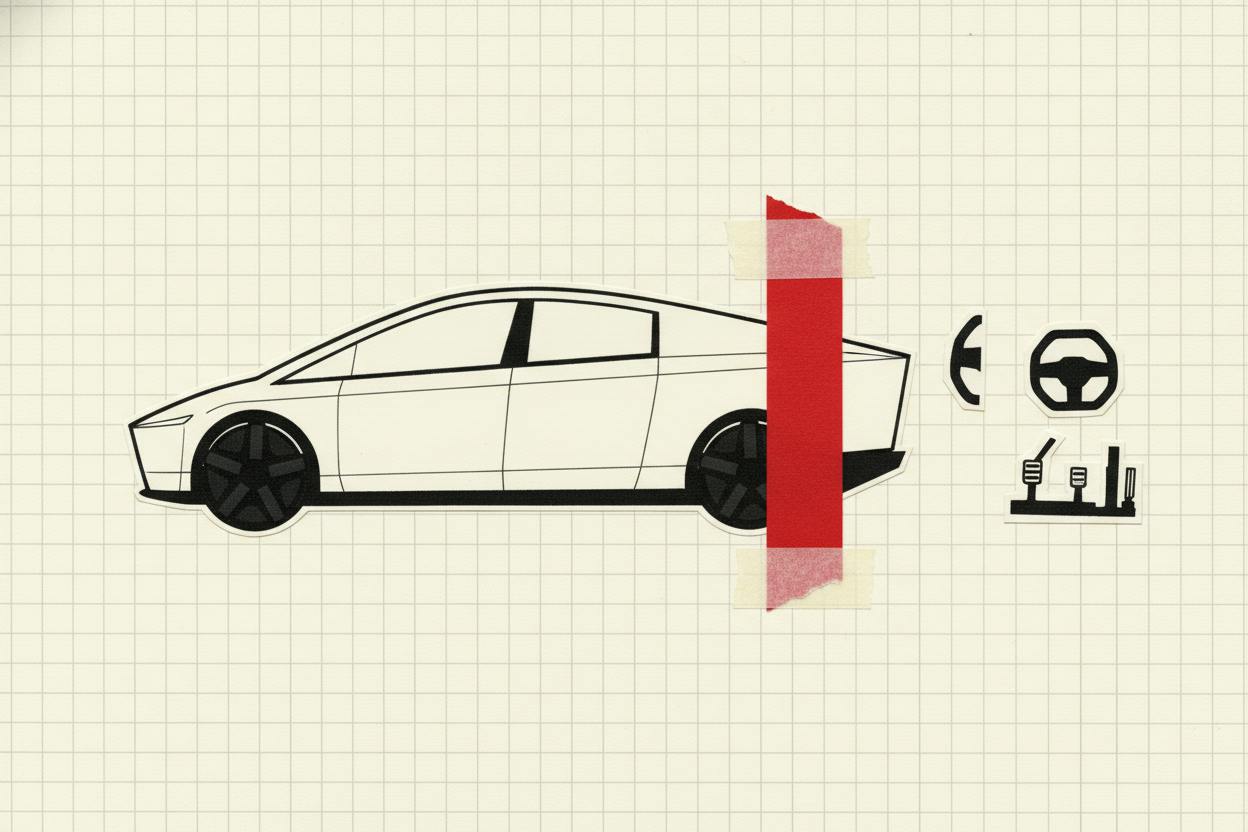
The US auto-safety regulator, the National Highway Traffic Safety Administration (NHTSA), has given Tesla until September 30 to explain whether its Cybercab robotaxi—a vehicle designed without a steering wheel, pedals, or mirrors—can be temporarily fitted with human controls. The request, reported by The Wall Street Journal and Reuters, centers on a key assumption in Tesla's regulatory filings: that traditional controls could be added when needed, even though the company has publicly described the vehicle as fully autonomous.
NHTSA, the federal agency responsible for enforcing vehicle safety standards, is essentially asking Tesla to reconcile its vision of a driverless future with existing federal rules that were written for cars with conventional human-operated controls. The agency wants to know if the Cybercab can meet those rules, and if so, how. The deadline for Tesla's response is September 30.
Why the regulator is asking
Federal motor vehicle safety standards require cars sold in the US to have certain basic features—steering wheels, pedals, and mirrors—unless a manufacturer obtains an exemption. Tesla has not yet received such an exemption for the Cybercab, which the company unveiled last year as a purpose-built robotaxi with no steering wheel or pedals. Instead, Tesla's paperwork appears to rely on the idea that the vehicle could be temporarily equipped with human controls, allowing it to comply with the rules when needed.
NHTSA's inquiry suggests the agency is skeptical of that assumption. The regulator is also asking for basic technical details, such as the vehicle's maximum speed, according to Reuters. The questions indicate that NHTSA is scrutinizing not just the Cybercab's design, but the entire legal and safety framework Tesla is proposing for a car that is meant to drive itself.
This is not the first time Tesla has clashed with regulators over its autonomous driving ambitions. The company has faced multiple investigations into its Autopilot and Full Self-Driving systems, and it has repeatedly pushed the boundaries of what regulators allow. But the Cybercab represents a more fundamental challenge: a vehicle with no way for a human to take over at all, unless controls are added later.
What this means for investors
For investors, this regulatory back-and-forth is a reminder that Tesla's robotaxi ambitions are not just a technical or engineering challenge—they are also a regulatory one. The Cybercab is central to Tesla's long-term growth story, with CEO Elon Musk framing it as a future source of massive revenue through a ride-hailing network. But if regulators refuse to approve the vehicle in its current form, or force significant design changes, that timeline could slip.
The September 30 deadline is a near-term catalyst. If Tesla fails to provide a satisfactory answer, NHTSA could delay approval, issue fines, or require design modifications. That would likely push back the Cybercab's launch, which Tesla has said could happen before 2027, though the company has a history of missing its own deadlines.
Investors should also consider the broader context. The Cybercab is part of a wider trend toward autonomous vehicles, but it is one of the most aggressive designs yet. Other companies, like Waymo, have launched robotaxis with steering wheels and pedals as a safety fallback. Tesla's decision to remove them entirely is a bet that its software will be reliable enough to never need human intervention—a bet that regulators are now questioning.
For everyday investors, the key takeaway is that Tesla's stock price is not just tied to its car sales or earnings, but also to its ability to navigate complex regulatory hurdles. Any sign that the Cybercab is facing regulatory headwinds could weigh on the stock, while a smooth approval process could be a positive catalyst. As always, it's important to watch how the company responds and what NHTSA does next.
In the meantime, the broader market is also dealing with other pressures, such as oil-driven inflation fears keeping Fed rates high, which can affect all stocks, including Tesla. And for those interested in the regulatory landscape, the recent launch of a market link group between Hong Kong and Dubai regulators shows how regulators worldwide are adapting to new financial and technological developments.
What to watch next
The immediate focus will be on Tesla's response to NHTSA by September 30. Investors should look for details on how Tesla plans to make the Cybercab compliant, whether it will seek an exemption, and what that might mean for the vehicle's design and production timeline. Also watch for any statements from NHTSA after the response, as the agency could open a formal review or request more information.
Beyond the Cybercab, Tesla's broader autonomous driving efforts remain under scrutiny. The company's reliance on advanced chips from suppliers like STMicroelectronics is part of the supply chain that makes these systems work, and any disruptions there could also affect Tesla's plans.
For now, the ball is in Tesla's court. The company has until the end of September to convince regulators that its vision of a steering wheel-free future can coexist with the rules of the road. How it answers could shape not just the Cybercab's fate, but the future of autonomous vehicles in the US.