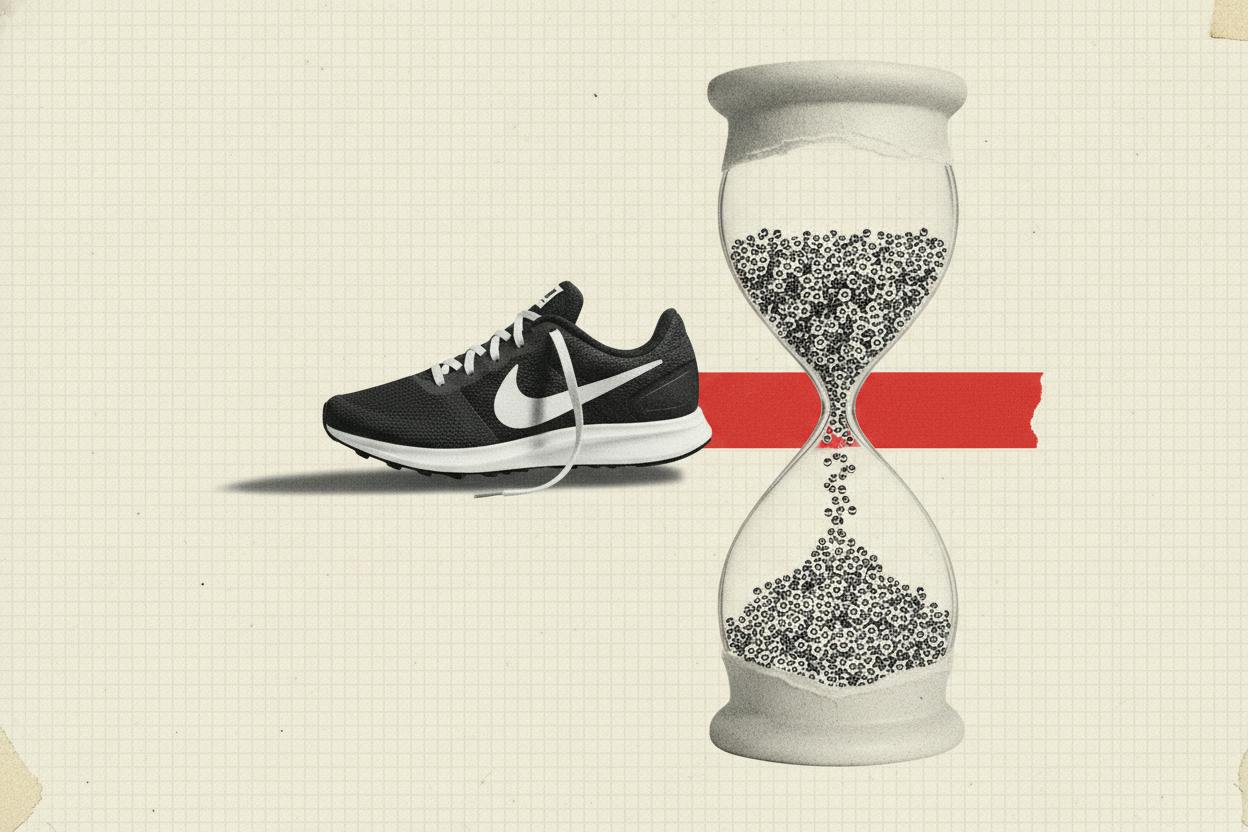
Nike used its first investor day in nearly a decade to lay out a long-term turnaround plan, targeting about $5 billion in additional revenue by fiscal 2031. The strategy, dubbed “Full Stride Ahead,” is centered on doubling down on performance sports and a handful of key markets, even as the company warns that the near-term pain is not over.
CEO Elliott Hill, who returned to the company in October 2024, is trying to steady the athletic giant after a rough stretch. His plan involves more sport-specific innovation, rebuilding relationships with wholesale partners, and simplifying operations—including job cuts. But the company was candid that the turnaround is moving slowly, with revenue still falling in both wholesale and its own stores and websites, continued weakness in China, and softer demand for the Jordan and sportswear lines.
What’s in the plan?
Nike is concentrating its spending and product launches on five performance sports: running, training, global football (soccer), basketball, and outdoor—plus sportswear. It also identified 23 “priority countries” that it expects to generate more than 90% of its revenue growth through fiscal 2031.
The company said performance sports should deliver roughly $4 billion of the $5 billion target, with sportswear adding about $1 billion. That split underscores Nike’s bet that athletes and everyday runners, not just fashion-driven sneakerheads, will drive the next phase of growth.
Investors seemed to focus on the longer arc. Nike said it expects to get back to market-level revenue growth in fiscal 2029, and the stock rose about 4% on the news. That reaction is notable because the company also reiterated its fiscal 2027 outlook for a high-single-digit revenue decline and adjusted earnings of $1.15 to $1.35 per share—a clear signal that the reset phase is not finished.
Why the market is looking past 2027
Nike handed investors two clocks: pressure in fiscal 2027, then a growth story meant to show up closer to fiscal 2029–2031. When more of a company’s expected cash arrives later, the stock starts trading like a “long-duration” asset—meaning small changes to beliefs about the out-years can move today’s valuation more than minor tweaks to next year’s profit range.
That helps explain why shares gained even as Nike kept a weak 2027 forecast. The market is likely reacting to whether the 2029 reacceleration and 2031 revenue target feel credible, and how quickly management can prove it with cleaner inventory, stronger wholesale orders, and better traction in key countries—especially China.
For everyday investors, the key takeaway is that Nike’s turnaround is a multi-year story. The company is not promising a quick fix. Instead, it’s asking investors to be patient while it rebuilds its product pipeline and repairs relationships with retailers that had been squeezed when Nike pushed its own direct-to-consumer strategy.
What to watch next
Investors will be watching several indicators over the next few quarters: whether Nike can stabilize sales in China, whether wholesale orders rebound, and whether the new performance-focused products gain traction. The company’s ability to hit its 2031 target will depend on executing in those 23 priority countries and convincing shoppers that Nike’s innovation engine is back.
For a broader view of how global markets are reacting to corporate news, check out our coverage of foreign investment flows into Canada and German investor morale. And for more on Nike’s specific challenges, see our earlier piece on Nike's 2031 plan and near-term sales slide.
Nike’s story is a reminder that even the biggest brands can stumble, and that turnarounds take time. The company’s long-term target is ambitious, but the near-term reality is still soft. Investors who are considering Nike should weigh the potential for a 2029 recovery against the risk that the next couple of years could remain bumpy.



