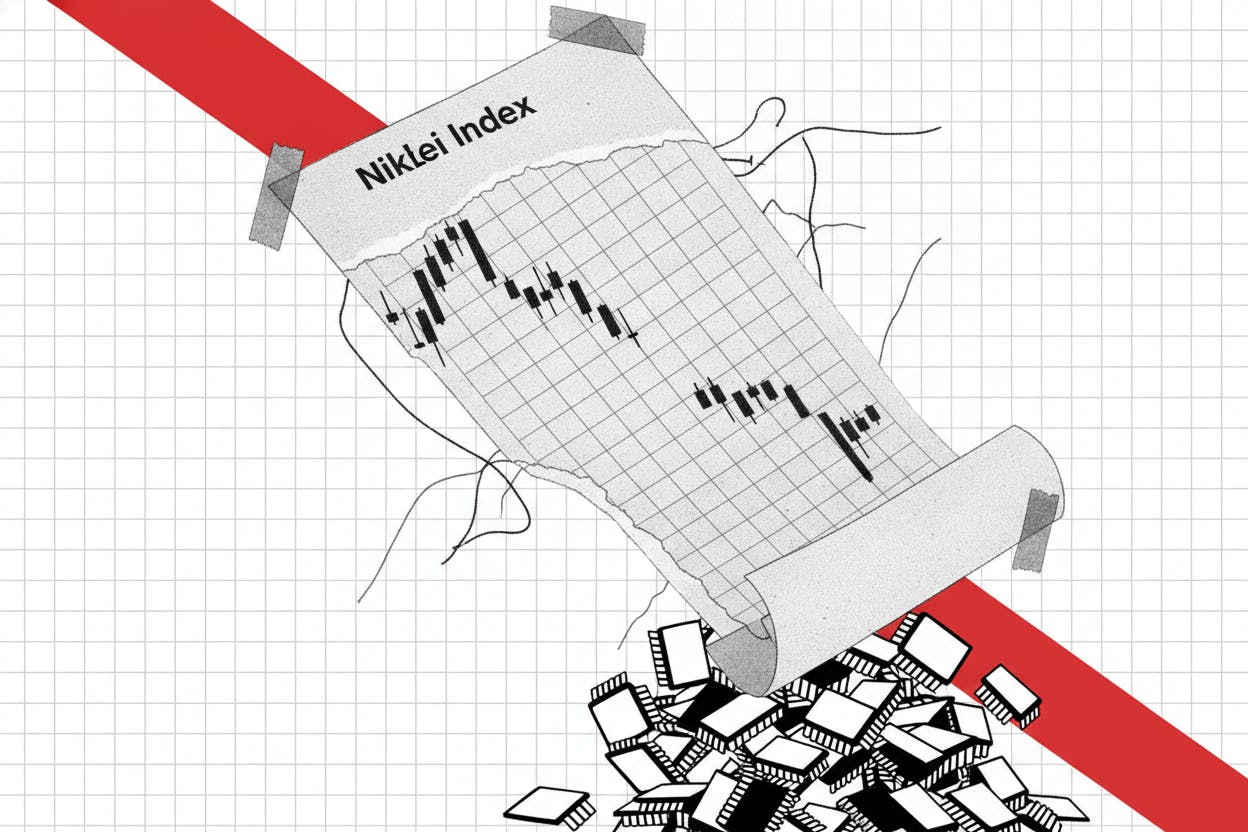
Japan's Nikkei 225 index fell 4.15% on Friday, shedding 3,005.46 points to close at 69,360.88, as a sell-off in US artificial intelligence and semiconductor stocks spread to Asian markets. The decline turned what had been a popular, crowded trade into a rush for the exits, with big investors trimming exposure to AI and chip names after a strong run.
The move echoed an overnight drop on Wall Street, where traders cited fresh “sales calls” on AI-related shares — analyst downgrades or cautious notes that can quickly cool demand for a hot theme. Apple fell more than 6% in a single session, losing nearly $250 billion in market value, as concerns about higher import costs and tariff risks weighed on the tech sector.
Why the Nikkei Was Hit So Hard
Japan's benchmark index is heavily weighted toward technology and semiconductor companies, making it especially sensitive to shifts in sentiment around AI. The Nikkei had rallied sharply earlier this year on optimism about AI-driven demand, with chip stocks leading the charge. But when the mood turns, those same stocks can fall fast.
“When investors sour on a popular growth story, the first thing that often falls is the valuation multiple — the extra price people pay for future earnings — rather than near-term profits,” said market analysts. In this case, tariff anxiety added another layer: higher import costs can squeeze profit margins and disrupt East Asia’s hardware-heavy supply chains, which include many Japanese companies.
The sell-off also comes after a period of strong gains. The Nikkei had recently hit record highs, partly fueled by AI enthusiasm. A similar pattern played out earlier this year when the Nikkei 225 plunged 3.7% on OpenAI IPO delay fears, with SoftBank tumbling 12%, showing how quickly sentiment can shift.
What It Means for Investors
For everyday investors, Friday's drop is a reminder that even powerful long-term trends like AI can experience sharp reversals. In risk-off moments, index moves are often driven less by company fundamentals and more by positioning — meaning even unrelated corporate updates can get ignored until markets settle.
“In the short run, forced selling and thinner liquidity can overpower stock-by-stock differences,” said one strategist. “Then fundamentals matter again once the scramble to cut risk slows down.”
The sell-off also highlights the interconnected nature of global tech markets. A move in US AI stocks can quickly ripple through Asia, affecting Japanese chip suppliers and other hardware companies. This is especially true when tariff worries are in play, as they can hit multiple parts of the supply chain at once.
Investors should watch for signs of stabilization in US tech stocks, as well as any further tariff developments. The US dollar edged higher as traders braced for a data deluge and Fed remarks, adding to the cautious mood. Meanwhile, the Hong Kong trade deficit widened to HK$44.2 billion as AI demand fueled an import surge, underscoring the region's reliance on tech trade.
Broader Market Context
The Nikkei's drop was part of a broader risk-off move across Asian markets. While the index had been on a strong run, Friday's decline shows how quickly a crowded trade can unwind. The move was also notable for its size — a 4.15% drop is significant for a major benchmark, and it came on relatively high volume, suggesting genuine selling pressure rather than just noise.
For context, the Nikkei had previously surged to record highs on AI optimism, as Micron's AI demand signal drove the Nikkei to a record close, with chip stocks surging. That rally made the index vulnerable to a pullback when sentiment shifted.
Looking ahead, investors will be watching for any further analyst calls on AI stocks, as well as earnings reports from major tech companies. The key question is whether Friday's sell-off is a temporary correction or the start of a deeper downturn. For now, the market is in a wait-and-see mode, with many traders reducing risk until the picture becomes clearer.