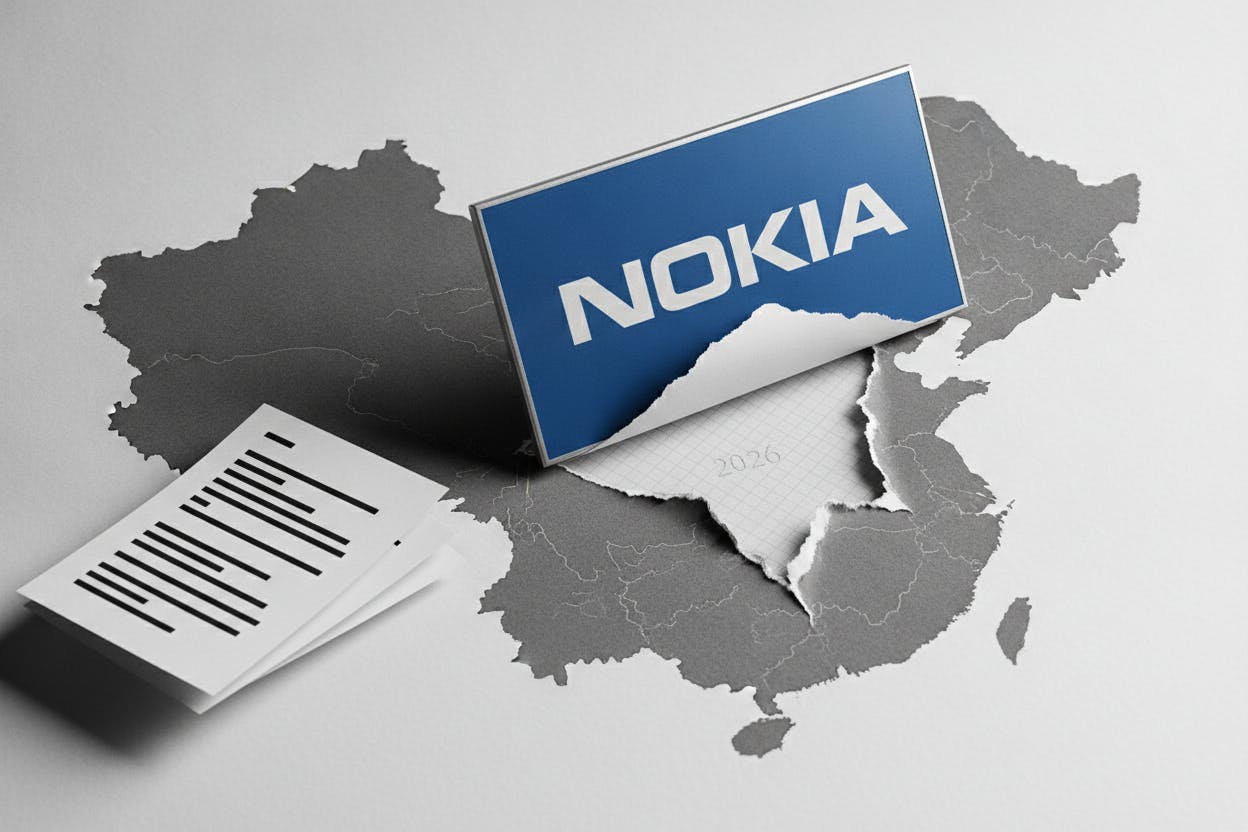
Finnish telecom equipment maker Nokia has announced plans to wind down its radio-technology research and development unit in Hangzhou, China, by the end of 2026. The move will eliminate about 1,600 jobs as the company realigns its operations in a market where its local business has been shrinking.
The Hangzhou facility has been a key center for developing radio technology, which is the backbone of mobile networks. But as Chinese demand for Nokia's equipment has declined, the company has decided to consolidate its R&D efforts elsewhere.
Why is Nokia pulling back from China?
Nokia's struggles in China are not new. The company has faced intense competition from domestic players like Huawei and ZTE, which dominate the Chinese market. Over the years, Nokia's share of Chinese telecom contracts has dwindled, making it harder to justify maintaining a large R&D presence there.
The decision to close the Hangzhou unit is part of a broader cost-cutting and efficiency drive. By consolidating R&D, Nokia aims to reduce overheads and focus resources on markets where it has stronger growth prospects, such as North America and parts of Europe.
This is not the first time Nokia has trimmed its workforce. The company has been on a multi-year cost-reduction program, and job cuts have become a recurring theme as it tries to stay competitive in a capital-intensive industry.
What does this mean for investors?
For everyday investors, this news is a signal about Nokia's strategic direction. The company is essentially acknowledging that its China business is unlikely to recover to previous levels. By cutting costs, Nokia hopes to protect its profit margins and return cash to shareholders.
However, the job cuts also highlight the challenges Nokia faces. The telecom equipment market is mature, and growth is slowing in many regions. Nokia's ability to grow will depend on winning new contracts in 5G and future 6G networks, as well as diversifying into areas like enterprise networking and data centers.
Investors should watch how Nokia manages this transition. Cost cuts can boost short-term profitability, but they also risk undermining long-term innovation if R&D capabilities are reduced too much. The company will need to balance efficiency with investment in future technologies.
For those holding Nokia shares, the key question is whether these moves will lead to sustained earnings growth. For those considering an investment, it's worth noting that the company operates in a cyclical industry with intense competition, and its fortunes are closely tied to the global telecom spending cycle.
In the broader context, Nokia's retreat from China is part of a larger trend of Western tech companies reducing their exposure to the Chinese market, driven by both commercial and geopolitical factors. This can affect supply chains and revenue streams, and investors should be aware of these dynamics when evaluating tech stocks with significant China operations.
As Nokia winds down its Hangzhou unit, the company will likely face some short-term costs related to severance and restructuring. These charges could weigh on its financial results in the coming quarters, but the long-term savings are expected to be positive.
For now, the announcement is a reminder that even large, established companies must constantly adapt to changing market conditions. For investors, staying informed about such strategic shifts is crucial to making sound decisions.