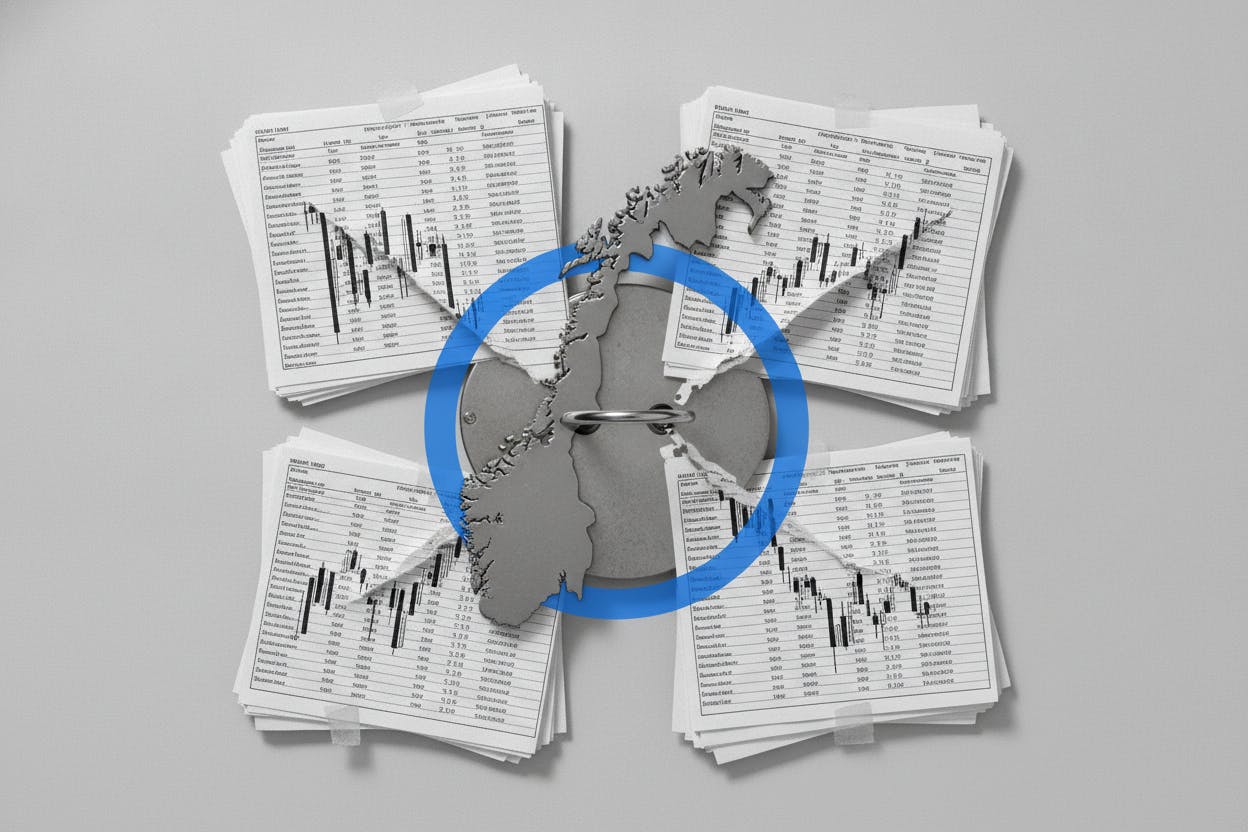
A Nordic industry group is exploring a bold idea: merging the stock exchanges of Sweden, Denmark, Norway, and Finland into a single marketplace. The initiative, led by a group called Nordic Compass, aims to make the region more attractive to global investors and encourage more companies to go public.
Nordic Compass is backed by some heavyweight names in the region, including private equity firm EQT, banks Nordea and SEB, and the Novo Nordisk Foundation. The group's vision goes beyond simply sharing a trading screen—it would involve aligning listing rules, disclosure standards, and other regulatory requirements that currently create friction for companies and investors operating across borders.
Why a single exchange?
Today, a company listing in Stockholm must comply with Swedish rules, while a company in Helsinki follows Finnish regulations. For an international investor, this means navigating four different sets of requirements, which can be costly and time-consuming. By creating a single bourse, the region could present itself as one unified market, similar to how the U.S. operates with multiple exchanges but a single regulatory framework.
The potential benefits are clear: more liquidity, deeper capital pools, and a simpler path for companies to raise money. For everyday investors, a unified market could mean easier access to a wider range of Nordic stocks, potentially with lower costs and greater transparency.
However, the ownership structure of the current exchanges complicates any merger. The exchanges are owned by different entities—Nasdaq operates the Stockholm, Copenhagen, and Helsinki exchanges, while Oslo Børs is owned by Euronext. This fragmented ownership makes a simple merger difficult, as any deal would require agreement from multiple corporate parents with different strategic interests.
What it means for investors
For investors, the idea of a single Nordic exchange is about reducing barriers. If successful, it could lead to more IPOs, as companies would face a simpler, more predictable listing process. It could also attract more global capital, which tends to favor markets that are easy to access and understand.
In the near term, however, this is likely a long-term project. Regulatory harmonization across four countries is a complex process, and any merger would need to overcome significant legal and political hurdles. Investors should not expect immediate changes, but the initiative signals that Nordic policymakers and business leaders are serious about making the region more competitive.
The push for a unified market comes at a time when European exchanges are facing increasing competition from the U.S., which has seen a wave of tech listings in recent years. By streamlining its own market, the Nordics could position themselves as a more attractive destination for growth companies.
For now, Nordic Compass is in the exploratory phase. The group is likely to study the feasibility of a single bourse, including the legal, regulatory, and operational challenges. Investors will be watching to see if the group can turn this vision into a concrete plan.
In the meantime, the broader European market continues to evolve, with global tech sentiment and inflation data influencing investor behavior. A more unified Nordic market could help the region weather such global trends more effectively.
Ultimately, the idea of a single Nordic stock exchange is a recognition that scale matters in global finance. By pooling their resources, these four small countries could punch above their weight, attracting the kind of capital that currently flows to larger markets. For investors, that could mean more opportunities and a more vibrant regional market.



