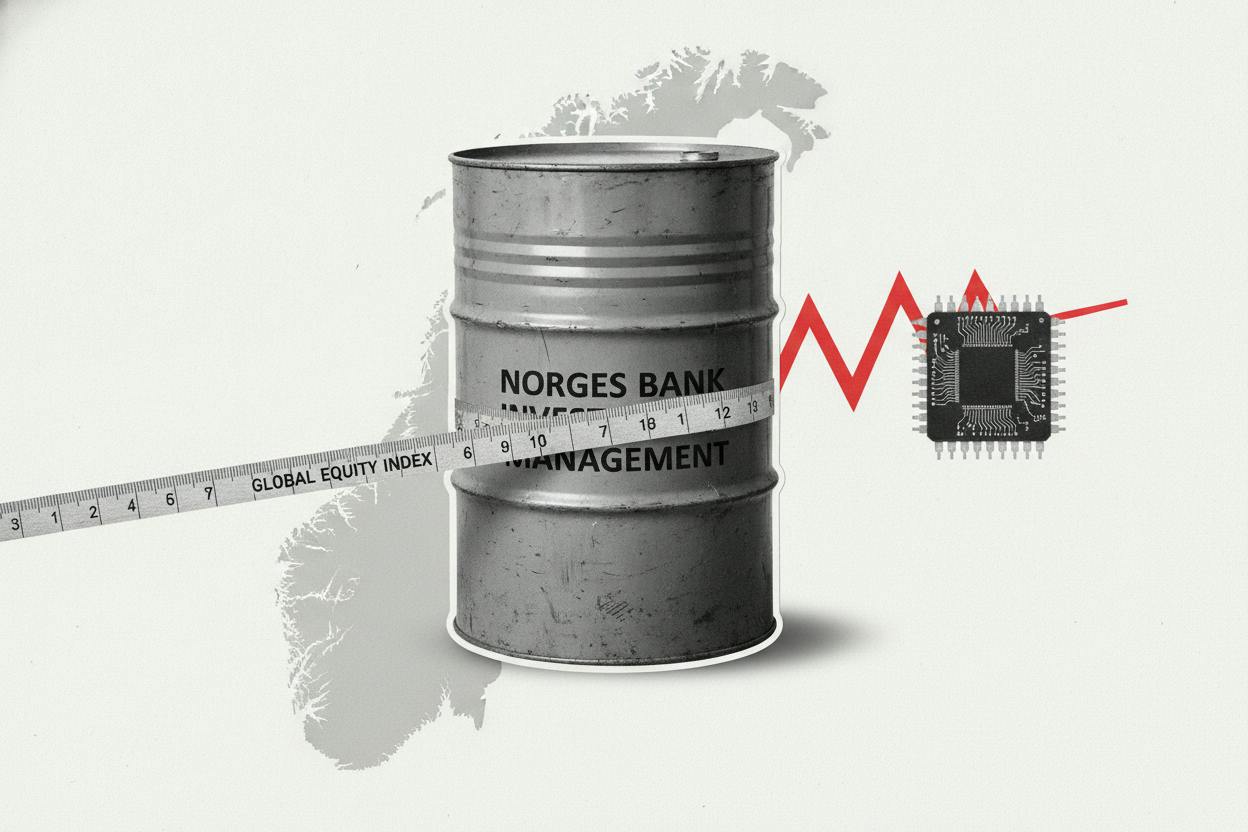
Norway's $2.3 trillion sovereign wealth fund, the world's largest, reported a 278 billion-crown ($29.7 billion) loss for the third quarter. The fund's manager, Norges Bank Investment Management (NBIM), said it has maintained small underweight positions in several major technology companies, pointing to persistent volatility tied to artificial intelligence.
What happened
The loss, equivalent to roughly 2.5% of the fund's value, reflects a tough quarter for global markets. While the fund is diversified across thousands of stocks, bonds, real estate, and renewable energy projects, its equity portfolio—which makes up the bulk of its assets—was hit by falling tech shares and broader market uncertainty.
NBIM's cautious stance on Big Tech is notable. The fund is designed to track a benchmark set by Norway's Finance Ministry, and its stock holdings are meant to mirror global markets closely. Deviations, such as underweights, are deliberate bets that the fund believes will improve long-term returns or reduce risk.
Why the caution on Big Tech?
The fund's underweights in some major tech names are small, but they signal a wariness about the rapid swings in AI-related stocks. Over the past year, enthusiasm for artificial intelligence has driven a handful of mega-cap technology companies to record highs, but it has also brought sharp reversals when earnings or outlooks disappoint.
NBIM's comments echo a broader debate among investors: how much of the AI boom is priced in, and how sustainable are the valuations of companies that are spending heavily on AI infrastructure? The fund's approach—staying slightly underweight rather than exiting entirely—reflects a belief that these companies remain important, but that their near-term share prices may be too volatile.
What it means for everyday investors
For ordinary investors, the fund's stance is a reminder that even the world's largest institutional investor does not try to time the market perfectly. Instead, it makes modest adjustments around a core portfolio that tracks global indices. This is a strategy that individual investors can learn from: rather than making big bets on or against AI, it may be wiser to maintain a diversified portfolio and accept that some sectors will be more volatile than others.
The fund's loss also underscores that even the most diversified portfolios can have down quarters. The key is to focus on long-term performance. Norway's fund has historically delivered solid returns over decades, despite periodic losses.
Broader market context
The third quarter saw a mix of economic signals, including slowing growth in some regions and persistent inflation concerns. Central banks, including the U.S. Federal Reserve, have been navigating a delicate balance between curbing inflation and supporting growth. This uncertainty has made markets more sensitive to news, especially in high-growth sectors like technology.
Meanwhile, other parts of the market have shown resilience. For instance, Prada's third-quarter sales edged up even as luxury demand cooled, and Jio's $3.2 billion IPO saw strong demand, with orders topping four times shares. These examples show that while tech may be volatile, other sectors and regions still offer opportunities.
What to watch next
Investors will be watching NBIM's next moves, as well as earnings reports from major tech companies. The fund's underweights could be adjusted if AI-related volatility subsides or if valuations become more attractive. For now, the message is clear: caution is warranted, but not panic.
For those with exposure to tech stocks, the fund's approach suggests that a measured, diversified stance may be more prudent than chasing the latest AI trend. As always, time in the market tends to beat timing the market.