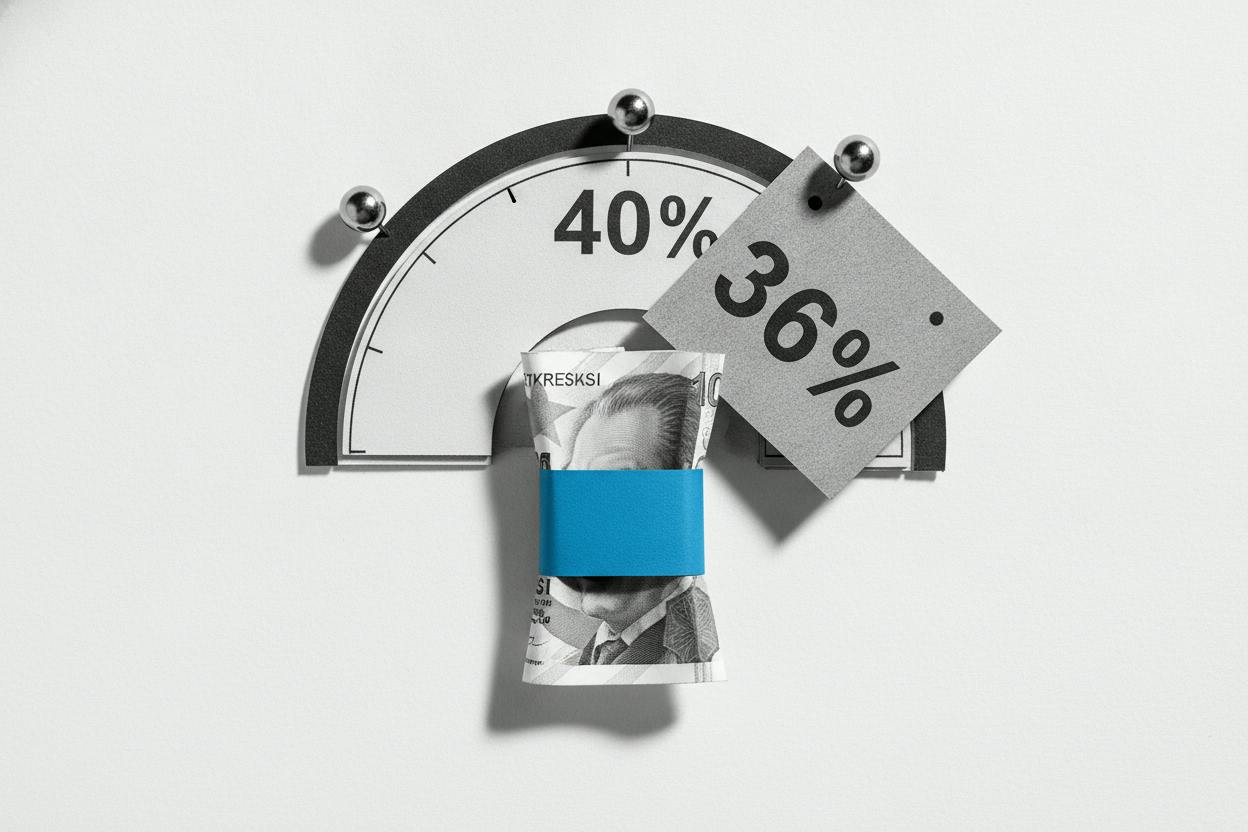
Turkey's central bank cut its main policy rate by 1 percentage point to 36% on Thursday, restarting an easing cycle after five consecutive meetings without a change. The decision, which was in line with most economists' forecasts, comes as policymakers try to balance slowing inflation against pressure on the lira.
What happened
The cut was widely anticipated: 22 of 24 economists surveyed by Reuters had predicted the move, and many now expect another reduction at the next meeting. The central bank's statement pointed to inflation readings that have come in softer than feared, even after energy prices jumped. September inflation was 1.84% month-on-month and 29.73% year-on-year, according to Reuters figures cited in the brief.
But the headline rate cut tells only part of the story. Turkey has been managing monetary conditions through two separate levers: the policy rate and liquidity management. By limiting how much cheap central-bank funding banks can access, the central bank can steer where banks borrow overnight. Earlier steps pushed the lira overnight rate up to the 40% top end of its interest-rate corridor, and that cap remained in place until August. As a result, day-to-day funding conditions could stay closer to 40% even with a 36% policy rate.
Why the lira barely moved
The muted reaction in the currency reflects this dual approach. The lira traded at 49.6275 after the decision, barely changed from Wednesday's close of 49.6025. That stability is notable given that rate cuts typically put downward pressure on a currency.
For investors, the key insight is that the 40% overnight cap can matter more than the 36% policy rate. When the central bank cuts its policy rate, the market's first question is whether banks will actually get cheaper funding. If liquidity remains tight, banks end up borrowing at the upper end of the corridor, so the effective overnight rate can stay near 40% even as the headline rate falls. In practice, that can hold up money-market rates and short-dated government-bill yields, and keep bank funding costs elevated.
What it means for investors
For those holding Turkish assets, the distinction between the policy rate and the effective funding rate is crucial. A cut in the headline rate might seem like an easing of financial conditions, but if liquidity stays tight, the real cost of borrowing for banks—and ultimately for businesses and consumers—may not fall as much as the headline suggests.
That tighter short-end environment can also reduce near-term pressure on the lira, which is why the currency barely moved on the day. But it also means that the central bank is not fully committing to an aggressive easing path. The next meeting will be closely watched for signals on whether the bank will continue to cut while keeping liquidity tight, or whether it will allow funding costs to fall more broadly.
For everyday investors, this is a reminder that central bank decisions are rarely as simple as a single rate number. The way a central bank implements its policy—through liquidity tools, corridor settings, and communication—can be just as important as the headline rate. In Turkey's case, the effective cost of money may stay higher than the official rate suggests, which could limit the boost to growth and keep inflation pressures in check.
As always, investors should consider their own risk tolerance and diversification. Turkey's economy has been through significant volatility in recent years, and currency risk remains a major factor for anyone holding lira-denominated assets.