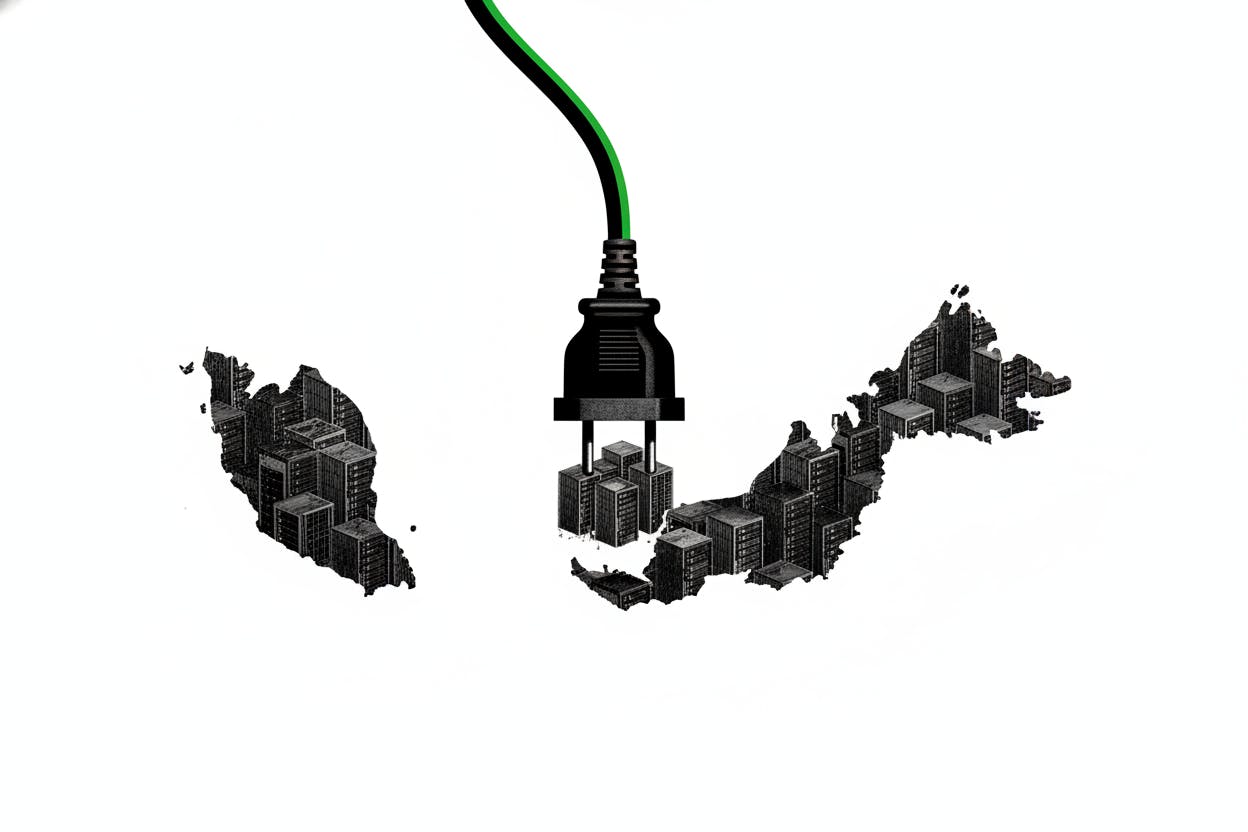
Nvidia-backed data center developer Firmus has landed OpenAI as an anchor customer, signing a multi-year deal to provide computing capacity from two facilities in Malaysia. The agreement, reported by Reuters, marks a significant step for Firmus as it scales its AI infrastructure business in Southeast Asia.
The contract lifts Firmus' total contracted capacity across all customers to more than 900 megawatts (MW), a key milestone in an industry where available power is often the bottleneck. Data centers don't just need land and servers; they need reliable electricity hookups, and securing them early can decide who gets to scale AI services fastest.
Why power capacity matters
For everyday investors, the term "megawatt" might sound like technical jargon, but it's essentially a measure of how much electricity a data center can draw. The more megawatts a facility can handle, the more servers it can run, and the more computing power it can offer to customers like OpenAI, which develops AI models that require enormous amounts of processing power.
In the AI boom, data center developers are racing to secure power capacity, often signing long-term agreements with utilities or building their own energy sources. Companies that can lock in power early are better positioned to win contracts from tech giants and AI startups alike. Firmus, backed by Nvidia—the chipmaker whose GPUs are the backbone of most AI training—has an edge in this race, as its relationship with Nvidia may help it design facilities optimized for the latest hardware.
Malaysia has emerged as a regional hub for data centers, thanks to its relatively low energy costs, favorable business climate, and proximity to major Asian markets. The two facilities involved in the OpenAI deal are part of a broader buildout that could eventually serve multiple customers, not just OpenAI.
What this means for investors
For investors, this deal underscores the growing demand for AI infrastructure, a theme that has driven much of the market's recent gains. Nvidia's own equity portfolio reflects a strategic bet on AI demand, and its backing of Firmus is another example of how the chipmaker is extending its reach beyond just selling chips.
OpenAI's decision to anchor with Firmus also signals that even the most prominent AI companies are willing to work with newer, specialized data center providers rather than relying solely on the big cloud platforms like Amazon, Microsoft, or Google. This could open the door for more independent data center developers to win major contracts, potentially reshaping the competitive landscape.
However, investors should be cautious about reading too much into a single contract. The data center industry is capital-intensive, and profitability depends on utilization rates, energy costs, and the ability to keep facilities running efficiently. While a 900 MW contracted capacity is impressive, it doesn't guarantee that Firmus will generate strong returns, especially if construction delays or cost overruns occur.
For those watching the broader AI trade, this deal is another data point in the ongoing buildout of AI infrastructure. Similar moves, such as Nscale lining up funding ahead of a potential IPO, show that investors are pouring money into companies that provide the physical backbone for AI. The trend is also visible in Nvidia's partnership with Hugging Face, which helped lift AI stocks earlier this year.
Looking ahead
The deal also highlights the importance of geography in the AI race. Malaysia's push to attract data centers could create local economic benefits, including jobs and infrastructure investment, but it also raises questions about energy sustainability. As more facilities come online, pressure on local power grids could become a concern, potentially leading to higher energy prices or regulatory scrutiny.
For investors, the key takeaway is that AI's growth is not just about software and algorithms; it's also about physical assets like data centers and the electricity they consume. Companies that can secure both capital and power are likely to be winners, but the risks are real. As with any infrastructure play, patience and a long-term view are essential.
In the near term, market watchers will be looking for more details on the Firmus-OpenAI agreement, including the financial terms and the timeline for the facilities to come online. They'll also be watching whether other AI companies follow OpenAI's lead in signing with independent data center providers, which could signal a shift in how AI computing capacity is sourced.
For now, the deal is a positive sign for the AI infrastructure sector, but investors should keep in mind that the industry is still young and evolving. The companies that thrive will be those that can execute on their plans, manage costs, and adapt to changing technology and market conditions.