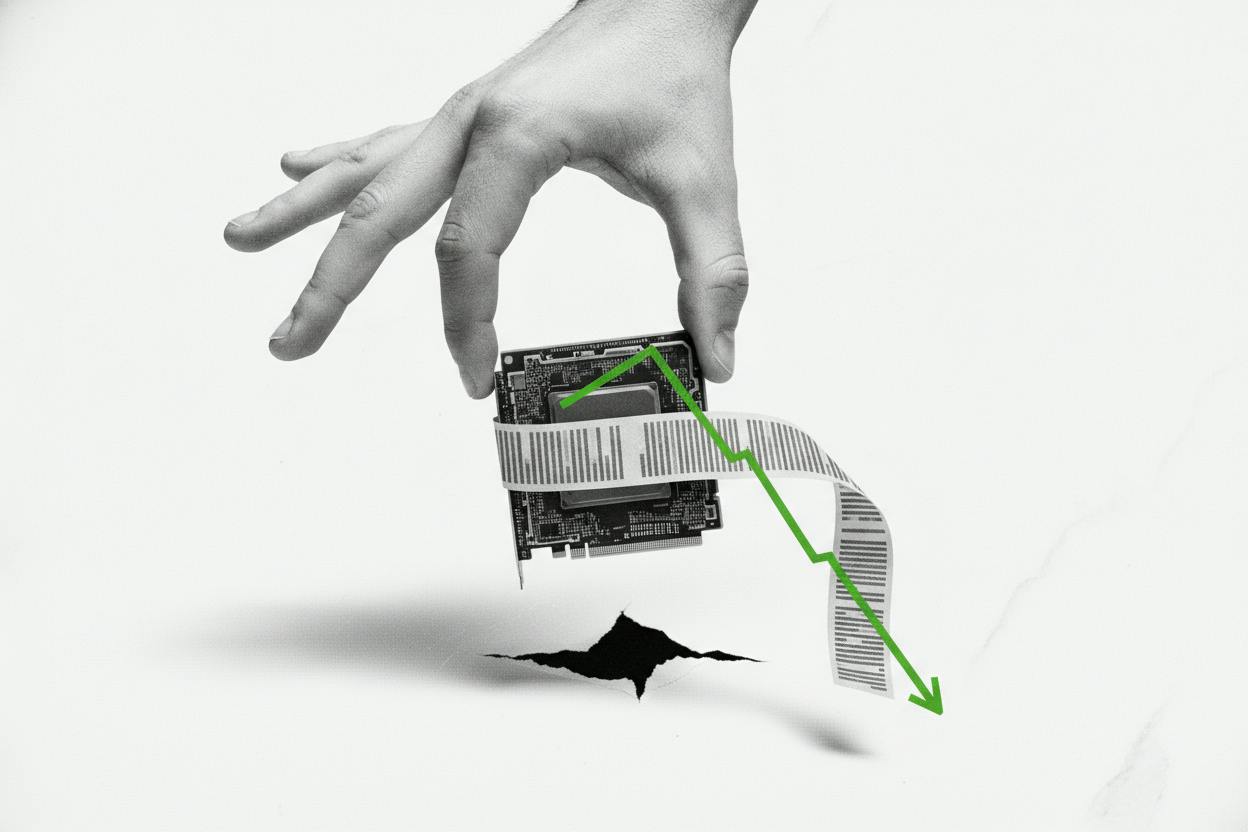
Asian markets opened higher on Tuesday, following a strong session on Wall Street where the Nasdaq led gains. The bounce was driven largely by a renewed appetite for AI-related stocks after Nvidia announced that Jensen Huang would return as CEO, a move that calmed nerves across the tech sector.
The rebound comes after a rough week for AI-linked equities, which had sold off sharply. Monday's rally served as a reminder that sentiment in this corner of the market can turn quickly when a bellwether company shifts the narrative. Nvidia sits near the center of the AI supply chain, so any leadership headline can have ripple effects across chipmakers and the broader tech-heavy Nasdaq.
Why Nvidia's CEO news matters
Nvidia is widely treated as a stand-in for the AI trade. Its chips are essential for training and running large language models, making it a key player in the AI boom. When investors hear positive news about Nvidia, they often interpret it as a signal that the entire AI ecosystem is on solid footing. That can reduce the perceived "worst-case" risk for other companies in the space, from semiconductor suppliers to cloud providers.
The leadership change was particularly notable because Huang's return had been anticipated after an 11-day absence. The news helped lift Asian tech benchmarks, with South Korea's KOSPI jumping 7.2% and Japan's Nikkei surging 4.6%. Other regional indexes, including New Zealand's NZX 50 and Australia's ASX, also posted solid gains.
The role of derivatives and volatility
Such "relief rallies" often show up first in the derivatives market. When investors feel less need to protect against a sharp drop, demand for options that hedge downside risk can cool. That tends to pull down implied volatility—the market's estimate of how much prices are likely to swing in the near future.
Lower implied volatility can then trigger mechanical flows. Some systematic funds, which adjust their exposure based on volatility levels, may add risk when volatility falls. Options dealers may also adjust their hedges in ways that amplify the market's direction. This can make rebounds feel sudden and broad, as we saw on Monday.
But the same channel can reverse quickly if the next big input surprises. That's why all eyes are now on the upcoming US inflation report.
US inflation data: the next test
Investors are bracing for new US inflation data, which could shift expectations for Federal Reserve interest rates. A hotter-than-expected reading might reignite fears of prolonged high rates, which tend to weigh on growth-oriented tech stocks. A cooler print, on the other hand, could reinforce hopes for rate cuts and extend the AI rally.
For traders watching Nasdaq-linked stocks, semiconductor supply chains, or Asian tech benchmarks that often take their cue from US futures, the inflation data is a key stress test. A surprise in either direction could flip positioning—and price swings—back the other way.
What it means for everyday investors
For everyday investors, the takeaway is that market moves driven by a single headline can be powerful but short-lived. Nvidia's CEO news provided a boost, but the broader trend will depend on economic fundamentals, particularly inflation and interest rates.
It's also worth remembering that volatility cuts both ways. While lower volatility can feel comforting, it often precedes larger moves. Investors should focus on their long-term goals rather than reacting to daily swings.
As always, diversification remains a key strategy. While AI stocks have been a bright spot, they can be volatile. A mix of asset classes can help smooth out the ride.
In the coming days, watch how markets react to the inflation data. If the print comes in as expected, the AI rally may continue. If it surprises, expect choppier waters ahead.