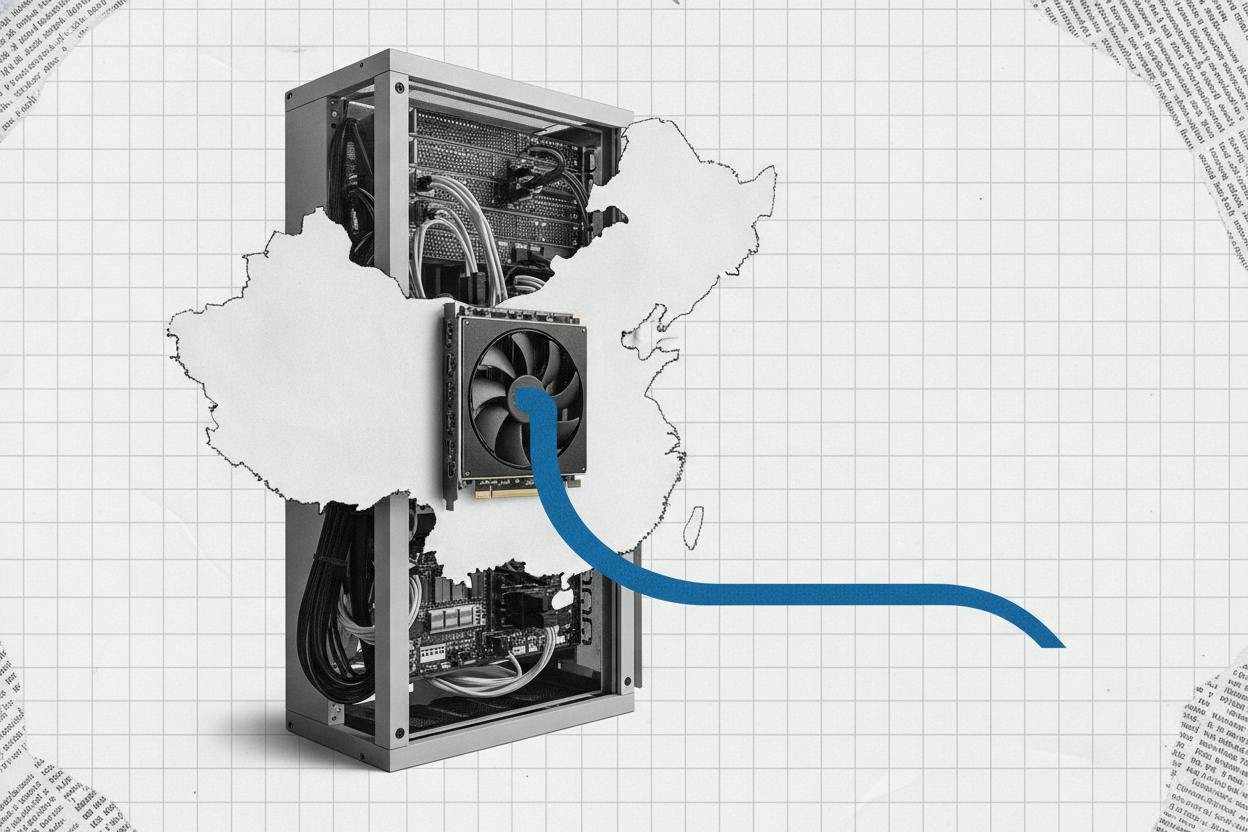
Chinese technology stocks took a sharp hit on Tuesday, with Shanghai's STAR 50 index falling 3.8%, after a report indicated that Nvidia is asking its cloud partners to generate at least 51% of their revenue from customers outside China. The broader Chinese market also slipped, but the pain was most acute in the tech sector, where investors are highly attuned to any development that could restrict access to advanced AI computing power.
Why Nvidia's cloud policy matters
Nvidia's graphics processing units (GPUs) are the industry standard for training and running large artificial intelligence models. Many companies, especially startups and smaller firms, do not buy these expensive chips outright. Instead, they rent computing power from cloud providers—companies that operate vast data centers filled with Nvidia chips and sell access to them over the internet.
If Nvidia requires its cloud partners to earn most of their revenue from customers outside China, those partners would have a strong incentive to prioritize foreign clients. For Chinese companies that rely on rented AI computing, this could mean reduced availability, higher costs, or both. The report, which has not been officially confirmed by Nvidia, suggests that the company is taking steps to limit the flow of its most advanced technology to the Chinese market, likely due to ongoing US export controls and national security concerns.
This is not the first time that AI-related worries have rattled Asian tech markets. Earlier this year, AI valuation concerns caused a similar selloff, as investors questioned whether the high prices of tech stocks were justified by their earnings potential. The current drop is different in nature—it is about supply, not valuation—but it underscores the same underlying fragility: the tech sector's heavy reliance on a handful of critical components and suppliers.
What this means for Chinese tech investors
For everyday investors, the key takeaway is that Chinese tech stocks are particularly vulnerable to geopolitical and regulatory shifts. The STAR 50 index, which tracks the 50 largest and most innovative companies on Shanghai's STAR Market, is often seen as a barometer for China's tech ambitions. A 3.8% drop in a single day is a significant move, and it reflects how quickly sentiment can turn when access to essential technology is threatened.
Investors should also note that this is not just about Nvidia. The broader issue is the growing divide between the US and China in the field of advanced semiconductors. As Washington tightens export controls and Beijing pushes for self-reliance, companies on both sides are being forced to adapt. For Chinese tech firms, that could mean higher costs, slower innovation, or a greater reliance on domestic chipmakers, which are still catching up to Nvidia's performance.
It's also worth remembering that the Chinese market has been under pressure for some time. Government rescue measures have so far failed to lift shares from one-year lows, and new support packages have been judged too small by many investors. The latest tech selloff adds to a picture of persistent weakness, even as other Asian markets show signs of recovery.
What to watch next
Investors will be watching for any official statement from Nvidia or its cloud partners, as well as for any signs that Chinese regulators might respond with measures to support the tech sector. The reaction of other Asian tech markets will also be telling—if the selloff spreads, it could signal broader concerns about the global AI supply chain.
For now, the message is clear: AI computing power is a strategic resource, and its availability is increasingly tied to geopolitics. For investors in Chinese tech, that means volatility is likely to remain high, and any news about chip access or export controls could trigger sharp moves. As always, it's important to focus on the long-term fundamentals of the companies you own, rather than reacting to every headline.
In the meantime, the broader Asian market context is mixed. Asian stocks have been sliding on a combination of MSCI index changes and AI-related jitters, while other sectors like palm oil and Vietnam's currency show their own distinct trends. But for tech investors, the focus remains squarely on the chips that power the AI boom—and who gets to use them.