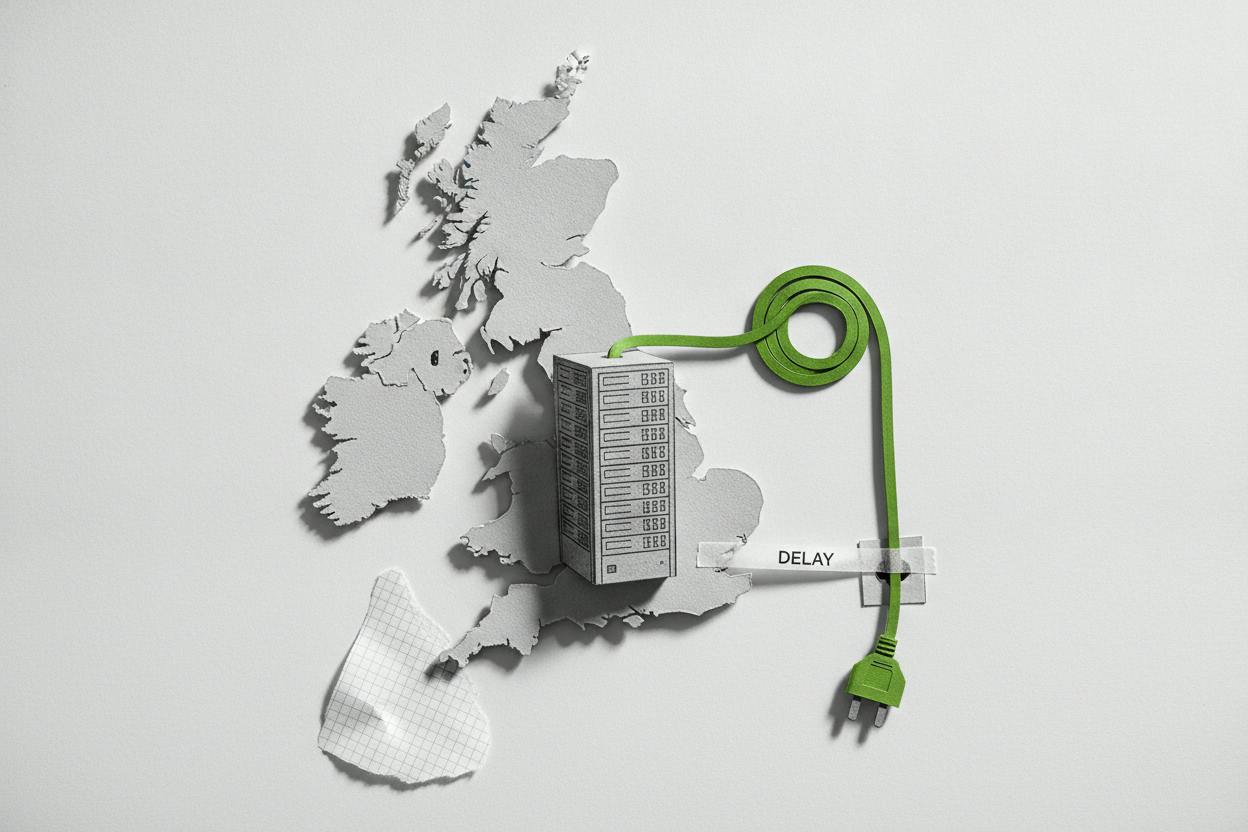
Anthropic, the AI startup behind the Claude chatbot, has signed a massive $35 billion contract with Lambda, an AI-cloud provider, to secure computing power. But the deal's most notable feature is who's holding the keys: Nvidia, the chipmaker that has become an increasingly important financial backer of the AI industry.
Under the agreement, Lambda will supply Anthropic with computing capacity using Nvidia's chips, while Nvidia holds the lease on the $20 billion, 700-megawatt data center in Texas that will power the arrangement. This structure is a sign of how AI companies are relying on creative financing to get the infrastructure they need.
Why Anthropic needs help
Anthropic is reportedly preparing for a potential initial public offering (IPO) that could value the company at around $2 trillion. To support its growth, it needs enormous computing power to train and run its AI models. But building or leasing data centers at that scale requires massive upfront capital.
Anthropic, like many AI startups, does not have an investment-grade credit rating. That makes it difficult to borrow the billions of dollars needed to finance such infrastructure on its own. Instead, it has turned to a growing trend in the AI world: the 'neocloud' providers that rent out processing power, and the chipmakers that help finance those deals.
Nvidia is invested in both Anthropic and Lambda, making it a natural middleman. By holding the lease on the data center, Nvidia effectively underwrites the deal, reducing the financial risk for the other parties while ensuring its chips are used.
Nvidia's expanding role
Nvidia has long been known as the dominant maker of AI chips, but its role is evolving. The company is increasingly acting as a financier, helping its customers get access to its hardware by providing or facilitating funding. This is a departure from the traditional chipmaker model, where companies simply sell chips and move on.
This strategy has helped Nvidia lock in demand for its products, even as some customers struggle to afford them. It also gives Nvidia a stake in the success of the AI companies it supports, potentially creating a virtuous cycle: the more successful these startups become, the more chips they need, and the more Nvidia benefits.
However, this approach also carries risks. If the AI market cools or if some of these startups fail, Nvidia could be left holding the bag on expensive leases and investments. So far, the strategy has paid off, but it's a factor investors should watch.
What it means for investors
For everyday investors, this deal is a reminder of the growing importance of compute in the AI industry. It's not just about software or algorithms; it's about the physical infrastructure that powers them. Companies that control that infrastructure, like Nvidia and the neoclouds, are in a strong position.
It also highlights the financial engineering behind the AI boom. As Anthropic shifts from buying AI chip startup MatX to partnering, it shows that even the most valuable startups are looking for ways to avoid massive capital expenditures.
For those invested in Nvidia, this deal is another sign of the company's growing influence. But it's worth noting that Nvidia's stock has already rallied significantly, and global stock funds saw their first outflows in 14 weeks ahead of Nvidia's earnings and the Jackson Hole symposium, suggesting some investors are taking profits.
The broader takeaway is that the AI boom is not just about technology; it's also about capital. As Asian stocks paused after a Nvidia-led rally as a Fed speech loomed, the market's focus remains on both the AI sector and the macroeconomic environment.
For now, Nvidia's role as a financier is a key part of its business model. Whether that's a strength or a vulnerability will depend on how the AI industry evolves. Investors should keep an eye on how these deals are structured and what they mean for the companies involved.