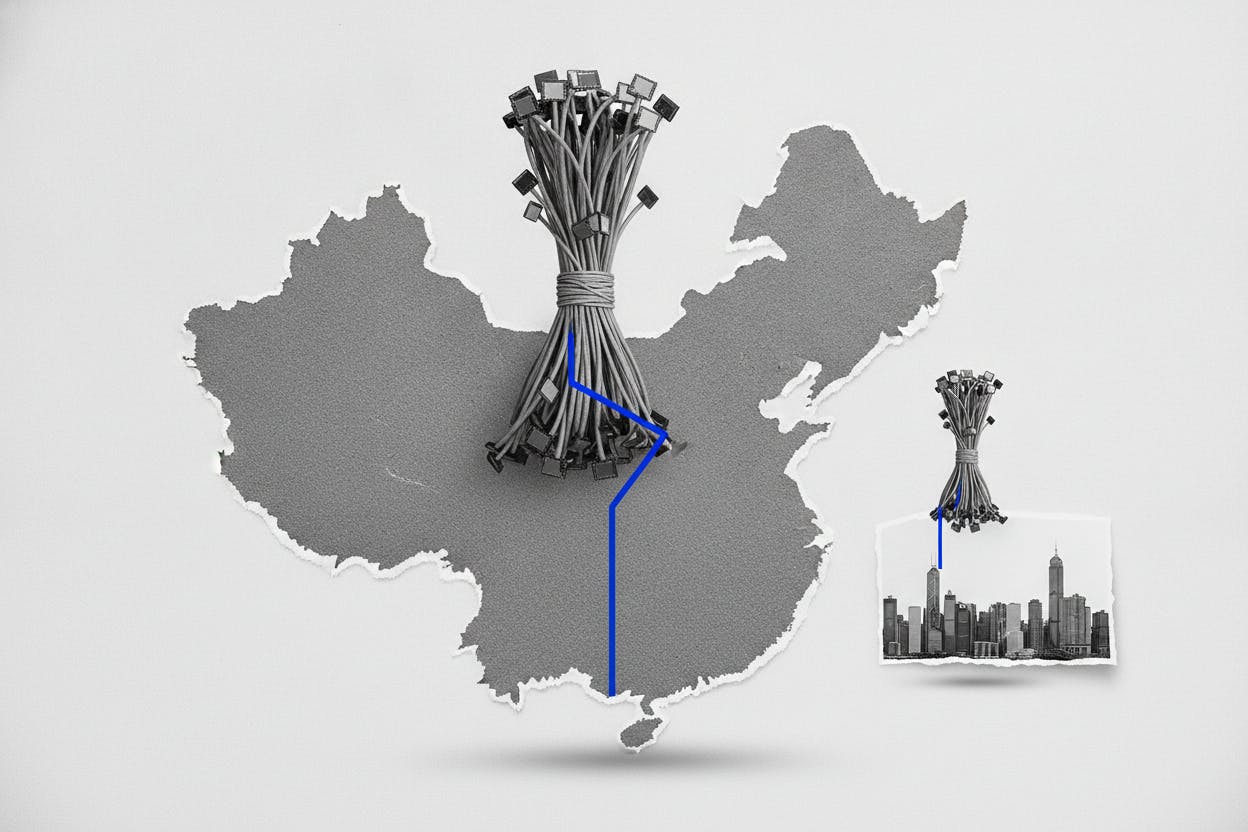
Nvidia's rosy outlook for artificial intelligence chips sent ripples through Asian markets on [day], with Chinese mainland stocks edging higher while Hong Kong shares slipped. The divergence highlights how different parts of the region's tech sector are reacting to the AI boom.
China's CSI 300 index, which tracks the largest companies listed in Shanghai and Shenzhen, rose 0.5%. In contrast, Hong Kong's Hang Seng index fell 0.4%. The split is largely explained by what each market is heavy in: mainland indexes are packed with hardware makers, while Hong Kong's tech scene leans toward internet platforms, according to Reuters.
Hardware stocks lead the charge
Onshore, the tilt toward hardware was unmistakable. The 5G Communication Index jumped 4.3%, onshore AI shares gained 3.5%, and the STAR50—a gauge of innovative tech companies on Shanghai's STAR Market—advanced 3.5%. These are the companies that build the physical infrastructure for AI: servers, networking gear, and the components that go into data centers.
Individual "picks-and-shovels" names also popped, including [specific companies if mentioned in the brief—none were provided]. These are the suppliers that benefit from the buildout of AI and 5G networks, regardless of which tech giants ultimately win the AI race.
The catalyst was Nvidia's projection of a 70% annual revenue jump, a signal that demand for AI chips remains red-hot. That forecast, delivered after the U.S. chip giant reported earnings, reassured investors that the AI spending boom is far from over. For Chinese hardware makers, that's a direct tailwind: they supply the servers, cooling systems, and networking equipment that go into the data centers powering AI.
Why Hong Kong lagged
Hong Kong's Hang Seng, by contrast, is dominated by internet and platform companies—think e-commerce, social media, and gaming. These firms are more exposed to consumer spending and regulatory dynamics than to the physical infrastructure of AI. So while Nvidia's news was a clear positive for hardware, it did little to lift the platform-heavy index.
This split is a reminder that "tech" is not a monolith. Within the same region, different tech sub-sectors can move in opposite directions based on where they sit in the AI value chain.
What it means for investors
For everyday investors, the key takeaway is that Nvidia's outlook is a global signal. When the world's most valuable chip company says AI demand is surging, it doesn't just move U.S. stocks—it ripples through supply chains in Asia, Europe, and beyond. As we noted in our coverage of Nvidia's AI demand outlook lifting Korean chip stocks, the effect is often strongest in markets with heavy semiconductor exposure.
But investors should also be cautious. The 70% growth projection is a company forecast, not a guarantee. AI spending cycles can be volatile, and a slowdown in Big Tech's capital expenditures—which we discussed in our piece on Nvidia's $108B forecast—would hit hardware suppliers hard. Diversification across sectors and geographies remains a prudent strategy.
Another angle: the strength in Chinese hardware stocks comes amid a broader backdrop of cooling factory profit growth, as we reported in China's factory profit growth cools. That suggests the AI-driven gains are concentrated in specific niches rather than a broad-based industrial recovery.
For those tracking the AI trade, the next thing to watch is whether Nvidia's optimism translates into actual orders for Chinese suppliers. If data center buildouts accelerate, hardware makers could see sustained demand. If not, today's gains could fade quickly.
In the meantime, the split between mainland and Hong Kong markets is a useful lesson in how index composition shapes market reactions. A single piece of news can have opposite effects on two neighboring markets, simply because of what's in each index.



