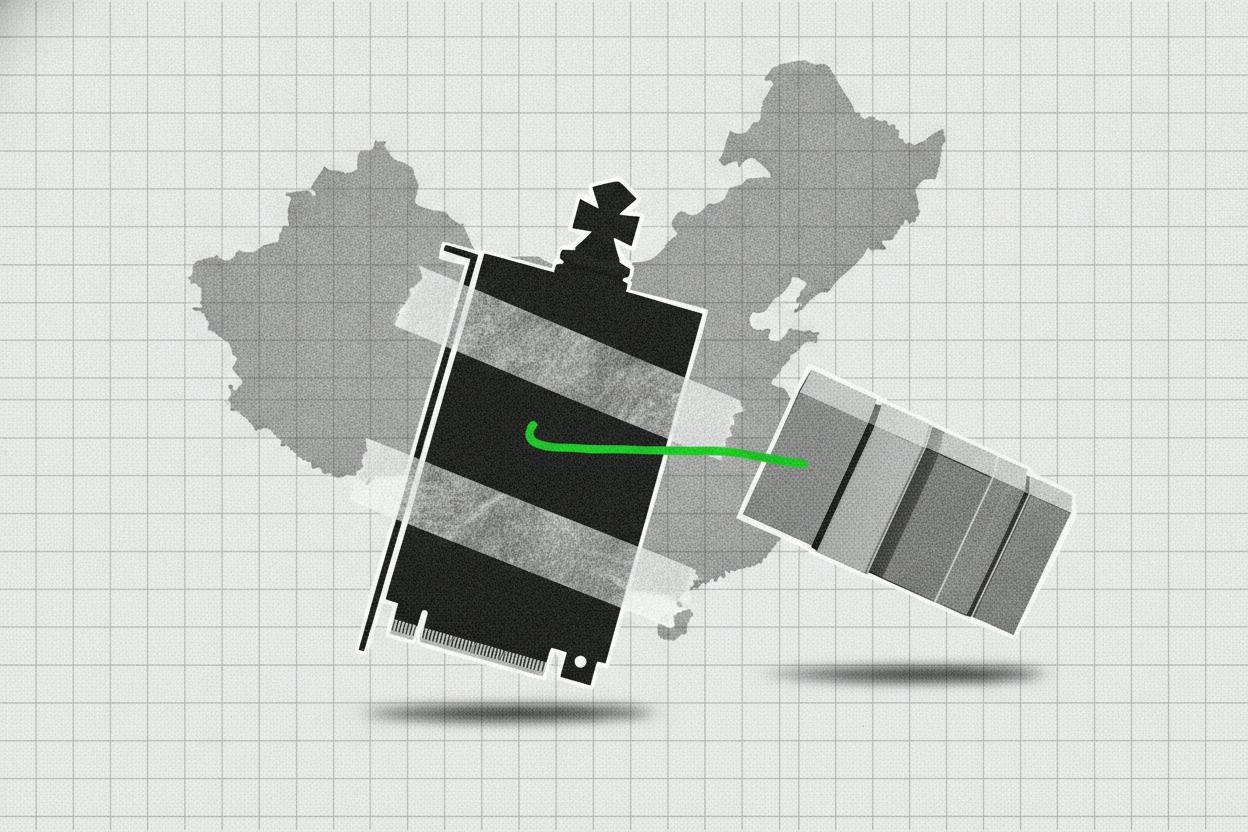
Nvidia's dominance in China's data-center AI chip market is eroding, according to new data from IDC cited by Reuters. The US chip giant's share fell to 34% in the first half of 2026, down from higher levels in previous periods, while domestic rival Huawei saw its share climb to 28%.
The numbers underscore a broader trend: as Washington tightens export controls on advanced semiconductors, Chinese buyers are increasingly turning to homegrown alternatives. For everyday investors, this is a reminder that even the most dominant tech companies face real limits when geopolitics and national industrial policy collide.
What the data shows
IDC's figures cover China's data-center AI chip market, the segment that powers the massive computing clusters used to train and run artificial intelligence models. Nvidia has long been the clear leader in this space globally, but its position in China has been under pressure since the US government began restricting exports of its most advanced chips to the country.
Huawei, once best known for smartphones and telecom equipment, has emerged as the main domestic alternative. Its Ascend line of AI processors has gained traction among Chinese cloud providers and state-backed enterprises, which are under pressure to reduce reliance on foreign technology.
The 34% vs. 28% split still leaves Nvidia ahead, but the gap is narrowing quickly. A year earlier, Nvidia's share was significantly higher, and Huawei was a distant second. If current trends continue, Huawei could overtake Nvidia in China within the next year or two.
Why Nvidia is losing ground
The main driver is US export policy. The Commerce Department has repeatedly tightened rules on selling advanced AI chips to China, citing national security concerns. Nvidia has tried to work around these restrictions by creating lower-spec versions of its chips specifically for the Chinese market, but those products still face regulatory hurdles and are less attractive to buyers who want cutting-edge performance.
At the same time, Beijing has made self-sufficiency in semiconductors a top priority. The government is pouring billions into domestic chipmakers and encouraging state-owned companies to buy local. Huawei, despite being on the US Entity List, has managed to develop competitive AI chips using older manufacturing processes and advanced packaging techniques.
This is not just a China story. Nvidia is also facing broader questions about the sustainability of the AI boom. As we've noted, AI's market dominance faces a rising earnings bar, and any sign that growth is slowing in a key market like China could weigh on the stock.
What it means for investors
For investors holding Nvidia stock, this news is a caution flag. China has historically been a major source of revenue for Nvidia, and losing share there could dent future growth. However, Nvidia's overall business is still expanding rapidly, driven by demand from US and European cloud giants like Microsoft, Amazon, and Google. The company's data-center revenue outside China remains robust.
Still, the trend is worth watching. If Huawei continues to gain ground, it could signal that China is becoming a less profitable market for Nvidia, forcing the company to rely even more on other regions. That concentration risk is something investors should keep in mind.
For those interested in the broader chip sector, this development highlights the growing importance of geopolitical factors in tech investing. Tariffs, export controls, and industrial policies can shift competitive dynamics quickly, as seen in other areas like China's trade data and the China EV import dilemma in Europe.
What to watch next
Investors should monitor several things in the coming months. First, Nvidia's quarterly earnings reports will reveal how much revenue it is still generating from China. Second, any changes to US export rules could either ease or tighten the pressure. Third, Huawei's ability to scale up production of its Ascend chips will determine how quickly it can close the gap.
Also worth watching is the broader competition in AI chips, including Microsoft's AI chip plans and Nvidia-Amazon deal chatter, which could reshape the market. And for context on how central banks and currencies are moving, see Japan's bond market splits.
For now, the takeaway is simple: Nvidia is still the leader in AI chips, but its grip on China is slipping. That doesn't mean the company is in trouble, but it does mean investors should pay attention to how the geopolitical landscape evolves. As always, diversification and a long-term perspective are key.