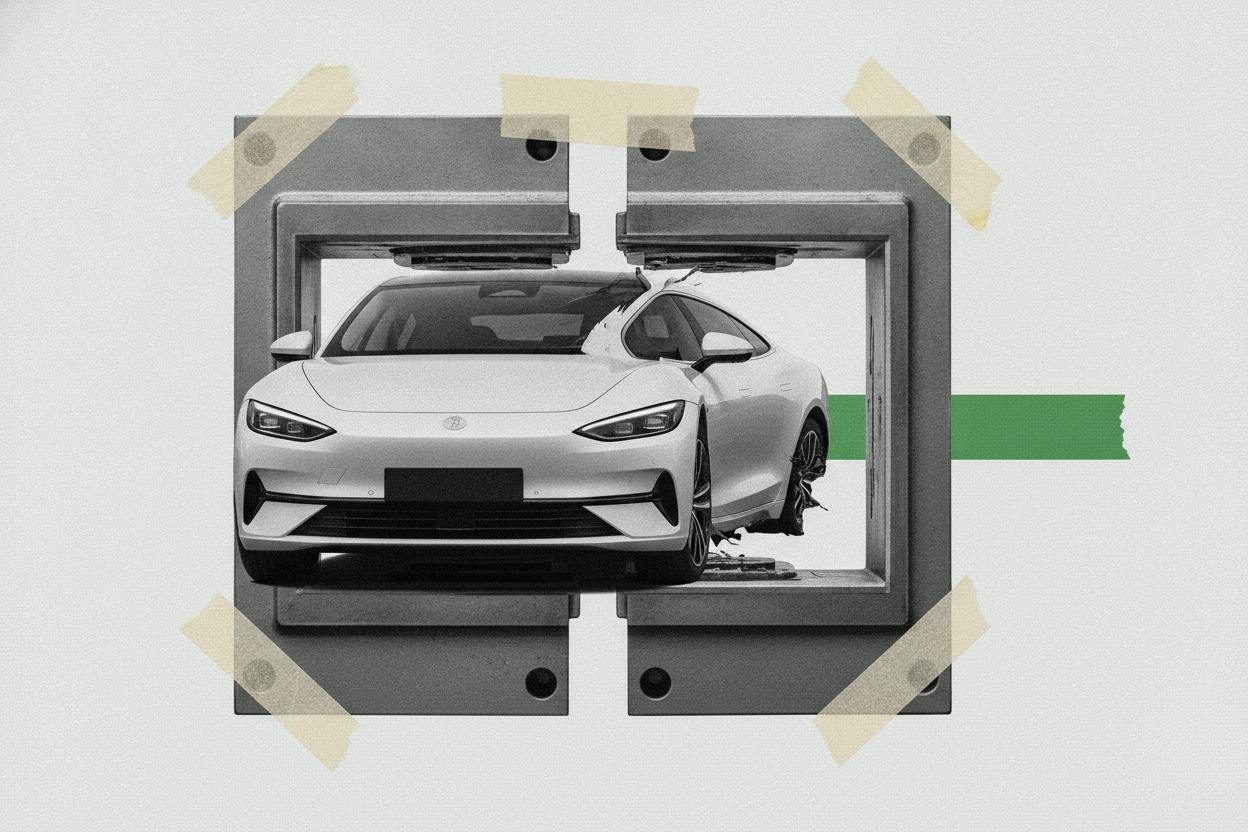
The Paris Auto Show kicked off this week with European and Chinese automakers unveiling dozens of new models — up to 60 in total — against a backdrop of tense trade negotiations. EU and Chinese officials are reportedly discussing a cap on Chinese hybrid imports at 350,000 vehicles a year, a move that could reshape how the world's two biggest car markets do business.
Why Europe has become the battleground
Europe has emerged as the key growth market for Chinese carmakers. Sales at home have weakened, and the US market is largely closed to them due to tariffs and political pressure. That leaves Europe as the main outlet for Chinese brands looking to expand globally.
Chinese customs data show hybrid exports to the EU tripled to $7.5 billion in the first half of this year. That surge helps explain why the European Commission says it has a tentative deal with China to limit volumes, even if the mechanics are still unclear.
Analysts at Jefferies estimate that BYD, Chery, and SAIC's MG account for about 90% of Chinese-brand hybrid sales in the EU so far this year. Any cap would likely land hardest on those three companies, which have been aggressively building market share with competitively priced models.
European incumbents fight back
European automakers are not standing still. They are trying to defend their home turf with cheaper electric options and new partnerships. Stellantis, for example, plans to build small electric vehicles (EVs) in Italy on a platform developed with China's Leapmotor. That deal shows how European companies are using Chinese technology to cut costs while keeping production local.
The EU has already imposed tariffs on China-made EVs, and Brussels is pushing for "Made in Europe" local-content rules. Taken together, the message to Chinese brands is shifting from "ship more cars" to "build more of them here."
What a cap would mean for Chinese automakers
A hard ceiling on hybrid imports wouldn't just slow volumes — it would make finished-car shipping a less reliable growth route. With local-content rules added, the easiest way to stay competitive becomes assembling vehicles in Europe and sourcing more parts locally, often through joint ventures and supply-chain investment.
That shift could move the competitive fight from ports and tariffs to factories and capacity. Companies with credible European production plans or partners would be better positioned. Deals like Geely building electric SUVs at a Ford plant in Spain, and Stellantis leaning on its Leapmotor partnership for Italian production, matter because they turn a trade constraint into a manufacturing footprint inside the region.
What it means for investors
For investors, the key takeaway is that the rules of the game are changing. Chinese automakers that can adapt by building in Europe may still thrive, but those that rely on shipping finished cars could see their growth stall. European incumbents that partner with Chinese firms to cut costs could defend their market share, but they also face the risk of depending on a competitor for key technology.
The broader picture is one of a global auto industry being reshaped by trade policy. Tariffs, caps, and local-content rules are becoming as important as engineering and design. Investors should watch how companies respond — whether they invest in European factories, form new alliances, or pivot to other markets.
Related coverage: China lithium futures plunge on EU hybrid export deal and Volkswagen's China sales tumble.