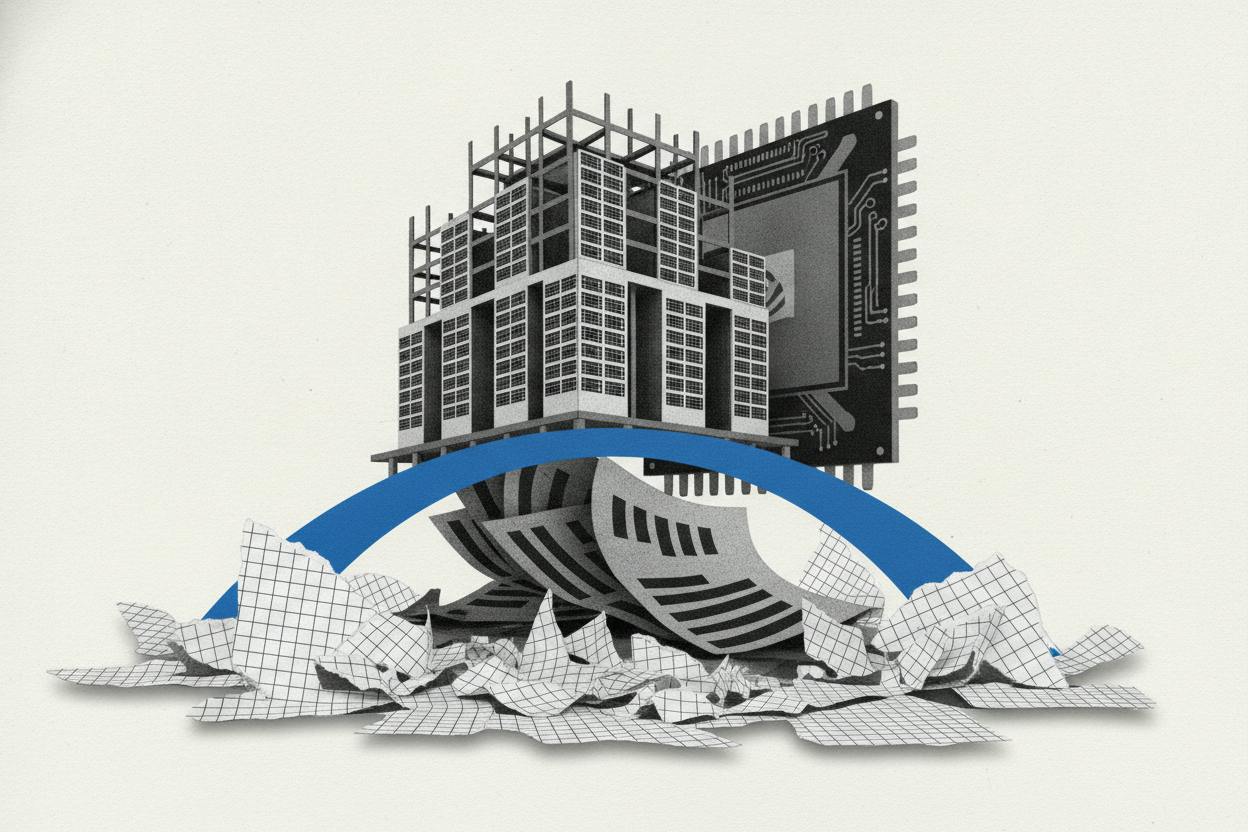
Nvidia is in talks to provide billions of dollars in credit guarantees to Nscale, an AI cloud provider, so the company can borrow money more cheaply to build a data center campus in West Virginia, according to a report from The Information. The facility is expected to be used by Anthropic, the AI developer behind the Claude family of models.
The discussions are not yet final, and the exact size and structure of any guarantee remain unclear. But the talks offer a window into how the AI buildout is being financed — and how the companies at the center of it are increasingly being asked to put their own balance sheets on the line.
Why a credit guarantee matters
A credit guarantee is a promise from one party to repay a borrower's debt if the borrower defaults. For a lender, that reduces the risk of the loan. For the borrower, it can mean a lower interest rate and access to more capital than it could get on its own.
That matters because AI data centers are expensive in ways that go well beyond the servers inside them. Building a large campus requires land, power connections, cooling systems, construction labor and years of lead time. Much of that spending happens before the facility generates any revenue. Companies in this position often need to borrow heavily up front, and lenders tend to demand higher rates when the borrower is a younger, less proven business.
Nvidia's involvement could change that math. As one of the world's most valuable companies and a central supplier to the AI industry, its backing would carry significant weight with lenders. A guarantee from Nvidia would effectively transfer some of the project's risk onto the chipmaker, which could make banks and other financiers more willing to lend at attractive terms.
Nvidia's growing role beyond chips
Nvidia is best known for designing the graphics processors that power AI training and inference. But the company has been steadily expanding its role in the broader AI ecosystem, including through investments, partnerships and supply agreements with cloud providers and data center developers.
That expansion has not gone unnoticed by regulators and investors. Questions have been raised about whether Nvidia's investments in companies that also buy its chips create circular relationships, and whether the company is effectively financing demand for its own products. Nvidia has defended its business relationships, including its ties to overseas partners, as legitimate and commercially driven.
The reported talks with Nscale fit that broader pattern. If Nvidia helps a data center developer borrow cheaply, that developer can build faster — and, in turn, buy more Nvidia hardware. Anthropic, which would use the West Virginia campus, is one of the largest buyers of AI compute and a major customer of cloud providers that run Nvidia chips.
The AI financing boom under scrutiny
The scale of AI-related borrowing has become a topic of intense interest on Wall Street. Data center projects are being financed with a mix of equity, bank debt and increasingly complex structures, and the total sums involved are enormous by historical standards.
That has led to growing scrutiny of whether the spending is sustainable. Analysts and investors have started paying closer attention to cash flow at the big tech companies funding the buildout, and to whether the revenue from AI services will arrive quickly enough to justify the investment.
There are already signs of friction in the financing market. Banks have found themselves exposed to large AI-related loans when projects hit delays, as happened with a Texas data center loan tied to Anthropic. Those episodes highlight the risks that come with lending against projects that are still under construction and dependent on a small number of large customers.
Against that backdrop, a guarantee from Nvidia would be a notable vote of confidence — both in Nscale and in the broader idea that AI compute demand will keep growing.
What it means for investors
For ordinary investors, the story is less about Nscale, which is privately held, and more about what it says about the AI trade.
- Nvidia's influence is widening. The company is moving from selling chips to helping finance the infrastructure those chips run in. That could support demand for its products, but it also concentrates more of the AI ecosystem's risk in one place.
- Debt is becoming a bigger part of the AI story. As projects get larger, equity alone is not enough. How that debt is structured — and who ultimately guarantees it — will matter for the stability of the buildout.
- Watch the suppliers. Companies that sell into data center construction, from electrical equipment to cooling systems, are sensitive to whether projects move forward on schedule. Nvidia's backing could help keep timelines on track.
- Scrutiny is rising. Regulators and investors are asking harder questions about circular deals and off-balance-sheet commitments. Any formal Nvidia guarantee would likely draw attention on that front.
Investors should also keep an eye on Anthropic's role. The AI developer has been expanding its compute footprint rapidly, and its choice of partners and locations offers a read on where the next wave of data center spending is headed. Related developments, such as Oracle's ambitious AI revenue targets, show how much of the market's optimism is tied to the same underlying bet.
For now, the Nvidia-Nscale talks are just that — talks. But they illustrate a broader truth about the AI boom: the biggest constraint is no longer ideas or chips, but the capital and infrastructure needed to turn them into working data centers.