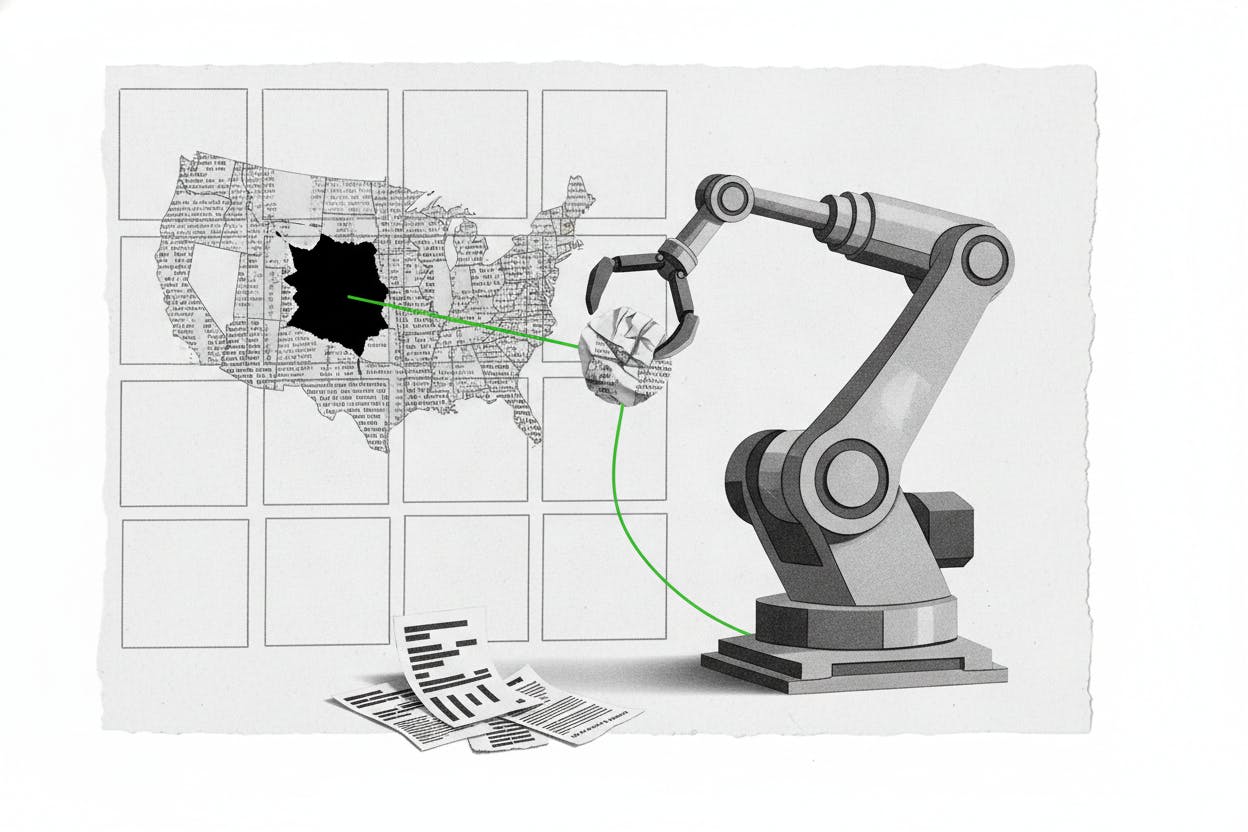
Ocado, the British online grocery technology company, is actively seeking new retail partners in the United States after two major clients—Kroger and Sobeys—scaled back their plans for its robotic warehouse systems. The company confirmed it is in talks with multiple US retailers, according to Reuters, as it looks to rebuild momentum in a market that has been central to its growth strategy.
What Happened
In its half-year results, Ocado reported a boost from termination fees paid by partners who exited or reduced their commitments. However, the company maintained its timeline for achieving positive cash flow, signaling that the financial impact of those departures has not derailed its long-term plans. Ocado shares have fallen 36% over the past six months, reflecting investor concerns about the pace of new partnerships and the profitability of its technology licensing model.
Ocado's robotic fulfillment centers—automated warehouses that use AI and robotics to pack grocery orders—are designed to help traditional retailers compete with Amazon and other online players. The company licenses its technology to partners like Kroger in the US, Sobeys in Canada, and Morrisons in the UK, earning fees for system design, installation, and ongoing royalties.
Why It Matters
The US grocery market is the world's largest, and Ocado's success there is critical to its valuation. Kroger, which had planned to build 20 Ocado-powered warehouses, has slowed its rollout, and Sobeys has similarly scaled back. These moves have raised questions about whether Ocado's technology can deliver the cost savings and efficiency gains that retailers expect.
Ocado's hunt for new US partners comes as the broader retail sector faces headwinds. June retail sales are expected to rise 0.2% headline, but core demand is seen stronger at 0.5%, suggesting consumer spending remains resilient but uneven. In Germany, retailers are being squeezed as costs rise and sales fall, a pattern that could also affect US grocers.
For everyday investors, Ocado's situation highlights the risks of betting on a single technology provider in a competitive industry. The company's stock has been volatile, and its path to profitability depends on signing new clients and retaining existing ones. The termination fees in the half-year results provide a short-term cushion, but they are not a sustainable source of revenue.
What to Watch Next
Investors will be watching for announcements of new US partnerships, which could restore confidence in Ocado's growth story. The company's ability to convert its current talks into signed deals will be a key indicator of whether its technology still appeals to retailers. Also important: the timing of cash flow positivity, which Ocado has not pushed back despite the recent setbacks.
Ocado's experience also reflects broader trends in the grocery industry. Traditional retailers are investing heavily in automation and e-commerce to compete with Amazon and discount chains. China's ambitious 60 trillion yuan retail sales target for 2030 shows how governments are betting on retail growth, but the US market remains the biggest prize for companies like Ocado.
Meanwhile, the company's technology is also being tested in other sectors. Williams Partners with Blackstone, Apollo, KKR to fund $5.34B AI power projects, highlighting how automation and AI are driving investment across industries. Ocado's robotic systems are part of this trend, but the company must prove they can deliver consistent returns for its retail clients.
What It Means for Investors
Ocado's stock decline over the past six months reflects real challenges, but the company still has a strong technology platform and a presence in multiple markets. The half-year results show that termination fees can provide a buffer, but they are not a substitute for recurring revenue from active partnerships.
For investors, the key question is whether Ocado can sign new US retailers quickly enough to offset the loss of Kroger and Sobeys' expansion plans. If it succeeds, the stock could recover. If not, the company may face further pressure to cut costs or adjust its business model.
As always, investors should consider their own risk tolerance and diversification. Ocado is a high-growth, high-risk stock that depends on the success of its technology licensing model. The next few months will be crucial in determining whether its US strategy can get back on track.