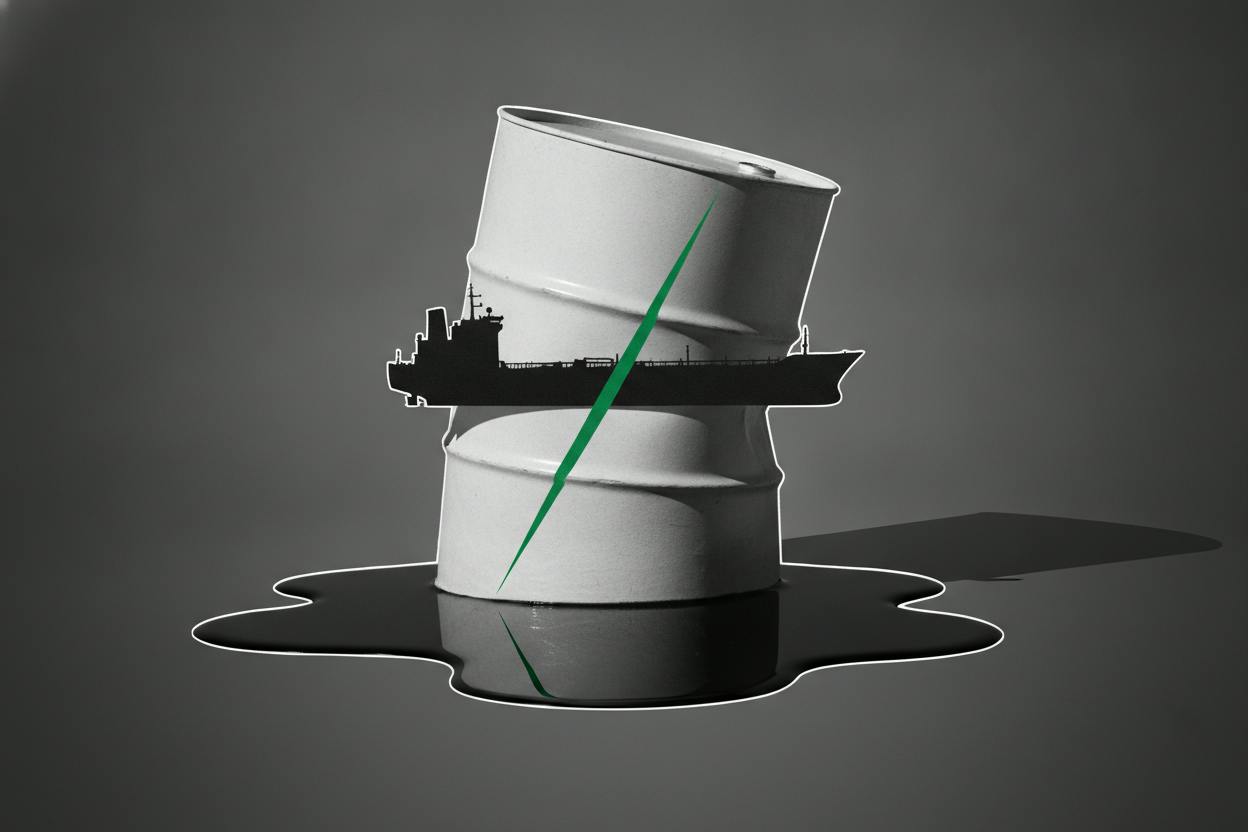
Oil prices are on track for their biggest weekly decline since 2020, as traders bet that tensions involving Iran could cool. Brent crude was modestly higher on Friday, but the benchmark was still set for a sharp weekly loss, reflecting a broad retreat in the so-called “fear premium” that had built into prices during the recent conflict.
That premium—the extra cost that traders attach to oil when geopolitical risk rises—has been shrinking as political signals point toward possible de-escalation. If tensions ease, the chance of major supply disruptions falls, and more barrels could eventually reach global markets. That repricing has been the main driver behind the week’s slide.
Shipping risk remains a wildcard
But the market’s calm is not complete. Reuters reported continued attacks on vessels around the Gulf, and the UK Maritime Trade Operations (UKMTO), a shipping monitor linked to the UK Navy, said the pace of incidents remains close to record levels. These attacks matter because they don’t just affect sentiment—they have a direct, mechanical impact on how oil moves around the world.
When tankers face threats, shipping companies may reroute vessels, which adds time and cost. Freight rates and insurance premiums rise, and some operators resort to ship-to-ship transfers to avoid the most dangerous zones. All of this ties up tanker capacity, effectively reducing the amount of crude that can be delivered promptly.
In other words, even if the market believes that overall supply and demand are loosening, these logistical constraints can keep near-term deliveries supported and make short-dated prices more volatile.
What it means for investors
For everyday investors, the key takeaway is that oil prices can move for two very different reasons. One is the big-picture outlook for supply and demand. The other is the day-to-day friction of getting crude from where it is produced to where it is consumed.
This week, the first factor has been pushing prices down. But the second factor—the shipping squeeze—has not gone away. That is why, even as Brent heads for its steepest weekly drop since 2020, the market could remain jumpy. Front-month contracts may stay supported, and Middle East physical signals like spot premiums and “time spreads” (the gap between near-term and later delivery prices) could stay tight.
For investors, this means volatility is likely to persist. A headline about de-escalation can send prices lower quickly, but a fresh attack or a new disruption can just as easily reverse the move. The reaction of regional stock markets to oil price swings shows how closely investors are watching these developments.
Broader market context
The oil market’s weekly drop comes alongside other commodity moves. Copper, for example, is heading for its biggest weekly decline since March as a selloff in AI-related stocks cools demand hopes. That suggests a broader risk-off tone in markets, even as oil’s decline is specifically tied to geopolitics.
For energy companies, lower oil prices can pressure profits, though many producers have been benefiting from recent strength. EOG Resources and Devon Energy both reported strong results recently, helped by higher crude prices. If the weekly drop extends, those tailwinds could fade.
For consumers, lower oil prices could eventually mean cheaper petrol and heating costs, which would be a welcome relief. But the shipping constraints mean that relief may not arrive as quickly as the futures market suggests.
The bottom line
Oil’s steep weekly fall is a clear sign that traders are becoming more optimistic about the geopolitical outlook. But the near-record pace of tanker attacks is a reminder that the physical market remains fragile. Investors should expect continued swings in oil prices, and by extension, in energy stocks and fuel costs, until there is clearer evidence that both the politics and the shipping lanes are truly calming down.