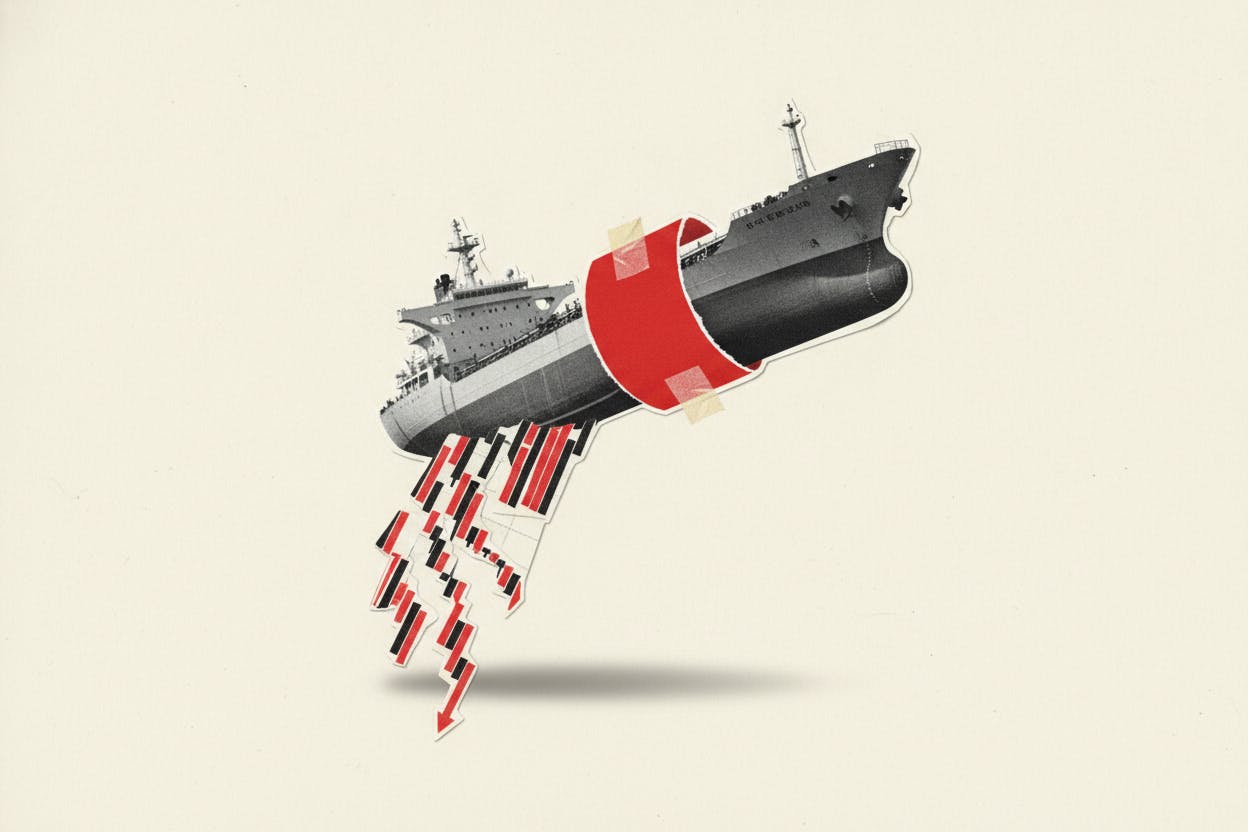
Oil prices surged and US stocks slid Tuesday after President Donald Trump announced the US is reinstating a naval blockade of the Strait of Hormuz and floated a 20% toll on all cargo moving through the strategic waterway. The comments rattled markets already on edge about geopolitical risk, sending Brent crude up 9.7% to $83.41 a barrel and US crude up 9.5% to $78.16.
The move marks a sharp escalation in US-Iran tensions and directly threatens a chokepoint that handles roughly one-fifth of the world's oil shipments. Investors quickly priced in higher disruption risk, not just for oil but for the broader global supply chain that depends on the narrow passage between the Persian Gulf and the Gulf of Oman.
What Happened
President Trump said the US would reinstate a naval blockade of the Strait of Hormuz, according to reports. CNN later confirmed that US Central Command (CENTCOM) will resume the blockade at 4 p.m. ET Tuesday. Trump also floated a 20% toll on all cargo shipped through the strait, a proposal that would effectively act as a tariff on energy and other goods passing through the route.
The Strait of Hormuz is a narrow waterway bordered by Iran and Oman, through which about 20 million barrels of oil and petroleum products pass daily. Any disruption there can quickly ripple through global energy markets, as seen in previous confrontations between the US and Iran.
For context, the US has imposed naval blockades on Iran in the past, most notably during the Iran-Iraq war in the 1980s. But the addition of a cargo toll is a new twist that could have longer-lasting effects on shipping costs and inflation.
Market Reaction: Oil Up, Tech Down
The immediate market response was a sharp divergence between energy and technology stocks. The energy sector rose 3.2% as oil prices soared, while the tech-heavy Nasdaq fell 1.6%. The broader market also felt the sting: the VIX, a measure of expected stock market volatility often called the "fear index," jumped 14% to 17.16.
Bond markets reflected growing inflation worries. The two-year Treasury yield stood at 4.28% and the 10-year yield at 4.63%, as traders weighed what higher energy costs could mean for future Federal Reserve interest rate decisions. Rising yields tend to pressure stocks, especially those with high valuations and long-dated cash flows, like many technology companies.
This split between energy and tech is a classic pattern when geopolitical shocks hit. Energy stocks benefit directly from higher oil prices, while tech stocks are more sensitive to interest rate expectations and the broader economic outlook.
Why a 20% Toll Matters More Than a Blockade
While a naval blockade is a dramatic step, the bigger near-term issue for investors may be the proposed 20% toll on cargo. A blockade headline can fade if tankers keep sailing, but a stated charge on all cargo shipped through the strait can push prices up even without a full supply outage.
Here's how it works: shippers face higher insurance premiums, increased security costs, and the toll itself. They pass those costs on to buyers, raising the delivered price of oil, natural gas, and other goods that transit the strait. That kind of inflation pulse tends to pressure long-duration stocks, where a lot of value depends on profits far in the future and is sensitive to interest rates.
That's why the same session that saw Brent at $83.41 also featured weaker tech, firmer Treasury yields, and a jump in volatility. Investors are essentially pricing in a higher cost of capital for companies that rely on future growth.
What It Means for Investors
For everyday investors, the key takeaway is that geopolitical events can quickly reshape market dynamics. The Strait of Hormuz is not just an oil story—it's a global supply chain story. A 20% toll would act like a tariff on energy and everything else that crosses the strait, potentially boosting inflation and delaying any Fed rate cuts.
This development also highlights the importance of diversification. While energy stocks rallied, tech stocks suffered, and bond yields rose. Investors with a mix of assets may be better positioned to weather such shocks.
Looking ahead, markets will watch for any actual disruption to tanker traffic through the strait, as well as any diplomatic moves to de-escalate tensions. For now, the oil spike and tech slide serve as a reminder that geopolitics can hit prices through a shipping bottleneck as much as through lost barrels.
Related reading: Oil Surges 7% on Report Trump Weighs 20% Toll on Strait of Hormuz Shipping, Stocks Dip as Trump Proposes 20% Toll on Hormuz Strait Cargo, and Stocks Diverge as Iran Strait Closure Sends Oil Surging, Tech Slides.



