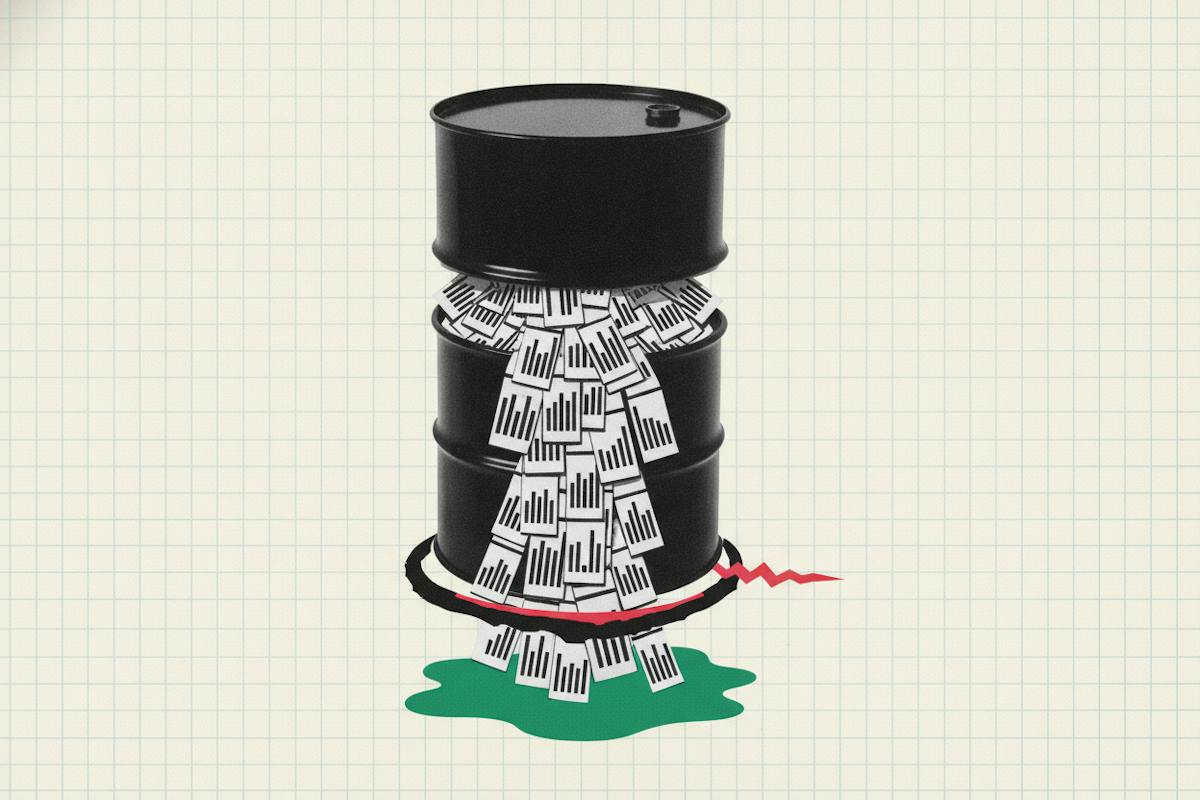
Oil prices eased on Wednesday, giving back some of the previous session's gains, as traders weighed rising shipping risks near the Strait of Hormuz against a growing sense that global supply is starting to outpace demand.
Brent crude, the international benchmark, slipped 0.5% to $90.97 a barrel, while U.S. West Texas Intermediate (WTI) fell 0.6% to $81.58. The moves reversed part of Tuesday's advance, when prices had climbed on concerns about potential disruptions to tanker traffic in the key Middle East shipping lane.
IEA warns of a fourth-quarter surplus
The main drag on prices came from the International Energy Agency (IEA), the global energy watchdog, which said on November 13 that the market could swing back into a fourth-quarter surplus. The agency noted that Middle East exports are recovering faster than demand, a shift that could leave more barrels on the market than buyers need.
A surplus typically puts downward pressure on prices, as it means supply is ample relative to consumption. The IEA's assessment adds to a narrative that has been building for weeks: that the world may not be as short of oil as some had feared, even with ongoing geopolitical tensions.
Supply headlines reinforced that tone. Libya's Sharara oilfield, one of the country's largest, restarted its pipeline after a shutdown, restoring some output. Meanwhile, Iraq is pressing OPEC+ to revise up its assessed production capacity ahead of a review that influences how much each member is allowed to pump.
OPEC+ talks and the Hormuz factor
Traders are also looking ahead to OPEC+ quota talks scheduled for November 29. The group, which includes major producers like Saudi Arabia and Russia, has been cutting output to support prices. But with demand concerns growing, the question is whether they will extend those cuts or start to unwind them.
At the same time, the risk of shipping disruptions near the Strait of Hormuz—a narrow waterway through which a large share of the world's oil travels—remains a wildcard. Any escalation there could quickly tighten supply and push prices higher, as recent attacks on ships have shown. But so far, the market seems more focused on the surplus outlook than on the geopolitical risk.
What it means for investors
For everyday investors, the tug-of-war between supply and demand is worth watching because oil prices ripple through the broader economy. Lower oil prices can mean cheaper gasoline and heating costs, which helps consumers but can weigh on energy company profits.
Energy stocks, which had been a bright spot earlier in the year, may feel the pinch if prices keep sliding. On the other hand, sectors that rely heavily on fuel, like airlines and shipping, could benefit from lower input costs.
The upcoming OPEC+ meeting is a key event to watch. If the group signals deeper or longer production cuts, prices could rebound. If they instead raise output, the surplus could grow, pushing prices down further.
For now, the market seems to be in a wait-and-see mode, balancing the immediate risks in the Middle East against the longer-term supply picture. As recent price moves have shown, sentiment can shift quickly.
Investors with exposure to oil—whether through energy stocks, ETFs, or even their pension funds—should keep an eye on both the geopolitical headlines and the fundamental supply-demand data. The two forces are pulling in opposite directions, and the balance could tip either way.