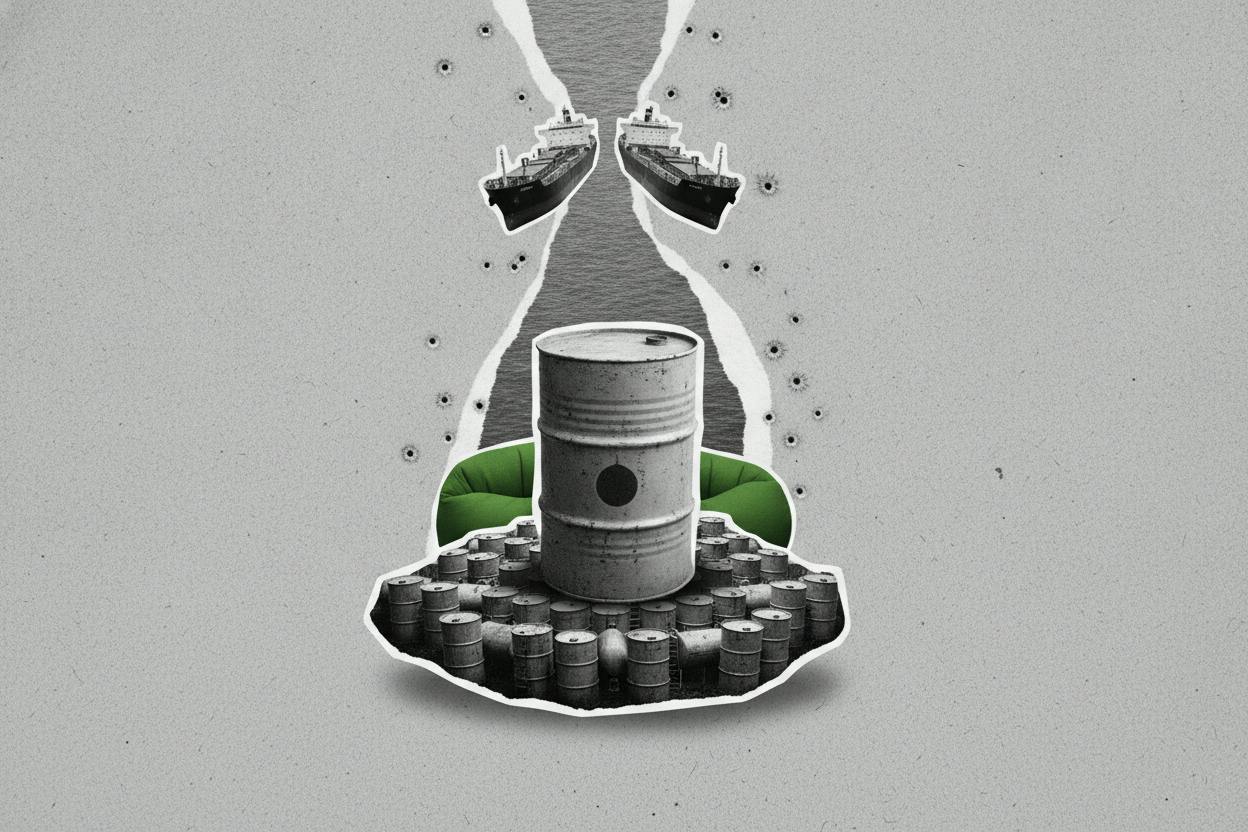
Oil prices climbed on Tuesday after reports of new attacks on vessels near the Strait of Hormuz, a critical chokepoint for global crude shipments. But the rally quickly cooled as traders focused on mounting evidence that the market is awash in supply.
Brent crude, the international benchmark, rose $1.15 to settle around $90.52 a barrel, while U.S. benchmark West Texas Intermediate (WTI) gained $1.16 to roughly $81.33, according to Reuters. The moves came after Iran's Revolutionary Guards said a container ship was targeted near the strait, and the UK Maritime Trade Operations office reported that three vessels were hit by unidentified projectiles while sailing east. All ships continued on their journeys and crews were reported safe.
Why the rally faded
The fact that no actual outage occurred is key. When tankers keep moving, the immediate impact is usually higher freight and insurance costs, not a sustained jump in crude prices. Traders are reluctant to build a lasting "risk premium" into prices unless there is proof of real supply disruption.
That reluctance is reinforced by the supply picture. Deutsche Bank noted that global observed liquids inventories rose in October, implying an oversupply of about 1.7 million barrels per day. A preliminary Reuters poll also pointed to another weekly build in U.S. crude and fuel stockpiles. With such a cushion, the market can absorb geopolitical shocks without panic buying.
This dynamic echoes recent trends. Earlier in the month, oil hit a three-month low as supply fears outweighed Hormuz risks, and prices have been drifting lower on persistent oversupply signals. The attacks add a fresh layer of uncertainty, but they haven't changed the fundamental balance.
What it means for investors
For everyday investors, the takeaway is that geopolitical events can still move oil prices, but often only briefly. In a market drifting into surplus, extra inventories act like shock absorbers. They reduce the need for a large "just in case" premium unless attacks start forcing reroutes, delays, or outright shutdowns.
The key indicator to watch isn't the first spike in Brent, but the shape of the futures curve. If the very front of the curve stays stronger than later months, that signals immediate tightness. If it quickly relaxes, the market sees enough buffer to ride out the tension.
For those with exposure to energy stocks or oil-linked investments, this means volatility may continue, but the underlying trend is toward lower prices unless supply is genuinely disrupted. As always, it's wise to focus on long-term fundamentals rather than reacting to daily headlines.
Related reading: oil's recent slide on supply fears and how Gulf markets are reacting.