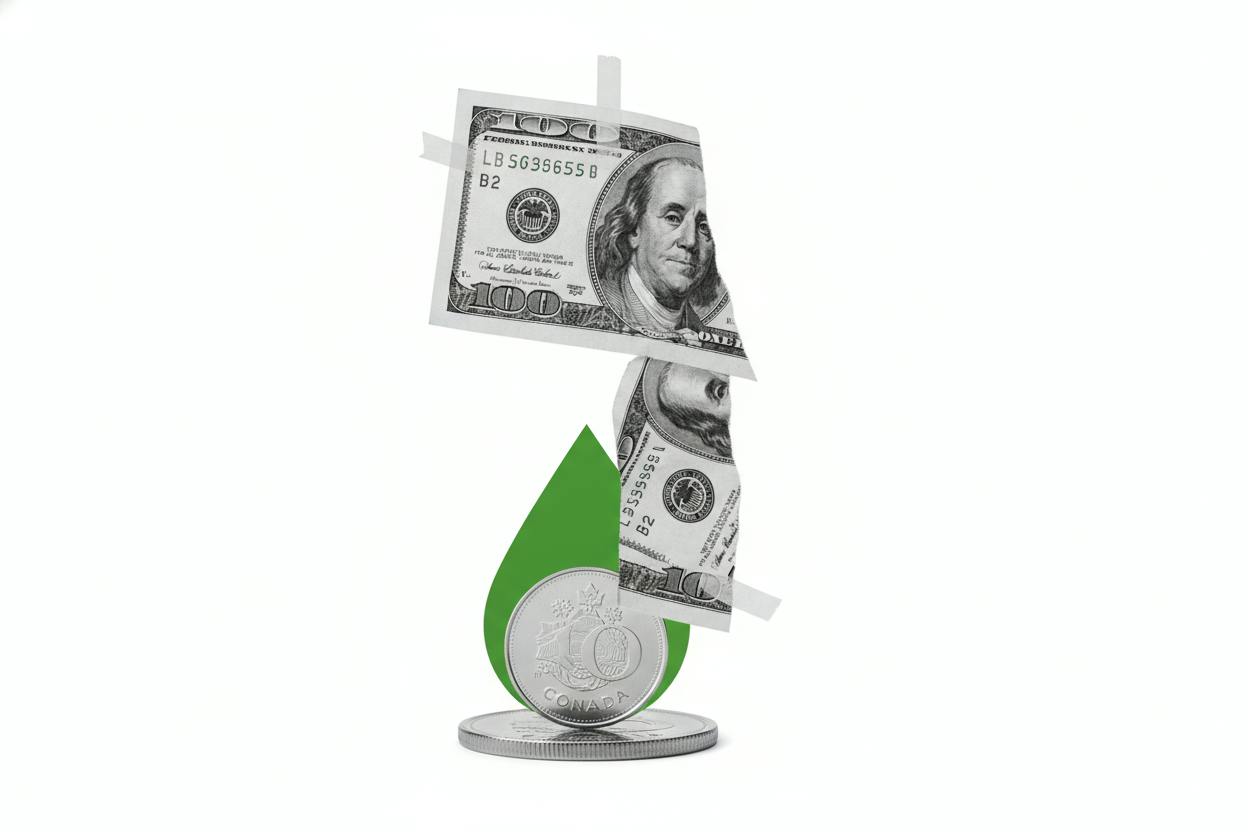
The US dollar weakened against its Canadian counterpart on Wednesday, slipping 0.5% to CA$1.4196. The move came even as US Treasury yields and gold prices also edged lower, while oil prices climbed—a combination that highlights the competing forces at play in currency markets.
Why the dollar fell
Currencies often take their cues from interest rates. When US Treasury yields fall, holding dollars becomes less rewarding for investors seeking income, which can nudge the greenback down. On Wednesday, yields drifted lower, removing some of the dollar's traditional support.
But the bigger story was oil. Canada is a major energy exporter, and its currency—nicknamed the loonie—tends to move with crude prices. When oil rises, Canada's export earnings increase, and those payments are ultimately converted into Canadian dollars, boosting demand for the loonie.
US crude (WTI) rose 1.9% to $83.57 a barrel, while Brent crude climbed 2.6% to $93.76. That gave the Canadian dollar a clear tailwind, even as other markets sent mixed signals.
Mixed signals elsewhere
The day's cross-currents were messy. Gold fell even as talk of tighter US monetary policy lingered after firm US inflation data. Separate figures showed the US economy grew faster than previously estimated in the third quarter, which might normally support the dollar.
Put together, it's a reminder that foreign exchange markets are constantly netting rate expectations against commodity and growth signals. On this day, rising oil prices appeared to outweigh other factors for the USD/CAD pair.
What it means for investors
For everyday investors, currency moves like this matter in a few ways. A firmer Canadian dollar can help keep imported inflation in check in Canada, but it can squeeze Canadian exporters because foreign revenue translates back into fewer Canadian dollars.
For US investors with exposure to Canadian assets, a weaker dollar means their Canadian-dollar investments are worth less when converted back to US dollars. Conversely, Canadian investors holding US assets benefit from the exchange rate.
The oil-currency link is a useful reminder of how commodities can drive currencies. As grain futures slip when the dollar strengthens, so too can oil-linked currencies like the loonie when crude rallies.
Traders will be watching whether oil's rise continues and whether US yields resume their climb. Any shift in those drivers could quickly move USD/CAD again. For now, the pair's direction hinges on the tug-of-war between rate expectations and commodity prices.
As traders await key US inflation and growth data, the dollar's broader trend remains uncertain. Wednesday's slip is a single day's move, but it underscores how sensitive currencies are to the latest economic signals.
For those tracking other currencies sliding against the dollar, the loonie's resilience stands out—a reminder that commodity exporters can buck the trend when their key exports rally.