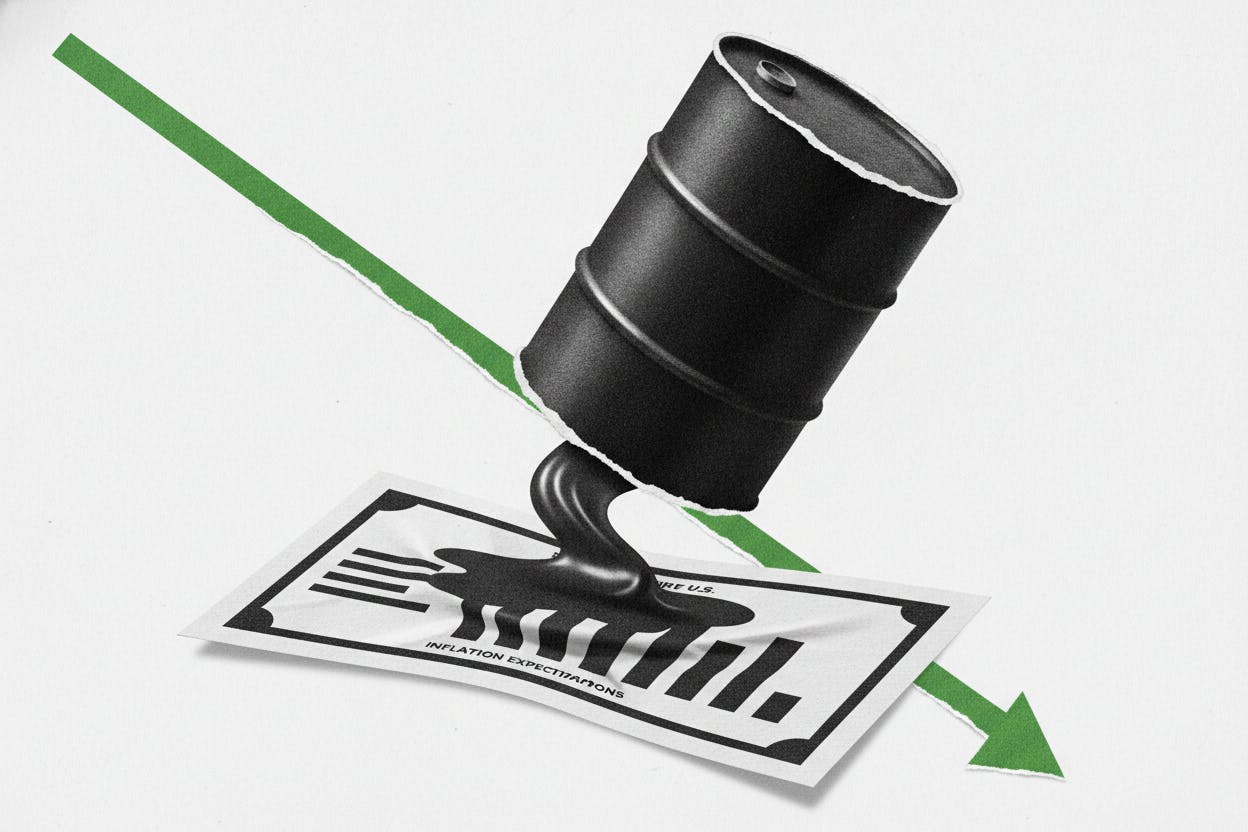
US Treasury yields fell on Tuesday as a sharp drop in oil prices eased investors' inflation concerns, even as markets still price in a 68% chance of a Federal Reserve rate hike by September. Brent crude, the global oil benchmark, slid 3% to a four-month low, pulling down a key measure of inflation expectations and sending yields lower across maturities.
The move highlights how sensitive the bond market remains to energy prices, which feed quickly into the broader inflation picture. The five-year "breakeven" inflation rate — the inflation rate investors expect over the next five years, derived from the gap between regular Treasuries and inflation-protected securities — fell to 2.20%, down from 2.74% in May. That decline helped push the two-year Treasury yield, which closely tracks expectations for Fed policy, to 4.15%, while the 10-year yield eased to 4.422%.
Why Oil Matters for Bonds
Oil is a major input in everything from gasoline to plastics, so a sustained drop in crude prices can reduce inflationary pressure across the economy. For bond investors, lower inflation expectations mean less reason for the Fed to keep raising interest rates, which makes shorter-term bonds more attractive and pushes their yields down. The two-year yield is particularly sensitive to Fed policy expectations, so its decline signals that traders see a slightly less aggressive rate path ahead.
But the broader story is that the Fed still views inflation as too high. The central bank's preferred inflation gauge, the personal consumption expenditures (PCE) index, is due out Thursday, and it will be the next major test for markets. If PCE comes in hotter than expected, it could reignite rate-hike fears and push yields back up, regardless of what oil does.
What It Means for Investors
For everyday investors, the interplay between oil, inflation, and bond yields is a reminder that markets are constantly repricing risk. When oil falls, it can provide a temporary tailwind for bonds and stocks alike, as it suggests inflation may be cooling. But the bigger driver of long-term yields is the Fed's credibility and its communication strategy.
If the Fed steps back from "forward guidance" — signaling in advance where rates are headed — or downplays its dot plot of rate projections, investors face a wider range of plausible rate paths. That uncertainty can push up the "term premium," the extra yield investors demand for holding longer-term bonds, and it can add volatility around major data releases like PCE. So even if the September-hike odds stay near 68% and the two-year yield sits around 4.15%, the 10-year yield and the gap between two- and 10-year yields (the yield curve) can become more sensitive to surprises in reports like PCE than to the latest move in Brent.
Heavy US borrowing also remains in the mix. The Treasury continues a run of big bond auctions, which can put upward pressure on yields as the government issues new debt. That supply dynamic is a separate factor from inflation, but it adds to the complexity for bond investors.
Looking Ahead
Thursday's PCE report will be the next major catalyst. If it shows inflation cooling, it could reinforce the message from falling oil and push yields even lower. If it comes in hot, it could undo the day's gains and put the September rate hike back in focus. For now, the bond market is taking its cues from the oil patch, but that could change quickly.
For investors, the key takeaway is that short-term moves in oil can create opportunities in bonds, but the longer-term trend depends on the Fed's ability to bring inflation down without derailing the economy. Keeping an eye on both oil prices and inflation data can help you understand why your bond portfolio is moving — and whether those moves are likely to last.