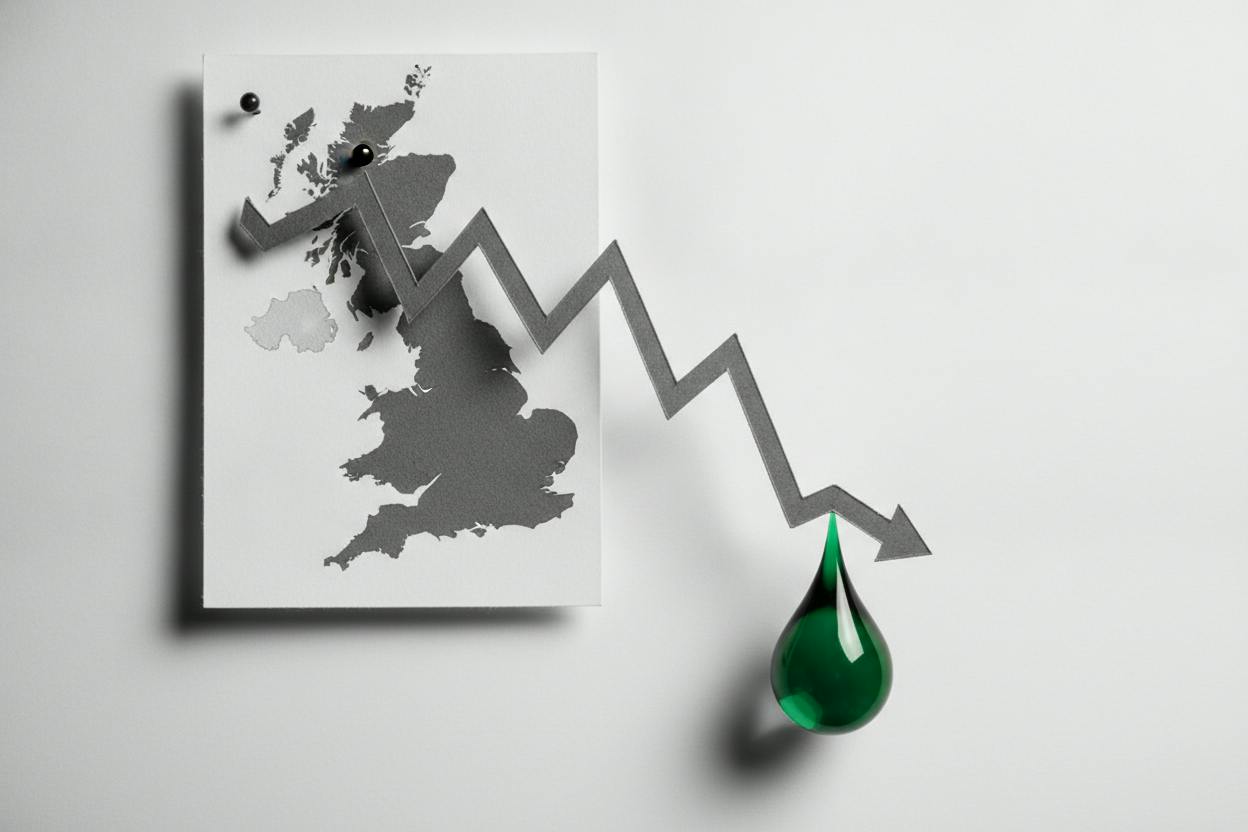
London's blue-chip index slipped on Tuesday as a rebound in oil prices revived inflation concerns, just as traders braced for the Bank of England's (BoE) latest policy decision and the US midterm elections. The FTSE 100 fell 0.5% to 10,705.31 by 10:43 GMT, while the FTSE 250, which tracks mid-sized companies, dropped 0.3%.
The move came after crude oil jumped more than 1.5%, reversing some of the previous day's sharp decline. On Monday, oil had fallen about 7% on hopes that a ceasefire or peace deal in the Middle East might be near. But those hopes were dashed when an Iranian official said a deal to end the war still looked far off, keeping the market focused on supply risks.
Why oil matters for the FTSE 100
Oil prices have a direct and indirect impact on the UK stock market. Higher crude prices tend to boost energy companies like BP and Shell, which are heavyweight constituents of the FTSE 100. However, they also raise costs for airlines, transport firms, and manufacturers, and they feed into inflation expectations.
When inflation expectations rise, investors often worry that central banks will keep interest rates higher for longer. That can hurt consumer spending and corporate profits, and it can make bonds more attractive relative to stocks. The FTSE 100's dip on Tuesday suggests that the negative inflation signal outweighed the boost to energy shares.
This is a familiar pattern. Earlier this year, when oil prices tumbled, long-term Treasury yields fell as investors bet on lower inflation. Conversely, when crude climbs, yields often rise and equities can struggle. The link between oil and bond yields is a key dynamic for global markets.
Bank of England decision in focus
The BoE is widely expected to announce its next interest rate decision later this week. While the central bank has been hiking rates to combat inflation, the recent drop in oil prices had raised hopes that price pressures might be easing. Tuesday's rebound complicates that picture.
If the BoE signals that rates will stay higher for longer, that could weigh on UK stocks, particularly rate-sensitive sectors like real estate and utilities. On the other hand, if the bank hints at a pause or a cut, that could provide a boost. Investors will be listening closely to the accompanying statement for clues about the future path of monetary policy.
US midterms: what to watch
Across the Atlantic, Americans are voting in the midterm elections, which will determine control of Congress. The outcome could have significant implications for fiscal policy, regulation, and trade. A divided government—where one party controls the House and the other the Senate—often leads to gridlock, which markets sometimes view as positive because it reduces the risk of major policy shifts.
However, the midterms also come at a time of heightened geopolitical tension and economic uncertainty. Investors will be watching for any surprises that could affect the dollar, Treasury yields, or global risk appetite. The results could also influence the Federal Reserve's policy stance, as a new Congress might push for different economic priorities.
What it means for investors
For everyday investors, the key takeaway is that oil prices remain a wildcard. A sustained rebound in crude could keep inflation elevated, forcing central banks to keep rates higher for longer. That would likely pressure stock valuations, especially for growth-oriented companies.
On the other hand, if oil prices resume their decline, that could ease inflation fears and support equities. The recent 6% drop in oil had provided some relief, but Tuesday's bounce shows how quickly sentiment can shift.
Investors should also keep an eye on the BoE decision and the midterm results. Both events have the potential to move markets in the coming days. As always, it's important to maintain a diversified portfolio and avoid making impulsive decisions based on short-term fluctuations.
In the meantime, the FTSE 100's dip is a reminder that even small moves in commodity prices can ripple through the entire market. Whether oil continues to climb or falls back will likely be a major driver of sentiment in the weeks ahead.