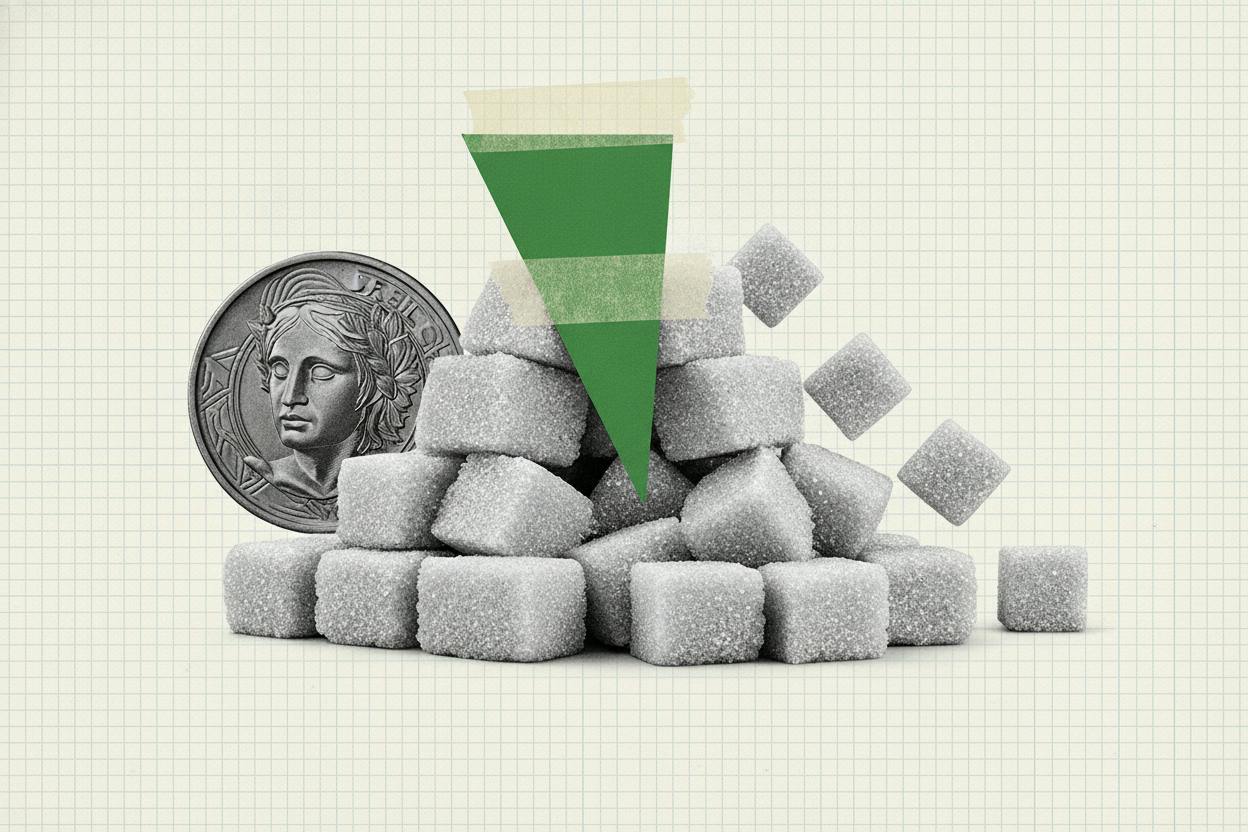
Raw sugar futures on ICE fell to a one-month low on Tuesday, and cocoa prices also slipped, as speculative funds trimmed their bullish positions in the soft commodities complex. Coffee, by contrast, held up better, supported by tighter near-term supplies.
What's moving the markets
Raw sugar futures slid as low as 18.39 cents a pound before steadying near 18.62 cents. White sugar also declined. The moves come as investors who had been betting on higher prices—so-called long positions—reduced their exposure, a common profit-taking or risk-reduction step after a rally.
Dealers pointed to a softer Brazilian real as a key driver. Brazil is the world's largest sugar producer and exporter, and its currency's value directly affects how attractive it is for local mills to sell sugar on international futures markets. When the real weakens, each US dollar of sugar sales converts into more local currency, making it easier for mills to lock in acceptable prices by forward-selling on ICE. That extra futures selling adds "paper" supply to the market, even if the physical crop outlook hasn't suddenly changed.
Cocoa prices also dipped, though the brief did not specify the size of the move. Coffee, meanwhile, remained firmer, with dealers citing tighter near-term supplies—a reference to the fact that available stocks of coffee beans are relatively low, which can support prices even when broader sentiment is cautious.
Why this matters for everyday investors
For most people, the immediate impact of these moves is at the grocery store or coffee shop. Sugar and cocoa are key ingredients in packaged foods, confectionery, and beverages. When their prices fall, it can ease cost pressures for food companies, potentially supporting profit margins. Conversely, firmer coffee prices could eventually feed into higher prices for your morning brew.
For investors, soft commodities like sugar, cocoa, and coffee are a niche but real part of the global markets. They are traded on futures exchanges, and their prices are influenced by weather, currency movements, and the positioning of speculative funds. When funds trim long bets, it often signals that the rally may be losing steam—at least in the short term.
It's also worth noting that currency moves can be as important as crop fundamentals. The Brazilian real's weakness is a reminder that commodity prices are often tied to the health of producing countries' economies. A weaker currency can encourage more selling, which can push prices down even if the physical supply situation hasn't changed.
What to watch next
Investors will be watching the Brazilian real's trajectory, as well as any updates on weather conditions in key growing regions. For sugar, the next major data point will be the crop progress in Brazil and India. For cocoa, attention will be on West African supply, where weather and disease can quickly alter the outlook.
For coffee, the tight near-term supply situation could keep prices supported, but a shift in fund positioning or a change in currency dynamics could change that quickly.
As always, these are short-term moves in a complex market. For most investors, the takeaway is not to make drastic portfolio changes based on a single day's commodity price action. Instead, it's worth understanding how these inputs affect the companies you own—especially food and beverage makers—and keeping an eye on broader trends in currencies and global supply.
If you're interested in related market moves, you might also check out how Asian stocks slid on MSCI and AI jitters, or how ABF warned sugar losses could widen as its Primark demerger approaches. For a look at how currency and commodity dynamics can affect other sectors, see Diamondback Energy's Q3 beat on higher output and crude prices.