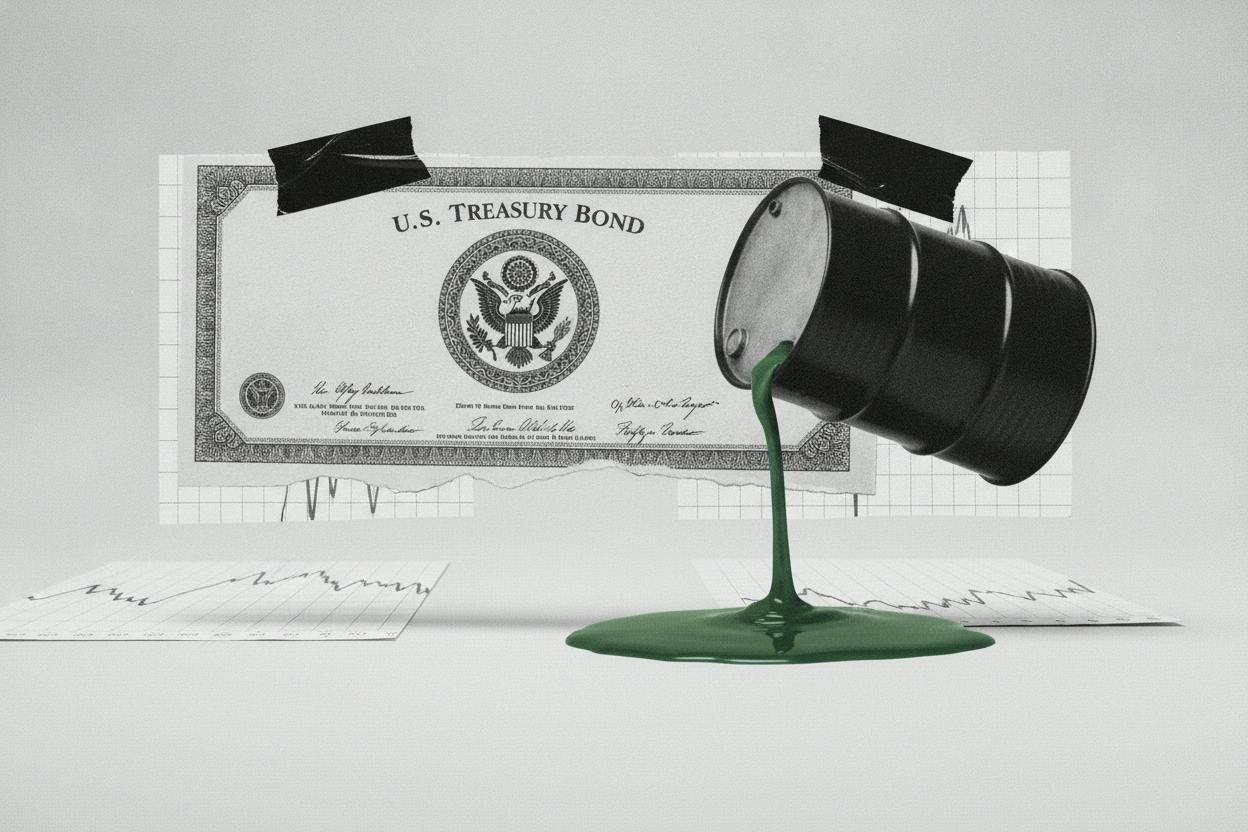
Oil prices tumbled more than 6% on Tuesday as investors grew hopeful that diplomatic efforts could ease tensions in the Middle East. That drop in crude had a knock-on effect in the bond market, where long-term US Treasury yields fell again.
The yield on the 10-year Treasury note slipped to 4.88%, while the 30-year bond yield dropped to 5.252%. In contrast, the 2-year yield, which is more closely tied to expectations for Federal Reserve policy, was roughly flat at 4.579%.
Why cheaper oil matters for bonds
For everyday investors, the link between oil and bond yields might not be obvious. But it comes down to inflation expectations. Oil is a key input in everything from gasoline to plastics, so when energy prices fall, the overall cost of goods and services tends to cool off.
That's why investors often treat a drop in crude as an "inflation pressure release." If energy costs are likely to stay lower, the future path of prices looks a bit less scary. As a result, lenders don't demand as much extra compensation to hold long-dated bonds, which pushes yields down.
Long-term yields are particularly sensitive to inflation expectations because they lock in a fixed interest rate for decades. If inflation is expected to be lower, the purchasing power of those future payments is less at risk, so investors are willing to accept a lower yield.
What the yield curve is telling us
The fact that the 2-year yield barely moved while longer-term yields fell is a signal. The 2-year yield mostly reflects where investors think the Federal Reserve will set short-term interest rates in the near future. Since the Fed's next moves are already heavily priced in, a change in oil prices doesn't shift those expectations much.
Longer-term yields, however, are more influenced by growth and inflation outlooks. So when they fall while short-term yields stay put, it suggests the market is becoming more confident that inflation will ease without a major hit to economic growth.
This dynamic is also visible in other markets. For example, palm oil slipped as crude's slide cooled biodiesel demand, showing how energy price moves ripple through related commodities. And financial stocks slipped as Treasury yields and bitcoin retreated, highlighting the broad reach of these shifts.
What it means for investors
For bond investors, lower long-term yields mean the prices of existing long-dated bonds have risen. If you hold a bond that pays a fixed coupon, its market value goes up when yields fall. That can be a welcome boost for portfolios that include long-term Treasuries.
But it also means new buyers of long-term bonds will lock in lower yields. For those saving for retirement or looking for income, the current level—still above 4.8% on the 10-year—remains historically attractive compared with the ultra-low rates seen in the past decade.
For stock investors, the picture is more mixed. Lower yields can support equity valuations because they reduce the discount rate used to value future earnings. However, the reason for the yield drop—a slide in oil prices—can hurt energy companies' profits. Oil prices tumbled 6% as crude slid to $97.83, dragging energy stocks lower, which shows the direct impact on that sector.
Meanwhile, cheaper oil is generally a positive for consumers and businesses that rely on transportation and manufacturing, as it lowers input costs. That could support corporate margins and consumer spending down the line.
What to watch next
Investors will be watching whether the Middle East peace talks make further progress and whether oil prices stay down. A sustained drop in crude could reinforce the disinflationary trend, giving the Fed more room to consider rate cuts later this year.
But the situation remains fluid. Geopolitical tensions can flare up quickly, and oil prices are notoriously volatile. If peace hopes fade, crude could rebound, and long-term yields might climb back toward recent highs.
Also on the radar are upcoming economic data and corporate earnings. Big tech earnings disappointed, dragging US stocks lower despite the Fed hold, reminding investors that the stock market has its own drivers beyond interest rates.
For now, the bond market is sending a message of cautious optimism: inflation may be cooling, but the path ahead is still uncertain. As always, diversification and a long-term perspective remain key for everyday investors navigating these moves.