Oil prices slipped again on Tuesday, with Brent crude hovering near three-month lows as traders focused on signs of loosening supply rather than geopolitical headlines. Brent was around $88 a barrel after its lowest close since late August, while US crude (WTI) traded near $80.
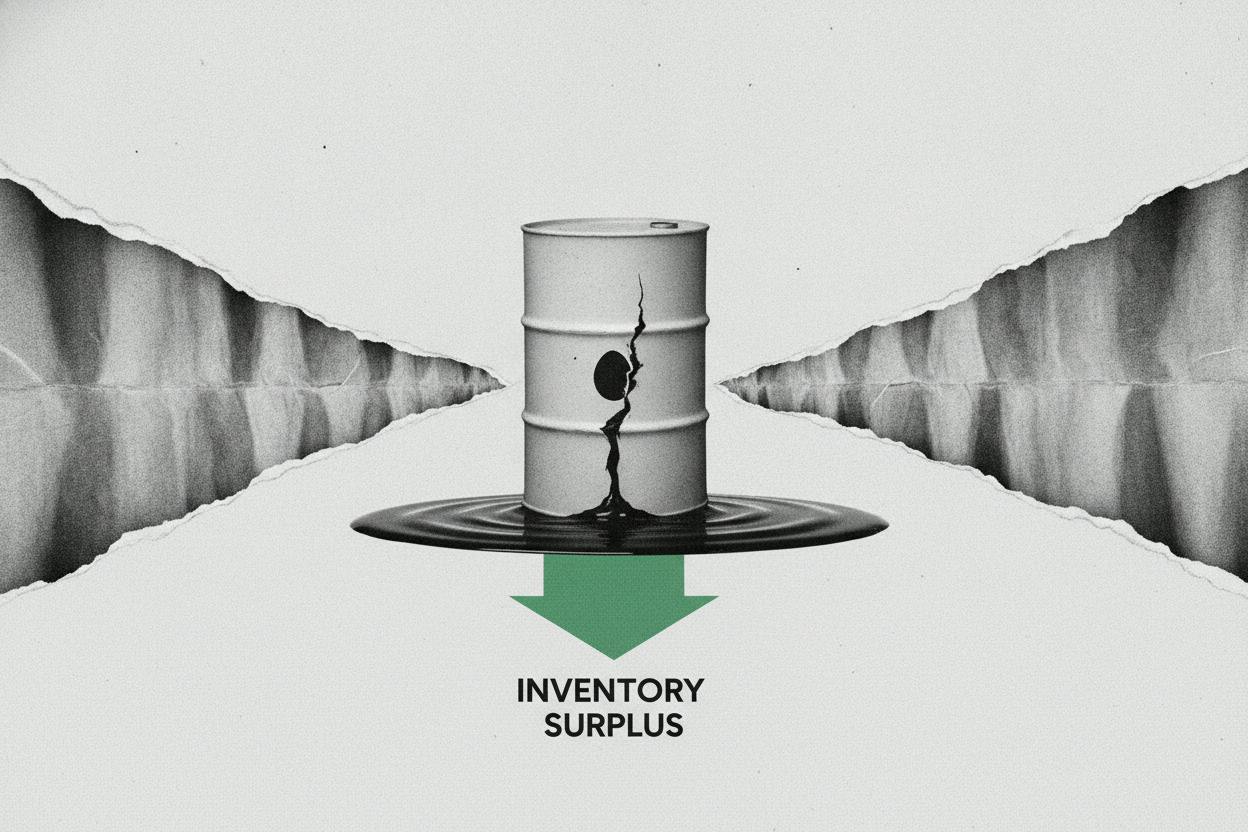
The move came as Libya's Sharara pipeline restarted after a shutdown, easing fears of a prolonged outage. At the same time, Deutsche Bank said global inventories of crude and refined fuels rose by 52 million barrels in October, which it translated into an oversupply of about 1.7 million barrels a day. A Reuters poll also pointed to another build in US stockpiles last week.
Why supply signals matter
Oil prices are set not just by today's news, but by how tight buyers think supply will be in the months ahead. When inventories are rising, refiners and traders feel less urgency to pay up for immediate deliveries. That dynamic can shift the entire pricing structure of the market.
If the market is truly drifting into surplus, the premium for oil delivered "right now" tends to shrink. The futures curve can flatten or even tilt toward contango, a situation where future prices are higher than spot prices and storing oil starts to make economic sense. That usually puts more pressure on near-dated Brent and WTI than on longer-dated contracts.
Deutsche Bank's call of a 1.7 million barrels-a-day surplus reframes Brent near $88. For everyday investors, this matters because oil is a key input into inflation. A better-supplied market can mute oil's influence on near-term inflation data, even while Middle East headlines keep a floor under prices by reminding traders how quickly supply can be disrupted.
Hormuz risk still in the background
The market hasn't forgotten the Strait of Hormuz, a key chokepoint for global oil shipping. Any disruption there can still add a risk premium, even if it hasn't been enough to overpower the improving supply signals so far. Traders are watching both the physical barrels and the headlines, and the balance between the two is what sets prices.
For investors, the takeaway is that oil prices are likely to stay sensitive to news from the Middle East, but the underlying supply picture is becoming more comfortable. That could mean less upward pressure on energy prices in the coming months, which is generally positive for consumers and for inflation expectations.
What it means for investors
For those with exposure to energy stocks or commodities, the shift toward surplus could weigh on prices in the near term. However, the risk premium from Hormuz means prices are unlikely to fall too far without a major headline. Investors should watch inventory data and any news from Libya or the Strait of Hormuz for clues on the next move.
Related coverage: oil drops 3% as Libya restarts Sharara pipeline and oil hits three-month low as Libya supply returns.