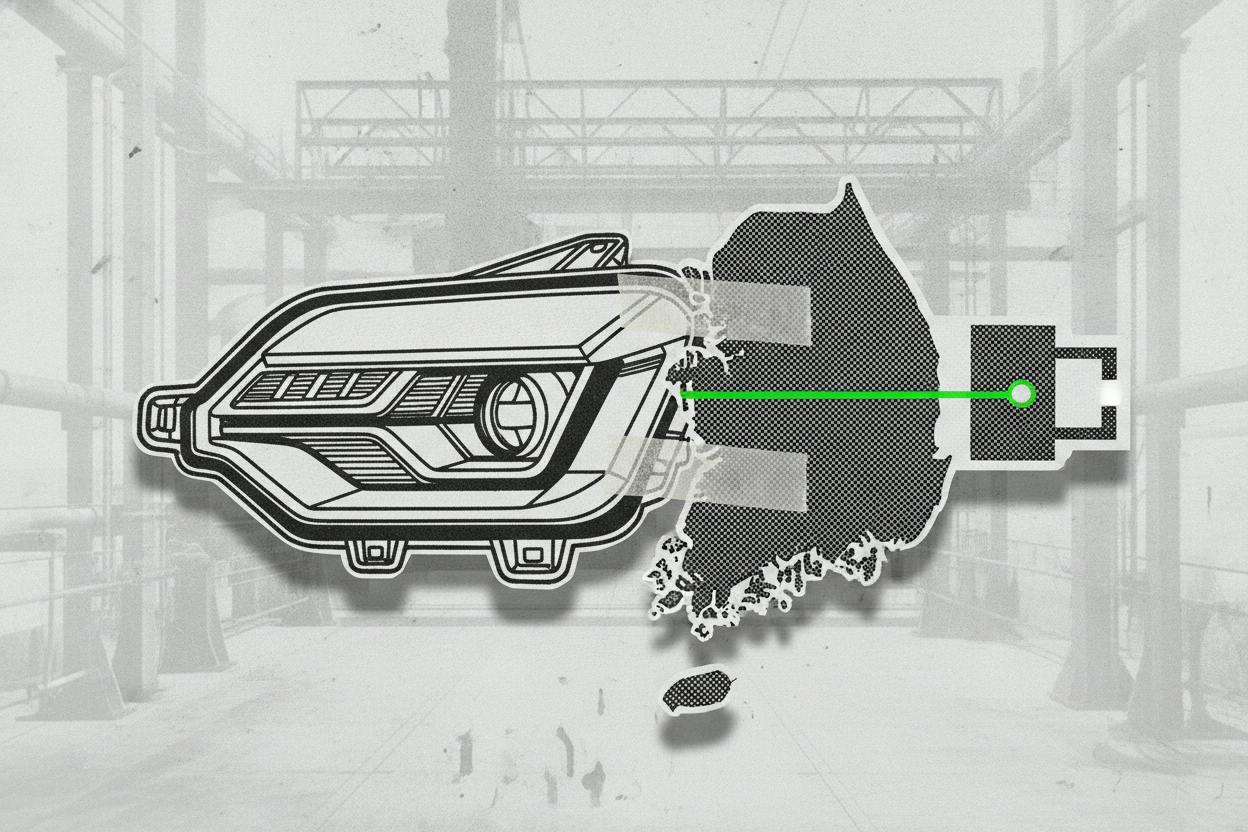
French automotive supplier OPmobility has agreed to acquire the lighting business of Hyundai Mobis, a major South Korean auto parts maker, for 600 billion won (about $443 million). The deal is expected to close in the second half of 2027, the company said.
The acquisition marks a strategic push by OPmobility into vehicle lighting, a segment that is becoming increasingly important as automakers use lights not only for design but also for safety features like adaptive headlights and driver-assistance systems.
What OPmobility is getting
According to OPmobility, the Hyundai Mobis lighting unit generated 2.5 trillion won in revenue in 2025 and posted a positive operating margin. The business operates five factories across South Korea, China, Mexico, and the Czech Republic, giving OPmobility a global manufacturing footprint in lighting.
For OPmobility, which has traditionally been known for plastic exterior parts and fuel systems, this deal represents a significant expansion into a higher-tech component area. Vehicle lighting is evolving from simple bulbs to complex systems that integrate sensors and electronics, making it a more value-added product.
Why this matters for the auto industry
The deal also deepens OPmobility's relationship with Hyundai and Kia, two of the world's largest automakers. By acquiring a key supplier to those brands, OPmobility positions itself as a more integral partner in their supply chains. This could lead to more stable, long-term contracts and closer collaboration on future vehicle models.
Automakers are increasingly relying on suppliers to handle more of the engineering and production of components, especially as they shift toward electric vehicles and software-defined cars. Lighting is one area where differentiation is visible to consumers, so carmakers are investing in distinctive lighting designs to stand out.
This is part of a broader trend of consolidation in the auto parts industry, as suppliers seek scale and new capabilities to keep up with the rapid changes in vehicle technology. Similar moves have been seen elsewhere, such as production snags at major automakers due to parts shortages, highlighting how critical suppliers have become.
What it means for investors
For everyday investors, this deal is a reminder that the auto parts sector is undergoing significant transformation. Companies that can adapt to the shift toward electric and autonomous vehicles may be better positioned for growth, while those that rely on traditional combustion-engine parts could face challenges.
OPmobility's move into lighting is a bet that this segment will grow as cars become more technologically advanced. The company is also diversifying its customer base, reducing its reliance on any single automaker.
However, the deal won't close until 2027, so there is a long runway before the financial benefits materialize. Investors should watch for regulatory approvals and any changes in the automotive market that could affect the deal's value.
For those with exposure to auto suppliers through index funds or ETFs, this acquisition is a sign that the industry is consolidating, which could lead to stronger players and potentially higher margins over time.
It's also worth noting that OPmobility's partnership with Hyundai and Kia could be a competitive advantage, as these automakers are among the leaders in electric vehicle adoption. As they ramp up EV production, suppliers that are closely aligned with them may benefit.
Still, the automotive industry faces headwinds, including parts shortages that have halted production at major plants, and the transition to EVs is not without bumps. Investors should keep an eye on how OPmobility integrates this new business and whether it can achieve the expected synergies.
Looking ahead
The deal is subject to regulatory approvals and other customary closing conditions. OPmobility expects to complete the acquisition in the second half of 2027, giving it time to plan the integration and align the lighting business with its existing operations.
For now, the announcement signals confidence in the future of vehicle lighting and in the long-term partnership with Hyundai and Kia. As the automotive industry evolves, such strategic acquisitions are likely to become more common, reshaping the supplier landscape.
Investors will be watching for more details on how OPmobility plans to finance the deal and what it means for its balance sheet. The company has not disclosed specific financing plans, but the size of the transaction suggests it will be a significant commitment.
In the meantime, the broader auto parts sector continues to face pressures from oil price fluctuations and global supply chain uncertainties. But for OPmobility, this acquisition is a clear statement of intent: it wants to be a leader in the components that will define the cars of the future.