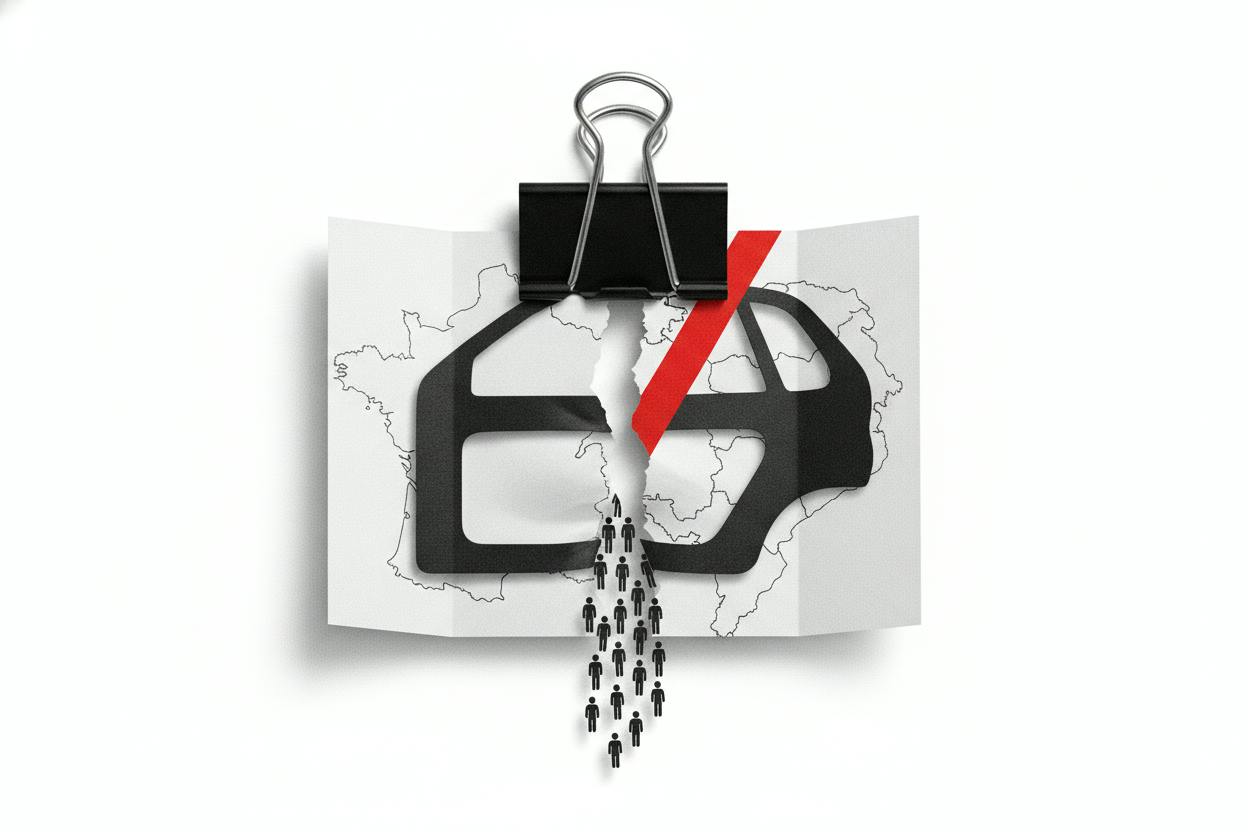
French auto parts maker OPmobility announced plans to cut about 770 jobs in Germany and France and lower its 2026 financial targets, as the global auto market weakens faster than the company had anticipated. The move underscores the pressure facing European suppliers as carmakers scale back production and shift priorities.
What's happening
OPmobility, which makes exterior parts, lighting, and fuel systems for vehicles, said it will eliminate roughly 460 roles in Germany and 310 in France. The company also plans to close two research and development sites in France and shut its Sterbfritz exterior parts plant in Germany. These steps are part of a broader effort to shrink its European footprint to match softer demand.
At the same time, management reset its 2026 financial goals. It now targets an operating margin of €430 million to €450 million and free cash flow of more than €220 million. That is a step down from what the company delivered in 2025, when operating margin came in at €490 million and free cash flow reached €297 million.
Why the downgrade?
OPmobility blamed several factors for the weaker outlook. Global auto production forecasts have been cut, European customers are dialing back activity, and hydrogen mobility projects have faced delays, including cancellations in the US and Europe. The company's pivot toward hydrogen and other clean-energy technologies has been a key part of its growth strategy, but those bets are taking longer to pay off.
The restructuring won't be cheap. OPmobility expects to spend €120 million to €130 million on restructuring in 2026 as it closes sites, adjusts capacity, and streamlines its R&D operations. That includes costs for severance, site shutdowns, and relocating equipment.
What it means for investors
For investors, the restructuring bill is a big bite out of the company's cash goals. OPmobility is projecting more than €220 million of free cash flow in 2026 while also flagging €120 million to €130 million of restructuring costs in the same year. In other words, the one-off bill is well over half of the annual cash number the company is aiming for.
That makes the 2026 cash delivery unusually sensitive to execution. The Sterbfritz closure and the two French R&D shutdowns need to translate into lower ongoing costs quickly enough to offset the upfront spend. If the savings don't materialise as planned, the free-cash-flow target could look harder to reach than the headline suggests.
Restructuring is never just an accounting line. It often means cash going out the door for severance, site shutdowns, and relocating equipment. For OPmobility, that matters because it's projecting a healthy cash number while also spending heavily to reshape its business.
Broader context
OPmobility is not alone in facing a tough European auto market. Car manufacturers across the region are grappling with weak demand, high energy costs, and the transition to electric vehicles. Suppliers like OPmobility are often the first to feel the pinch when automakers cut production or delay new models.
The company's troubles also come amid broader concerns about the European auto industry's competitiveness. The EU is weighing quotas on Chinese hybrid imports to shield local automakers, but such measures may not be enough to offset the current slowdown. Meanwhile, French and Italian bond yields have jumped as eurozone debt worries resurface, adding to the economic uncertainty.
For investors, the key question is whether OPmobility's restructuring will be enough to stabilise its finances. The company is betting that a leaner European operation will help it weather the downturn and position it for growth when the market recovers. But with the auto market weakening faster than expected, that bet carries risk.
What to watch next
Investors will be watching OPmobility's next earnings reports for signs that the restructuring is on track. They'll also look for updates on the hydrogen projects, which remain a key part of the company's long-term strategy. If those projects gain traction, they could provide a much-needed boost to revenue and margins.
For now, the company's lowered targets reflect a sobering reality: the auto industry's transition is proving more difficult and more expensive than many had hoped. OPmobility's ability to execute its restructuring plan will be critical to meeting its 2026 goals.