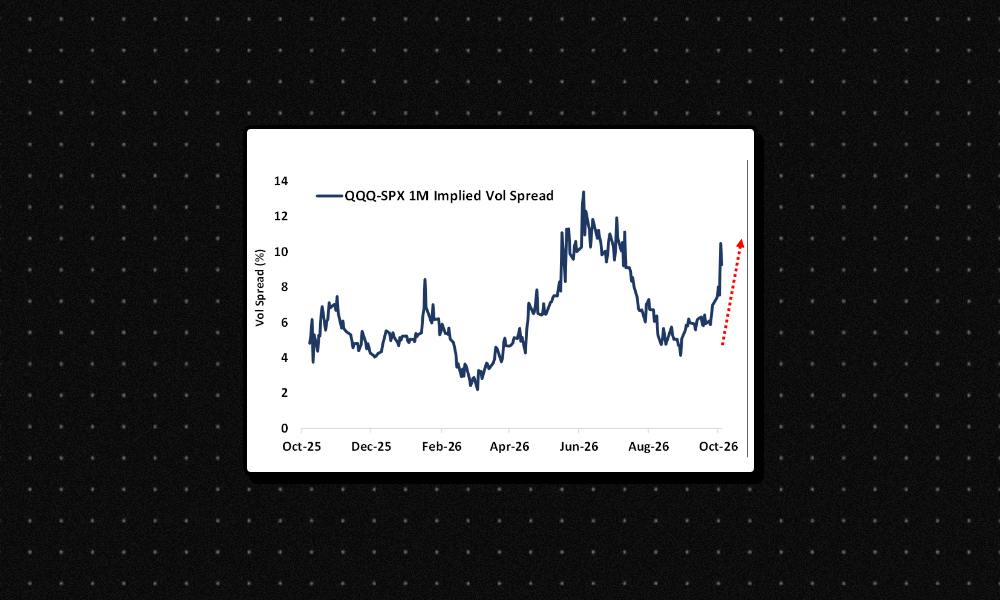
As the market heads into a pivotal week of earnings from the biggest technology companies, options traders are signaling that they expect a bumpier ride for tech stocks than for the broader U.S. market. The gap between implied volatility on the Nasdaq-100-tracking QQQ ETF and the S&P 500 index has widened, a sign that investors are bracing for bigger price swings in the tech sector.
What implied volatility tells us
Implied volatility is a measure of how much movement investors expect in a stock or index over a given period, based on the prices of options. When implied volatility rises, it means traders are paying more for protection against big moves, or are speculating that prices will swing more sharply. The chart comparing one-month implied volatility for QQQ and the S&P 500 shows that the gap between the two has grown, indicating that investors expect tech to be more volatile than the broader market.
This is not unusual ahead of major earnings reports. When companies like Apple, Microsoft, and Alphabet are about to report, options traders often price in larger potential moves because earnings can trigger sharp reactions. But the current gap is notable because it suggests that the market is particularly anxious about what these companies will say, and how their results might affect the wider tech sector.
Why tech volatility matters
Tech stocks have a heavy weighting in major indices, so swings in their prices can move the entire market. The Nasdaq-100, which tracks the largest non-financial companies on the Nasdaq, is dominated by tech giants. When these companies report earnings, their results can influence investor sentiment across the sector and beyond.
For everyday investors, this means that the coming week could see larger-than-usual moves in their portfolios, especially if they hold tech stocks or funds that track the Nasdaq. Even if you don't own individual tech stocks, you might feel the effects through index funds or retirement accounts that include these companies.
The broader market context is also important. Stocks have been holding steady as oil prices hover near a six-week high and investors await a Federal Reserve decision. That backdrop adds to the uncertainty, as higher energy costs can feed into inflation and affect consumer spending, which in turn impacts corporate earnings.
What to watch in the week ahead
Investors will be watching the mega-cap earnings reports closely, not just for the numbers but for guidance on future growth. Companies that beat expectations might still see their stocks fall if they give cautious outlooks, while those that miss could face sharp selloffs. The options market is pricing in the possibility of big moves in either direction.
Another factor to keep an eye on is the Federal Reserve's interest rate decision, which is also scheduled for this week. Treasury yields have been edging up as markets await the Fed's move and a large auction of government debt. Higher yields can pressure tech stocks, which are often valued on future earnings that get discounted more heavily when rates rise.
What it means for investors
For the average investor, the key takeaway is that tech stocks are likely to be more volatile than usual in the near term. This doesn't mean you should panic or make drastic changes to your portfolio. Instead, it's a reminder that markets can move quickly, and that diversification can help cushion the impact of sharp swings in any one sector.
If you're investing for the long term, short-term volatility is often just noise. But if you're close to retirement or need to access your money soon, it might be worth checking that your portfolio isn't overly concentrated in tech. The options market is simply reflecting the uncertainty that comes with big earnings reports, and that uncertainty is part of investing.
As always, it's important to focus on your own financial goals and risk tolerance, rather than trying to time the market based on short-term signals. The coming week will bring clarity on how the biggest tech companies are performing, and that information will help shape the market's direction in the weeks ahead.