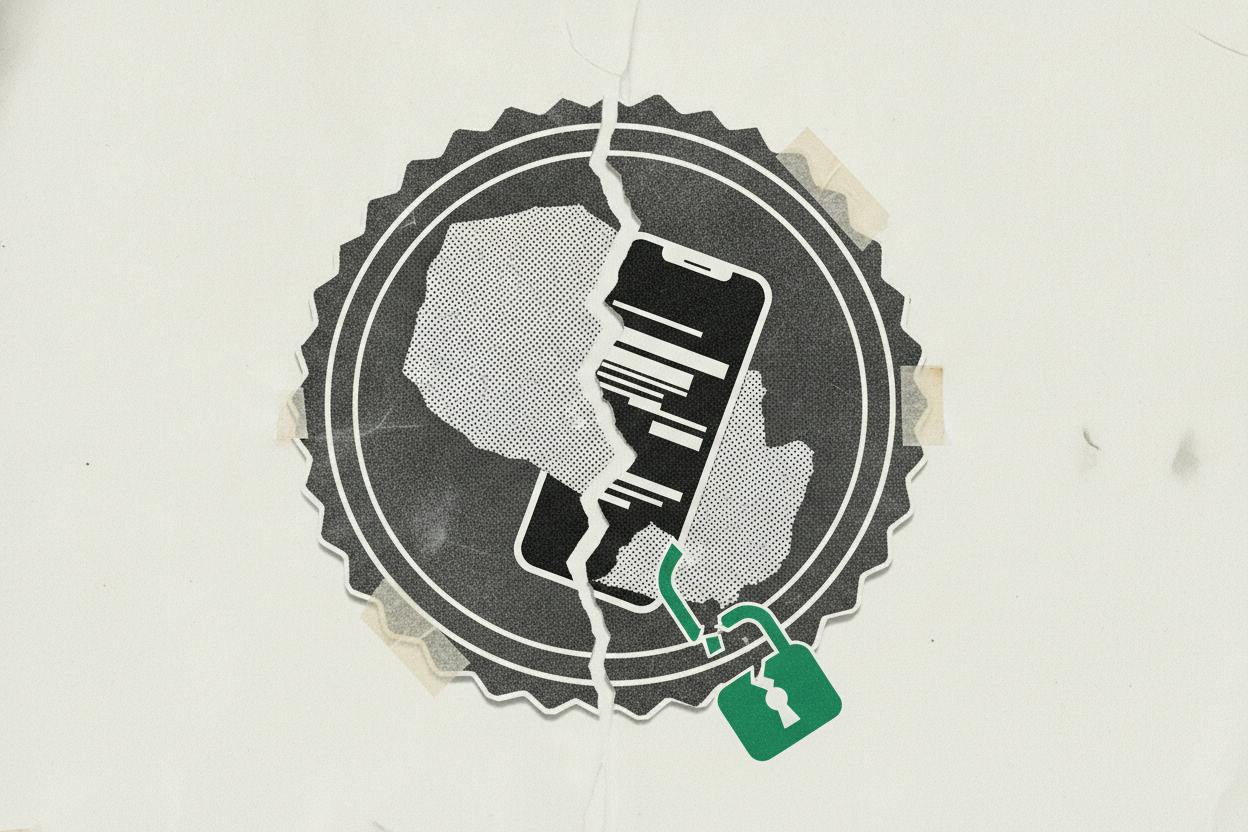
Paraguay's President Santiago Peña has resigned following the central bank's decision to place Ueno, a fast-growing digital lender, into resolution after the bank breached minimum solvency levels. The move briefly left millions of customers unable to access their accounts and has thrown a spotlight on the country's financial oversight.
What happened at Ueno?
Ueno, founded in 2021, quickly became a national standout in Paraguay's banking sector. It claimed to serve roughly 3 million customers in a country of about 6.5 million people, and it handled around $850 million of public money for state and pension-related bodies. That scale made it a household name for many Paraguayans who used its app for everyday banking.
But regulators later questioned whether Ueno had extended too many loans to companies tied to its controlling shareholder, Grupo Vázquez. The central bank said the lender fell below minimum solvency levels and put it into “resolution” — a process designed to protect depositors without immediately shutting the bank down. In practice, resolution often means a takeover or restructuring, with the goal of keeping the bank's operations running while its finances are sorted out.
The failure didn't stay contained within one app. Shifting customers to other banks has strained payment systems, with outages reported across several banking apps. Some Ueno customers have shown up at branches asking for access to their savings, underscoring the human impact of the collapse.
Governance questions mount
The political fallout has been swift. Critics have focused on Peña's past business links to Grupo Vázquez, though he says he sold his stake in March 2025. They have also questioned the independence of the central bank after its chief, Carlos Carvallo, a former Ueno head, resigned. The bank says Carvallo stepped away from Ueno-related decisions, but the optics have fueled concerns about conflicts of interest.
Paraguay has spent years building an investment-grade reputation, and a messy cleanup could test confidence in its supervision of a lender that also raised money abroad. Ueno issued a $350 million bond, led by JPMorgan Chase and Bank of America, which is now a key focus for investors.
What it means for investors
For markets, Ueno's bond is turning into a governance test for Paraguay. When a bank breaches solvency rules, investors worry about the balance sheet. When the response also raises questions about conflicts of interest, they price in governance risk too — the chance that oversight is uneven or politicized.
That often appears as wider credit spreads, meaning lenders demand more yield to hold the debt. The first pressure point is Ueno's offshore bond, but if doubts about supervision linger, the extra risk premium can creep into funding costs for other Paraguayan banks and, eventually, the sovereign the next time it borrows abroad.
For everyday investors, the key takeaway is that banking crises can have ripple effects beyond the institution itself. When a country's regulatory framework is questioned, it can raise borrowing costs for the whole economy, which may eventually affect everything from mortgage rates to the value of the local currency.
The situation in Paraguay is a reminder that fast-growing financial firms, especially in emerging markets, can carry hidden risks. While Ueno's growth was impressive, its reliance on related-party lending and its rapid expansion may have outpaced its risk controls. Investors in emerging-market debt should watch how the resolution process unfolds and whether the central bank can restore confidence.
As Paraguay navigates this crisis, the focus will be on how quickly customers regain full access to their funds, how the resolution is executed, and whether the government can reassure international investors that its financial oversight is sound. The coming weeks will be critical in determining whether this becomes a contained episode or a broader test of Paraguay's economic credibility.