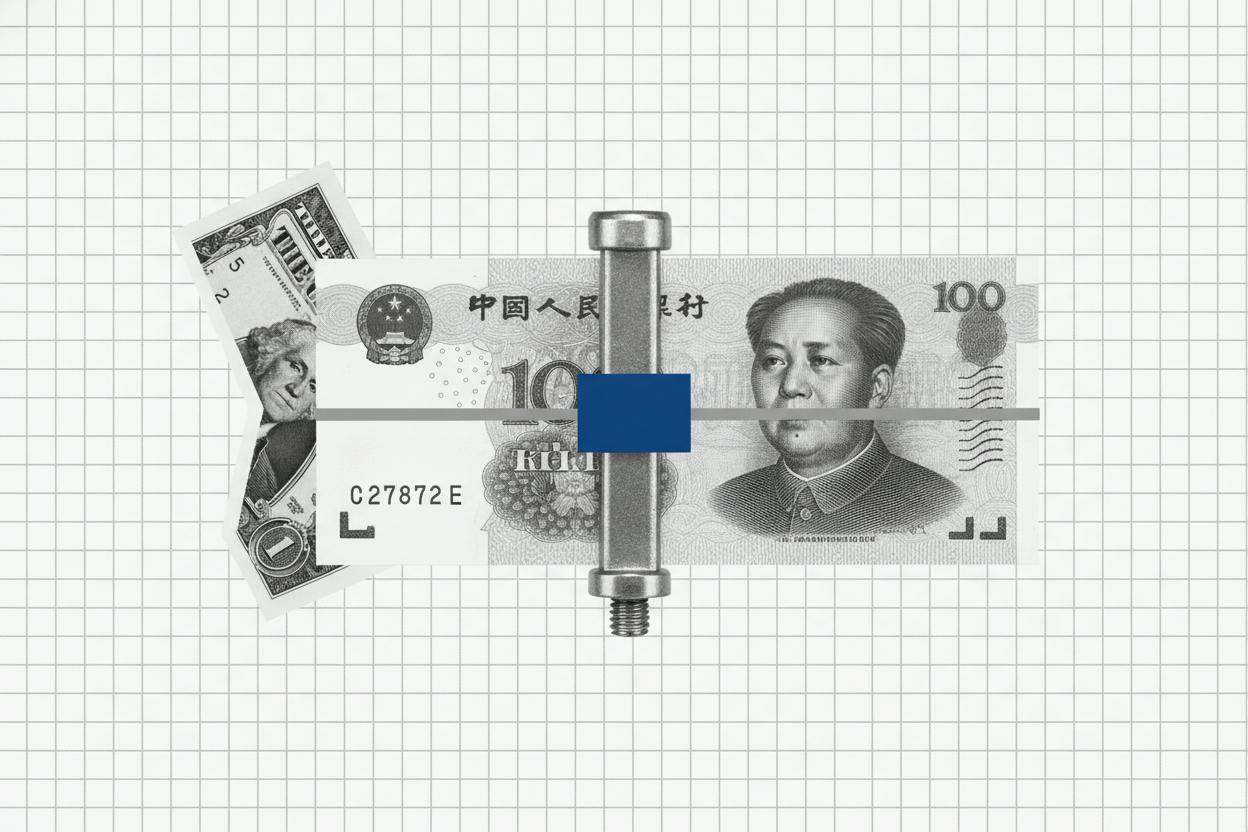
China's yuan held near a two-week high on Tuesday after the People's Bank of China (PBOC) set a stronger-than-expected daily midpoint, a clear signal that policymakers are keen to steady the currency even as the US dollar firms on expectations of further Federal Reserve rate hikes.
The move comes just ahead of the Asia-Pacific Economic Cooperation (APEC) summit, which kicks off in Shenzhen on November 18-19. With global attention on China as host, the central bank appears determined to avoid any sharp depreciation that could unsettle markets or overshadow the diplomatic gathering.
How China's currency system works
Unlike the US dollar or the euro, which trade freely on global markets, China runs a managed currency system. Every morning, the PBOC sets a daily midpoint rate for the yuan against the dollar. The onshore yuan is then allowed to trade within a band of 2% above or below that reference point. This gives the central bank a powerful lever to influence the currency's direction without intervening directly in the market.
On Tuesday, the PBOC set the midpoint at 6.7132 per US dollar, the strongest level since February 2, 2023. That was notably firmer than market forecasts, which had expected a weaker fix given the dollar's recent strength. By setting a stronger midpoint, the PBOC effectively signaled that it is uncomfortable with a weaker yuan and is willing to use its tools to push back against depreciation pressure.
The stronger fix helped keep the yuan near its recent highs, even as the US dollar index climbed on growing expectations that the Fed will keep interest rates higher for longer. Higher US rates tend to attract global capital into dollar-denominated assets, which typically puts downward pressure on other currencies, including the yuan.
Why the PBOC is stepping in
The timing of the PBOC's move is notable. With the APEC summit taking place in Shenzhen, Chinese officials will be keen to project stability and confidence in the economy. A sharp drop in the yuan could be seen as a sign of economic weakness, which would be an unwelcome narrative during a high-profile international event.
Beyond the optics, there are practical reasons for the PBOC to defend the currency. A weaker yuan makes imports more expensive, which can feed into domestic inflation. It also increases the cost of servicing China's dollar-denominated debt and can trigger capital outflows as investors seek safer or higher-yielding assets abroad. By leaning on the fixing, the PBOC can smooth out short-term volatility and buy time to assess broader economic conditions.
The move also comes amid a mixed economic backdrop. Recent data showed China's industrial output cooling, while Japan's GDP dipped, highlighting the uneven recovery across Asia. In this environment, a stable currency provides a degree of certainty for businesses and investors.
What it means for investors
For everyday investors, the PBOC's action is a reminder that China's currency is not a pure market play. The central bank's willingness to intervene means that sharp moves in the yuan are often cushioned, which can reduce currency risk for those with exposure to Chinese assets or companies that do business in China.
However, it also means that the yuan's value is partly a policy choice, not just a reflection of supply and demand. Investors should watch the daily midpoint fixings as a barometer of the PBOC's intentions. A string of stronger-than-expected fixes would signal that Beijing is prioritizing currency stability, while weaker fixes could indicate a more relaxed stance.
The broader context also matters. The dollar's strength, driven by Fed rate expectations, is a key force pushing against the yuan. If the Fed continues to signal higher rates, the PBOC may need to keep intervening to prevent the yuan from sliding. Conversely, if US rate expectations ease, the pressure on the yuan could diminish, giving the PBOC more room to let the currency move with market forces.
For now, the PBOC's message is clear: it wants a stable yuan, and it has the tools to achieve that. As the APEC summit unfolds, investors will be watching both the diplomatic outcomes and the daily currency fixings for clues about China's next steps.