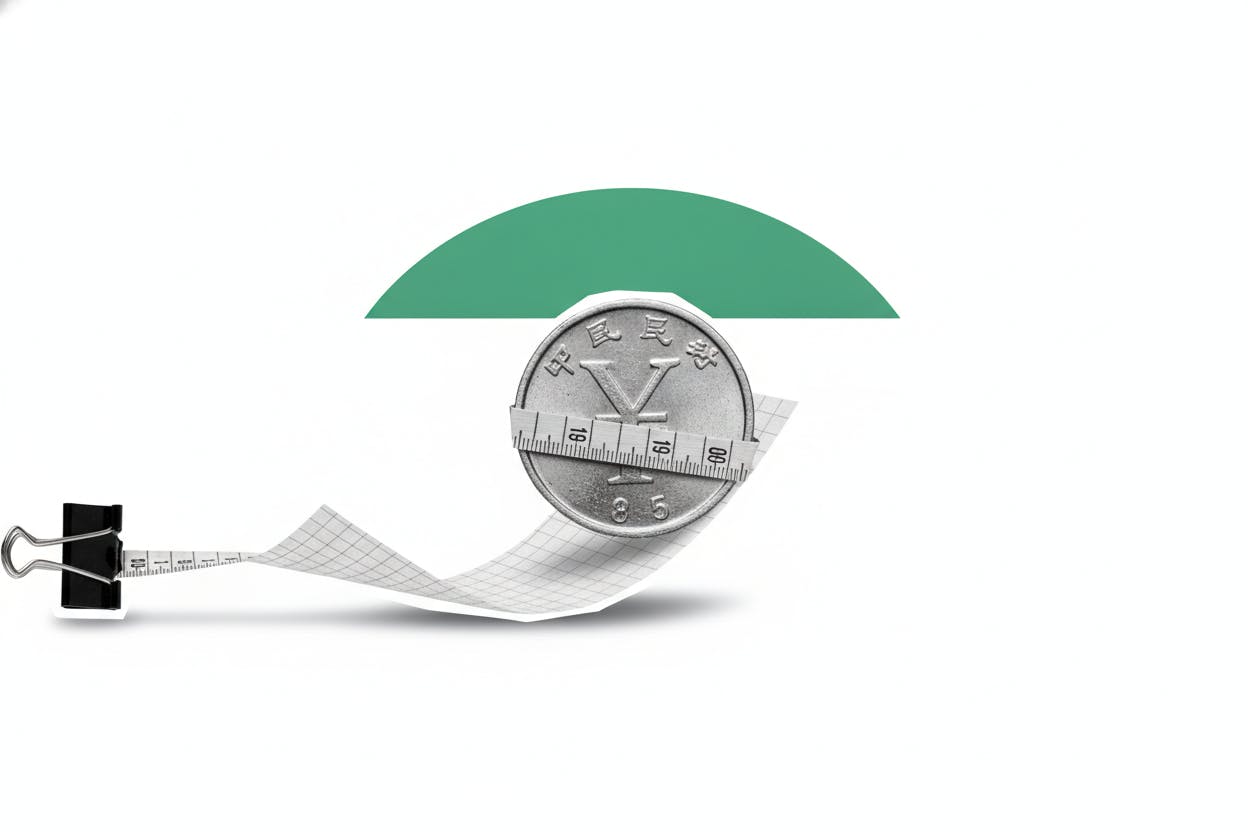
China's yuan slipped from a 3-1/2-year high on Tuesday after the People's Bank of China (PBOC) set a weaker daily reference rate, effectively tapping the brakes on an eight-week rally. The move came even as the US dollar remained soft in global markets, underscoring Beijing's desire to manage the pace of the currency's rise rather than let it run unchecked.
How China's currency mechanism works
Unlike most major currencies, the yuan does not float freely. Each morning, the PBOC sets a daily "fix" — a reference midpoint for the onshore yuan against the dollar. The currency is then allowed to trade within a 2% band on either side of that fix during the day. This system gives the central bank a powerful lever to influence the yuan's value without direct intervention.
On this occasion, the PBOC set the fix at 6.7841 per dollar, which Reuters reported was 593 "pips" (a pip is a tiny unit of exchange-rate movement) weaker than what market participants had estimated. Meanwhile, spot trading was closer to 6.7238. That gap is significant: a weaker fix leaves less room for the yuan to strengthen within the day's trading band, effectively capping its upside.
The yuan had been on a tear, climbing for eight straight weeks to reach its strongest level in 3-1/2 years. The rally was driven by a combination of a softer US dollar, strong Chinese exports, and expectations of further economic recovery. But Beijing has historically preferred a stable or gradually appreciating currency, wary of the impact a sharp rise could have on exporters and financial stability.
Why the PBOC is stepping in
By setting a weaker fix, the PBOC is signaling that it is comfortable with the yuan's appreciation but wants to slow the pace. This is a common tactic: central banks often "lean against the wind" to smooth excessive volatility, even when the underlying trend is in one direction.
The move also comes against a backdrop of a broadly softer dollar. The US dollar index has been under pressure recently, with the dollar hitting a three-month low as markets anticipate potential Federal Reserve rate cuts and as Treasury buybacks and the Jackson Hole symposium loom. A weaker dollar typically boosts the yuan, but the PBOC's action shows it is not willing to let that happen too quickly.
For China, a stronger yuan has both benefits and costs. It makes imports cheaper and helps contain imported inflation, but it also makes Chinese exports more expensive for foreign buyers, potentially hurting the competitiveness of the country's manufacturers. With global demand already uncertain, Beijing is likely keen to avoid adding to exporters' woes.
What it means for investors
For everyday investors, the PBOC's move is a reminder that currency markets are not always driven purely by fundamentals. Government policy can play a decisive role, especially in countries like China where the central bank has significant control over the exchange rate.
If you hold yuan-denominated assets or invest in Chinese stocks, a slower appreciation could mean less of a currency boost to your returns. Conversely, if you are a US-based investor with exposure to Chinese equities, a weaker yuan could slightly reduce the dollar value of your holdings.
The move also has broader implications for global markets. A calmer yuan reduces the risk of a sudden, disruptive appreciation that could roil trade flows and emerging-market currencies. It may also ease concerns about a potential currency war, as other Asian exporters might otherwise feel pressure to weaken their own currencies to stay competitive.
Looking ahead, investors will be watching whether the PBOC continues to set weaker fixes or allows the yuan to resume its climb. The central bank's stance will likely depend on the trajectory of the US dollar, China's export data, and the broader economic outlook. As always, the key is to stay informed and not overreact to a single day's move.
For those tracking the region, the yuan's path is intertwined with broader dollar weakness and commodity strength, which have been supporting emerging-market assets. A softer dollar has also helped gold prices and commodity-linked markets, though the PBOC's intervention shows that even a weak dollar does not guarantee a one-way bet on currencies.
In the end, the PBOC's action is a classic example of central bank management: letting the market breathe, but not letting it run away. For investors, it's a useful reminder to factor in policy risk when assessing currency and cross-border investments.



