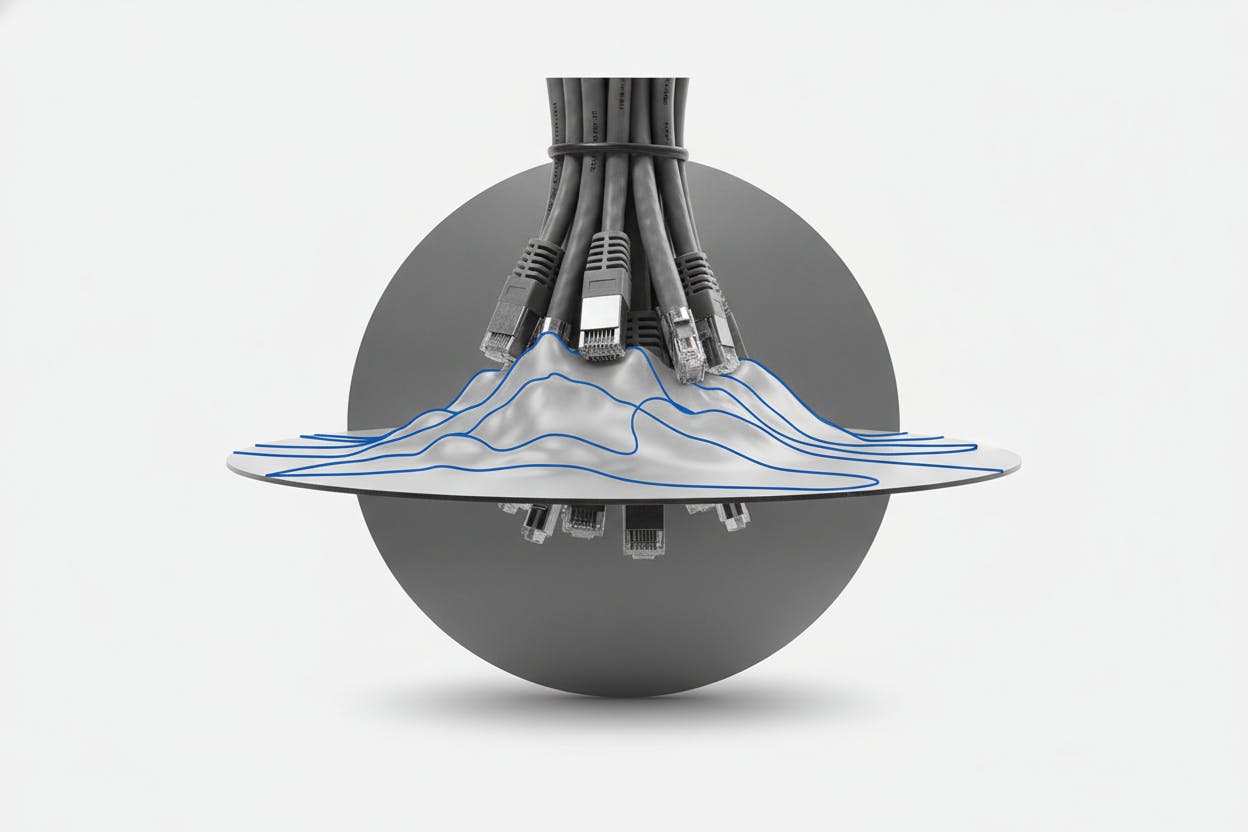
A new artificial intelligence startup, Accelerated Understanding, says its system can process 5 trillion data points in a single prompt — a scale that would dwarf today's most advanced chatbots. The company, co-founded by Caltech professor Anima Anandkumar and former NVIDIA researcher Benedikt Jenik, is taking what it calls a “physics-first” approach to AI, according to a Reuters report.
Instead of training models to predict the next word in internet text, Accelerated Understanding is building models that predict how physical systems evolve across space and time. The startup says it is already lining up enterprise customers, starting with chip design — a field where simulating complex physical behavior is critical.
What is a neural operator?
Most popular AI models, like the ones behind ChatGPT, are built on a design called a Transformer. They learn patterns from massive amounts of text and generate responses by predicting the next word. That works well for language, but it is not naturally suited to problems involving physics, like fluid dynamics, materials stress, or electromagnetic fields.
Accelerated Understanding is using a different mathematical framework called “neural operators.” Anandkumar helped develop this approach, which is designed to learn the relationship between inputs and outputs in physical systems — essentially teaching the model to understand the rules of how things change over time and space. The company says this allows it to handle enormous datasets, up to 5 trillion data points in a single prompt, far beyond what a typical chatbot can manage.
For context, a trillion is a thousand billion. Processing that much information at once could allow engineers to run simulations that would otherwise take supercomputers days or weeks, in a fraction of the time.
Why chip design?
Chip design is a natural first market for this kind of AI. Designing a modern microprocessor involves simulating how electrical signals move through billions of transistors, how heat dissipates, and how materials behave under stress. These are physics problems, not language problems.
If Accelerated Understanding's models can accurately predict those behaviors faster than traditional simulation tools, chipmakers could save time and money in the design cycle. The company says it is starting with enterprise deals in this area, though it did not name specific customers.
This is part of a broader trend of AI startups moving beyond chatbots into scientific and engineering applications. Other companies are also raising large sums to help businesses train and own their own AI models, as River AI's recent $1.1 billion round shows. And the appetite for AI infrastructure is not slowing down — Nvidia has been doubling down on AI startups ahead of its earnings, and Higgsfield quadrupled its valuation to $5.4 billion in just six months.
What it means for investors
For everyday investors, the key takeaway is that AI is expanding beyond the well-known language models. While companies like OpenAI and Google dominate the text-based AI market, a new wave of startups is targeting specialized, high-value problems in engineering, science, and manufacturing.
This could be significant for a few reasons. First, it suggests that the AI boom is not just about chatbots — there is real demand for AI that can solve complex physical problems. Second, it highlights the growing importance of compute power and data, which could benefit chipmakers and cloud providers. Third, it shows that venture capital is still flowing heavily into AI, even as some investors worry about a bubble.
However, it is important to be cautious. Accelerated Understanding is a private startup, and its claims have not been independently verified. Many AI startups make bold promises that take years to deliver. The company has not disclosed its valuation or funding details, and it is not clear how quickly it can turn its technology into a profitable business.
For investors, the practical implication is to watch how this plays out. If physics-first AI proves useful in chip design and other industries, it could create new opportunities for the companies that adopt it — and for the semiconductor and software firms that support it. But as with any early-stage technology, there is a wide gap between a promising demo and a sustainable business.
In the meantime, the broader AI investment theme remains strong. Blackbird recently raised A$1.05 billion for tech and AI startups in Australia and New Zealand, and Shanghai AI chip startup Kiwimoore has filed for a Hong Kong IPO. These moves suggest that investors are still willing to bet big on AI, even as the technology evolves in new directions.
For now, Accelerated Understanding is a name to watch, but not one to chase. Its success will depend on whether its physics-first models can deliver real-world results — and whether it can find enough paying customers to build a durable business.