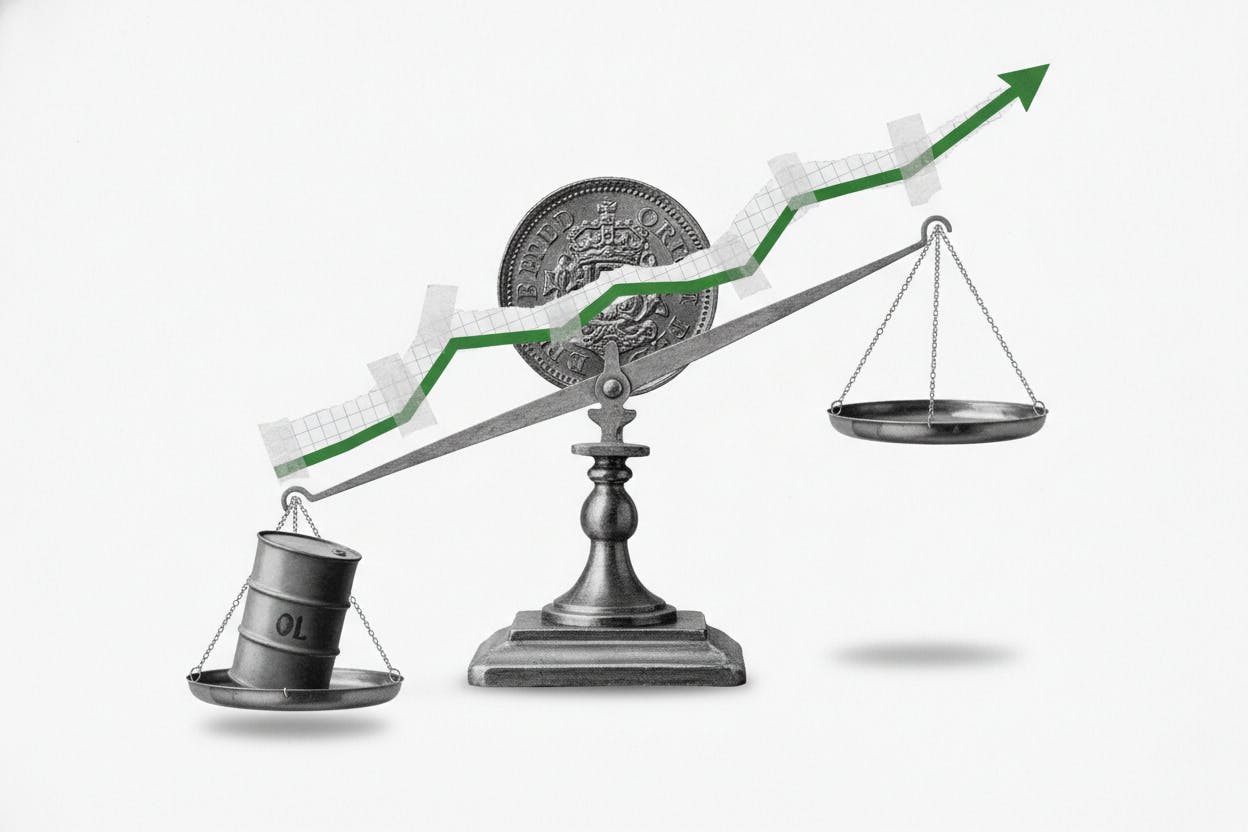
The British pound surged to $1.345 and reached a one-year high against the euro on Wednesday after Bank of England (BoE) chief economist Huw Pill signaled that UK interest rates may still need to rise. The comments suggest the central bank is taking a less relaxed stance on inflation than its peers, particularly as energy prices climb again.
Why the Pound Jumped
Currencies tend to move based on where investors expect interest rates to go. Higher expected rates make a currency more attractive to hold, because they offer better returns on deposits and bonds. Pill's remarks indicated that the BoE is less willing to ignore an inflation bump than the US Federal Reserve or the European Central Bank, according to Monex Europe, a currency brokerage, via strategist Barry van der Laan.
That distinction matters right now because energy prices are back in focus. Oil has risen about 5% this week, with Brent crude trading around $76 a barrel. The UK imports a lot of energy, so higher oil prices can feed directly into inflation. That, in turn, pushes traders to pencil in a "higher-for-longer" path for UK rates, which supports the pound.
Broader Support for Sterling
Beyond the BoE's hawkish tone, there were other supportive factors for the pound. Improved growth sentiment in the UK economy and a wave of cross-border deals involving British companies have also helped. But in the near term, sterling's direction is likely to hinge more on how the BoE reacts to any energy-led inflation surprises than on day-to-day domestic data.
This dynamic echoes a pattern seen in other markets. For example, Japan's wholesale inflation accelerated in June, raising rate hike prospects there, while Mexico's inflation dropped to 3.37%, easing pressure on its central bank to cut rates. In the UK, the focus is squarely on energy.
What It Means for Investors
For everyday investors, the key takeaway is that the pound's strength reflects a shift in rate expectations. When the BoE signals it may keep tightening policy, markets typically raise their expectations for UK rates relative to the US and eurozone. That gap influences currency "carry" trades—where investors borrow in low-yielding currencies to invest in higher-yielding ones—and the cost of hedging foreign investments. This can pull more capital toward sterling-denominated assets.
However, there is a trade-off. If oil-driven inflation is the trigger for more tightening, then headlines about energy prices can move the pound faster than usual. With Brent near $76 after a roughly 5% weekly climb, each fresh jump in oil has a clearer route into UK rate expectations, and that can quickly show up in GBP/USD and EUR/GBP exchange rates.
Investors should also watch how other central banks respond. The BoE's less relaxed tone contrasts with the Egyptian central bank holding rates amid diverging inflation signals, and the Malaysian central bank holding rates as well. The divergence in policy paths can create opportunities and risks for currency-focused portfolios.
The Bottom Line
The pound's rise to $1.345 and a one-year high against the euro is a direct result of the BoE's hawkish stance on inflation, particularly as energy prices climb. For investors, this means UK assets may become more attractive in the short term, but the volatility tied to oil prices adds a layer of uncertainty. As always, staying informed about central bank signals and energy markets is crucial for navigating currency moves.