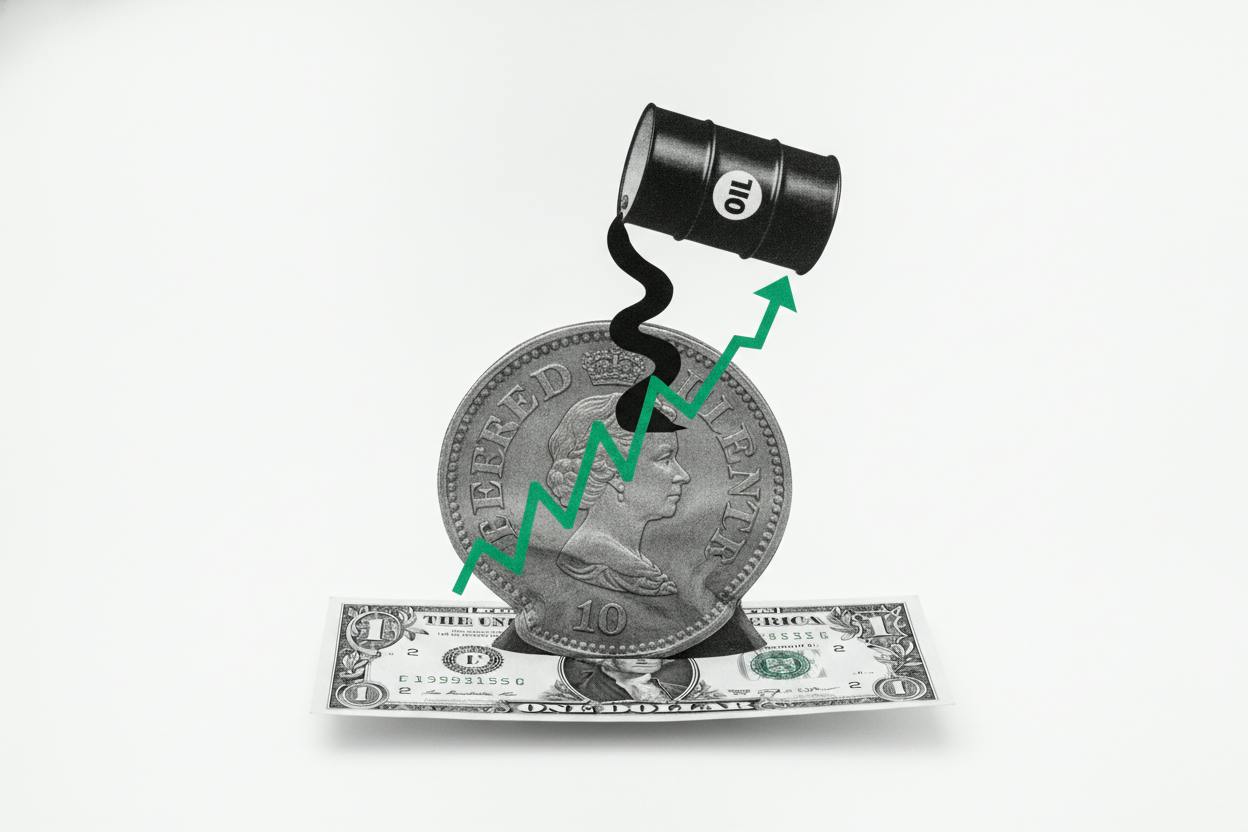
The British pound fell to $1.3474 on Tuesday, its weakest level in recent sessions, as a sharp jump in oil prices and a broad rally in the US dollar weighed on the currency. Brent crude, the international benchmark, climbed 3% to $108 a barrel, adding to inflation worries and prompting investors to seek the safety of the greenback.
The move comes just a day before the Federal Reserve's latest policy decision, which markets are watching closely for clues on the path of US interest rates. The dollar strengthened broadly, not just against sterling, as traders positioned for the possibility that US rates could stay higher for longer.
Why the dollar is winning
The dollar's strength is not just a UK story. It reflects a global shift in sentiment. When investors feel anxious about the economic outlook or inflation, they often buy US dollars as a safe haven. The US currency also tends to benefit when interest rates in the US are expected to remain elevated, because higher rates make dollar-denominated assets more attractive to yield-seeking investors.
Tuesday's oil spike added fresh fuel to that dynamic. Crude at $108 is a significant level—it's up sharply from earlier in the year and raises the cost of energy for businesses and consumers alike. That can feed into higher inflation, which in turn makes central banks more cautious about cutting rates or more inclined to keep them high.
For the pound, the pressure is twofold. On one hand, the dollar is strong. On the other, the UK economy is showing signs of strain. Recent growth data has been soft, and while some investors think the Bank of England could sound less dovish than expected, the consensus is that it will hold rates steady when it meets on Thursday.
What this means for your money
For everyday investors, a weaker pound has mixed implications. If you hold US stocks or assets priced in dollars, a stronger dollar means your investments are worth more in sterling terms. But if you're planning a trip abroad or buying imported goods, a weaker pound makes those purchases more expensive.
The oil price jump is also a double-edged sword. Higher energy costs can squeeze corporate profits and push up inflation, which erodes the real value of savings. It also tends to push bond yields up, which can hurt the prices of existing bonds in your portfolio.
For UK investors, the FTSE 100 often benefits from a weaker pound because many of its constituent companies earn in dollars. Indeed, the FTSE 100 has been rising as investors seek shelter in defensive stocks, a trend that could continue if the pound stays under pressure.
Oil's ripple effects
The jump in Brent to $108 is not happening in a vacuum. It's part of a broader move in commodities that has been driven by supply concerns and geopolitical tensions. Red Sea shipping risks have lifted tanker costs, adding to the upward pressure on crude prices.
Higher oil prices are rarely good news for the global economy. They act like a tax on consumers and businesses, reducing spending power and increasing production costs. For central banks, they complicate the fight against inflation, making it harder to justify rate cuts.
That's why the oil spike is feeding into the dollar's strength. If the Fed signals that rates will stay high, the dollar could continue to rally, putting further pressure on the pound and other currencies.
What to watch next
All eyes are now on the Fed's decision on Wednesday. The central bank is widely expected to hold rates steady, but the accompanying statement and press conference will be scrutinized for any hints about future moves. If the Fed sounds hawkish—meaning it emphasizes the need to keep rates high—the dollar could extend its gains.
For sterling, the Bank of England's meeting on Thursday is the next key event. While a hold is expected, any surprise in the vote or tone could move the pound. Central bank decisions are dominating currency markets, and the pound is no exception.
For investors, the takeaway is to stay diversified and be aware of currency and commodity risks. A strong dollar and high oil prices can create winners and losers across asset classes. Emerging market currencies and AI stocks have already felt the pinch, and more volatility could be ahead.
In the meantime, the pound's slide to $1.3474 is a reminder that currency markets are sensitive to global forces. Whether you're investing in UK or US assets, keeping an eye on the dollar and oil can help you understand the moves in your portfolio.