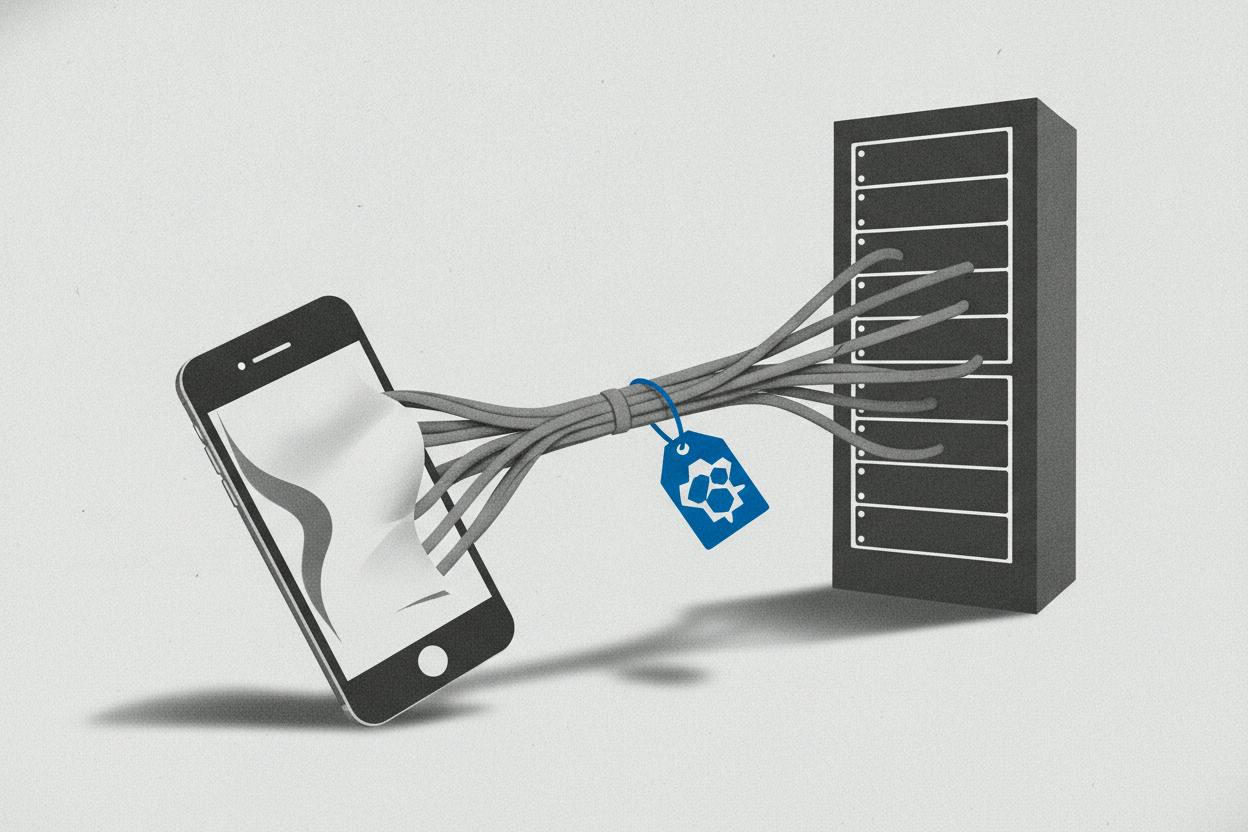
Qualcomm's latest quarterly results painted a familiar picture for investors: the company's core smartphone chip business remains under pressure. Revenue from handset processors missed Wall Street's expectations, and management flagged declining sales tied to Apple devices. The shortfall underscores how much the chipmaker still depends on a smartphone market that has been slow to recover.
But there was a notable counterpoint. Qualcomm is rapidly accumulating deals in artificial intelligence and 5G infrastructure, including a major agreement that allows Amazon to purchase up to $60 billion of its AI chips. That deal, reported by Reuters, signals that hyperscale data-center operators — the companies that run massive cloud computing networks — are increasingly looking at Qualcomm as a supplier for their AI workloads.
Why the phone business is struggling
Qualcomm is best known for the Snapdragon processors that power many of the world's Android smartphones, as well as the modems that connect Apple's iPhones to cellular networks. When smartphone demand cools, Qualcomm feels it quickly. The company's handset chip revenue missed expectations this quarter, reflecting a broader slowdown in consumer upgrade cycles.
Management also pointed to shrinking sales related to Apple. Qualcomm has long supplied modems for iPhones, but Apple has been working to develop its own in-house modem technology — a shift that threatens a meaningful slice of Qualcomm's revenue over time. CEO Cristiano Amon told Reuters that Android demand has likely bottomed, suggesting the worst of the handset downturn may be in the past. He also said the company is planning for a future where Apple contributes less to its top line.
That's a significant strategic pivot. For years, Qualcomm's fortunes have been closely tied to the health of the smartphone market and its relationship with Apple. Now the company is trying to convince investors that its next phase of growth will come from elsewhere.
The AI and 5G opportunity
The Amazon deal is the clearest example of that shift. Hyperscalers — cloud giants like Amazon Web Services, Microsoft Azure and Google Cloud — are spending billions on AI infrastructure, and they need specialized chips to train and run AI models. Qualcomm is positioning its data-center chips as an alternative to the dominant offerings from Nvidia and AMD.
While Qualcomm is a relative newcomer to the data-center AI chip market, the Amazon agreement gives it a marquee customer and a foothold in a fast-growing segment. The deal structure, which allows Amazon to buy up to $60 billion of chips, suggests a long-term commitment rather than a one-off purchase. That kind of volume would represent a substantial new revenue stream if it materializes.
Qualcomm is also expanding its 5G footprint. The company recently signed a major 5G deal with SpaceX for Starlink Mobile, which could open new markets for its connectivity technology. These deals matter because they diversify Qualcomm's revenue away from smartphones and toward infrastructure and enterprise customers — segments that tend to have longer contracts and more predictable demand.
Investors have been watching this transition closely. Qualcomm has been betting its post-Apple future on cars, IoT and AI chips, and the latest announcements are evidence that the strategy is gaining traction. The company's automotive and Internet of Things (IoT) businesses have also been growing, though they remain smaller than the handset segment.
What it means for investors
For everyday investors, Qualcomm's quarter is a reminder that even large, established tech companies can face sudden shifts in their core markets. The smartphone chip business is still the biggest part of Qualcomm's revenue, so any weakness there will weigh on the stock in the near term. The Apple modem transition is a slow-moving headwind that could take years to fully play out, but it's a risk worth understanding.
At the same time, the AI and 5G deals offer a potential upside that didn't exist a few years ago. If Qualcomm can convert these agreements into steady revenue, it could reduce its reliance on handsets and create a more diversified business. The Amazon deal, in particular, is a vote of confidence from one of the world's largest cloud providers.
Investors should watch a few things going forward: how quickly Qualcomm's data-center chip revenue ramps up, whether the Amazon deal leads to additional hyperscaler customers, and whether Android demand truly has bottomed. The company's ability to execute on these new opportunities will determine whether it can offset the decline in Apple-related sales.
It's also worth noting that Qualcomm isn't alone in this race. Competitors like Nvidia and AMD are deeply entrenched in the AI chip market, and Qualcomm will need to prove its technology can compete on performance and cost. The company's 5G deal with SpaceX for Starlink Mobile shows it's not standing still, but the AI chip battle is just beginning.
For now, Qualcomm's story is one of transition. The phone business is still soft, but the AI deals are growing. How that balance shifts over the next few quarters will be key for investors.