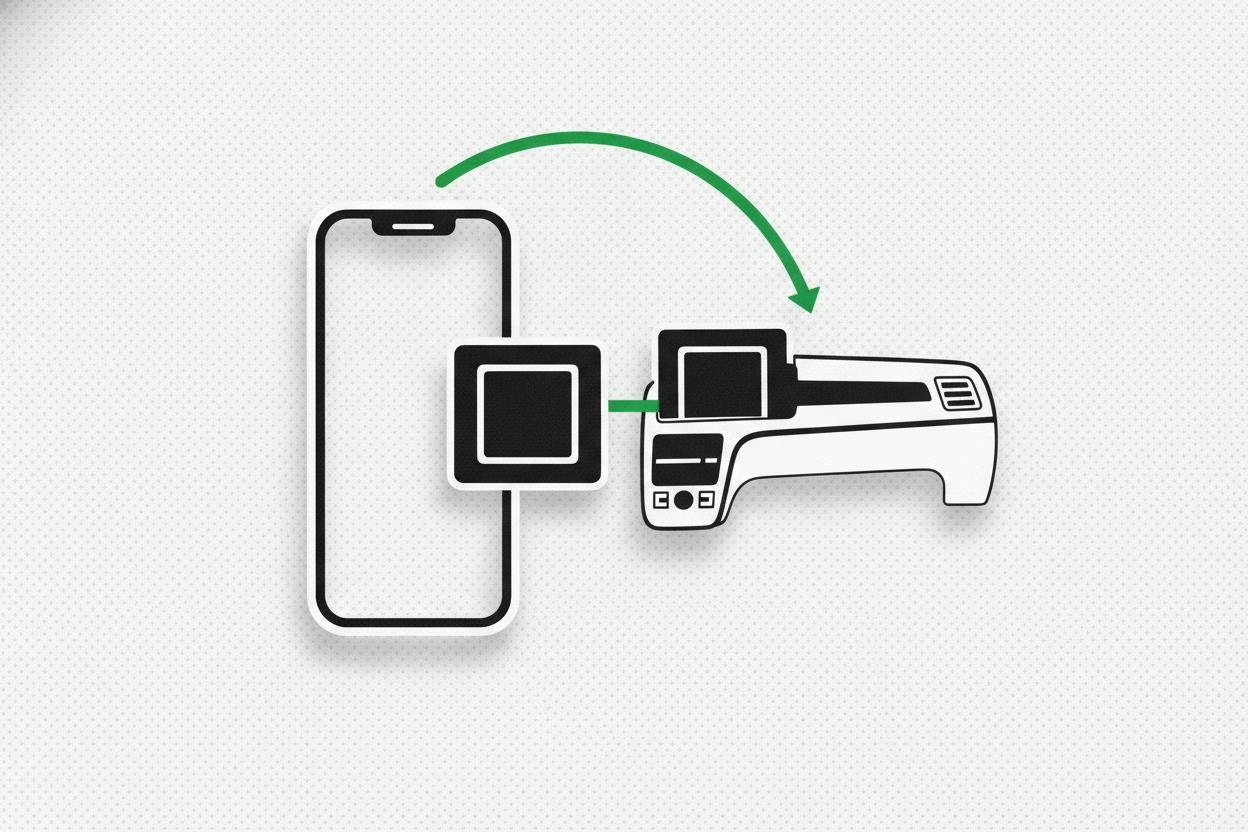
Qualcomm is asking investors to look past the smartphone. The US chip designer told investors to expect first-quarter revenue of $10.4 billion to $11.2 billion, a range whose midpoint landed slightly above the average analyst estimate tracked by LSEG. The company credited new deals in automotive, connected devices and AI data-center chips for helping to offset a still-soft handset market — and the eventual loss of its business supplying modems to Apple.
The guidance matters less for the headline number than for the story it tells. Qualcomm has spent years as one of the most Apple-exposed companies in the chip industry, and Wall Street has long applied a discount to that kind of single-customer risk. Management is now trying to reframe the company as a diversified supplier whose revenue comes from many end markets rather than one product cycle and one giant customer.
Why the Apple overhang matters
Qualcomm designs the modem chips that connect phones to cellular networks, and for years it has been a key supplier to Apple's iPhone. Apple has been building its own modem technology in-house, which means Qualcomm's Apple revenue is expected to shrink over time. That prospect has weighed on the stock because a single contract change can swing earnings for a company with heavy customer concentration.
CEO Cristiano Amon said Qualcomm's fiscal 2027 outlook assumes no further Apple revenue at all. In other words, the company wants investors to judge its 2027 numbers as if Apple were already gone. That is an unusual move — most companies prefer to keep optionality in their guidance — but it sets a clean bar for whether the diversification strategy is working.
Design wins: the leading indicator to watch
The key metric Qualcomm is pointing to is design wins, which rose 70% year over year for fiscal 2027 even with Apple excluded. A design win is when a chipmaker's part gets selected for a product platform — a car infotainment system, an industrial sensor, a data-center accelerator. It does not generate revenue immediately. There is usually a long build-in period before a design win turns into sales, but once it does, it can last for years because switching suppliers mid-product-cycle is expensive and disruptive.
That long tail is exactly why Qualcomm is leaning on the metric. Automotive and industrial programs tend to have multi-year lifecycles and high switching costs, which can make revenue steadier than the quarterly swings of smartphone demand. If the mix keeps tilting toward these program-style businesses, Qualcomm's results should become less sensitive to phone shipment surprises.
The deals behind the pitch
Two agreements stand out. Qualcomm has a framework that lets Amazon buy up to $60 billion of its AI chips and related products over time — a program-style arrangement that, if it scales, would give Qualcomm a foothold in the data-center market dominated by Nvidia. Qualcomm also has a multi-year 5G agreement tied to SpaceX's planned Starlink Mobile network, a deal that starts in 2027 and extends its connectivity franchise beyond handsets.
Those are meaningful endorsements, but investors should treat them as frameworks rather than guaranteed revenue. Large supply agreements often include volume commitments that depend on the customer's own product timelines, and data-center AI chips face intense competition from established players. The design-win pipeline is the better gauge of whether Qualcomm is genuinely broadening its base.
What it means for investors
For ordinary investors, the takeaway is about how to read Qualcomm's guidance. The midpoint beat is a modest positive, but the more important signal is the composition of revenue. If automotive, IoT and data-center sales keep growing as a share of the total, Qualcomm's earnings should become less cyclical and less dependent on a single customer — the kind of shift that can support a higher valuation over time.
The risks are real, though. Global smartphone shipments have been weak, and higher memory prices — pulled up by demand from AI servers — can raise the cost of building consumer devices, which tends to squeeze upgrade demand. A soft handset market pressures Qualcomm's core business even as it tries to diversify. And design wins are a promise, not a receipt: they convert to revenue only after long build-in periods, so the payoff from today's 70% jump may not show up for several quarters.
Investors will want to watch a few things next: whether Qualcomm's automotive and IoT segments keep growing faster than handsets, whether the Amazon and Starlink agreements move from framework to firm orders, and whether management holds to its Apple-free 2027 assumption. If those pieces fall into place, the company's pitch — that it is no longer just a handset story — becomes easier to believe.