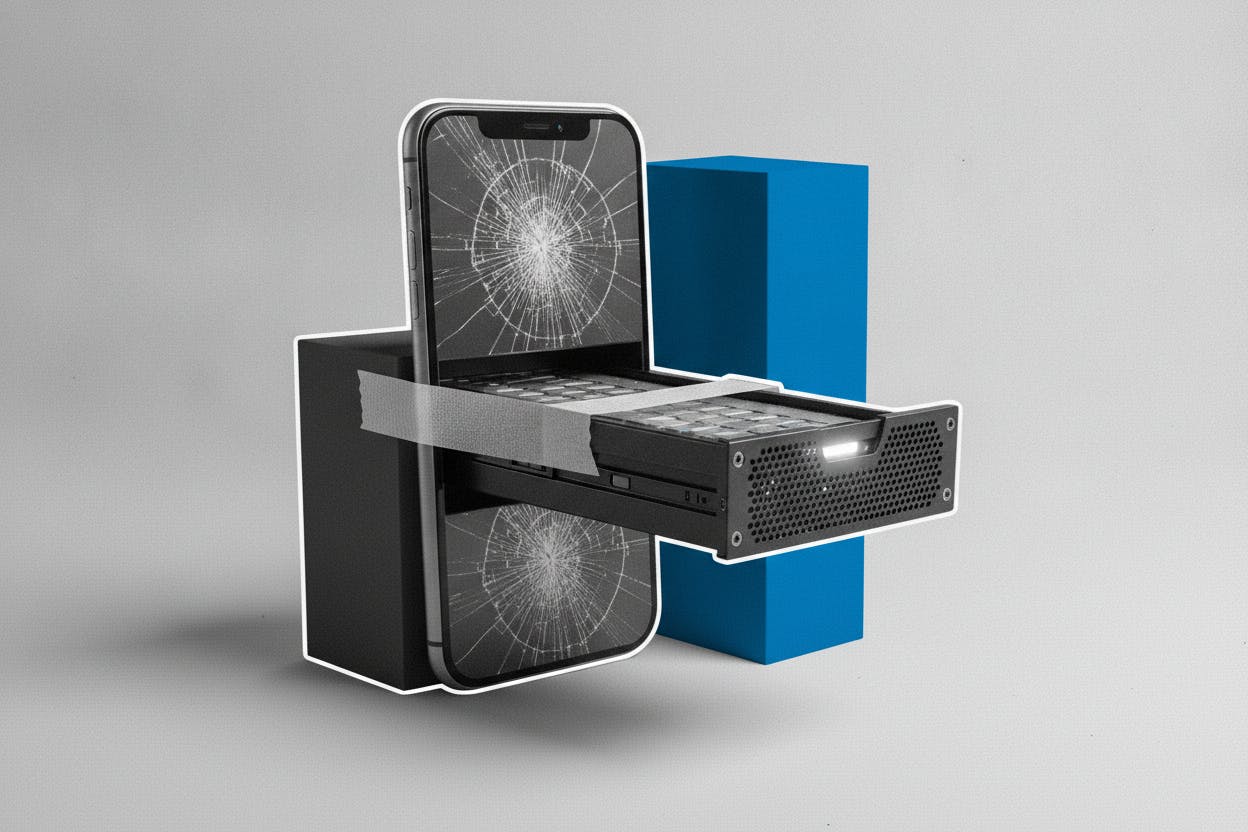
Qualcomm used its June 24th investor day to lay out a vision where smartphones become a smaller piece of its business. The chipmaker raised its fiscal 2029 revenue target for non-handset segments to $40 billion, signaling a major push into data centers, cars, and connected devices. It also announced new data center partnerships with Microsoft Azure and Meta, marking a strategic shift toward high-performance computing and artificial intelligence.
From Phones to Data Centers and Cars
Qualcomm said handsets could shrink to about one-third of its technology revenue by fiscal 2029. The rest is expected to come from data centers, automotive, and the Internet of Things (IoT). The company put a headline number on that pivot: more than $15 billion of data center revenue by fiscal 2029, including about $1 billion in fiscal 2027 tied to two hyperscale customers for custom chips.
In the automotive space, Qualcomm highlighted a $65 billion design-win pipeline and a goal of roughly $10 billion of automotive revenue by fiscal 2029. The company is trying to broaden its growth engines beyond phones, where it has long dominated with Snapdragon processors.
Timing and Execution Risks
The catch is timing. Qualcomm expects commercial sampling of its High Bandwidth Compute Gen 1 with the AI250 accelerator in mid-2027 and a data center CPU launch in mid-2028. Big cloud customers typically take time to qualify new hardware and get software running smoothly. In data centers, a “design win” is more like an invitation to a long onboarding process than an immediate sales spike: chips must pass qualification tests, software needs to be tuned, and rollouts often start small before scaling.
That’s why investors are likely to focus on whether mid-2027 sampling leads to visible revenue on schedule, not just on the fiscal 2029 headline. Delays wouldn’t erase the opportunity, but they can push it out and make long-dated targets feel less certain. And with Qualcomm framing the early ramp around just two hyperscale buyers, quarterly results could look lumpy if either customer changes its deployment pace.
What It Means for Investors
Qualcomm’s $1 billion fiscal 2027 hyperscaler goal is the first real checkpoint for its $15 billion fiscal 2029 data center target. For everyday investors, this story is about diversification and execution. Qualcomm is trying to reduce its dependence on the cyclical smartphone market, which has seen ups and downs. Success in data centers and automotive could provide more stable, long-term growth.
But the path is not guaranteed. The company faces stiff competition from established data center chip makers like Intel and AMD, as well as custom chip efforts from cloud giants themselves. Qualcomm’s automotive pipeline is large, but converting design wins into revenue takes years. Investors should watch for progress on sampling timelines and customer adoption as key indicators.
For context, other companies have also been making strategic moves. For instance, Bain Capital is nearing a buyout of Volkswagen's marine engine unit, showing how firms are repositioning for future growth. Similarly, Sky's deal to buy ITV's channels reflects consolidation in media. Qualcomm's pivot is part of a broader trend of companies seeking new revenue streams.
Bottom Line
Qualcomm’s investor day laid out an ambitious roadmap, but the real test will be execution over the next few years. The company has a clear strategy to reduce reliance on smartphones, but data center and automotive markets are competitive and slow to develop. For now, the $1 billion fiscal 2027 hyperscaler target is the first milestone to watch. If Qualcomm can hit that, it will build credibility for its longer-term goals.