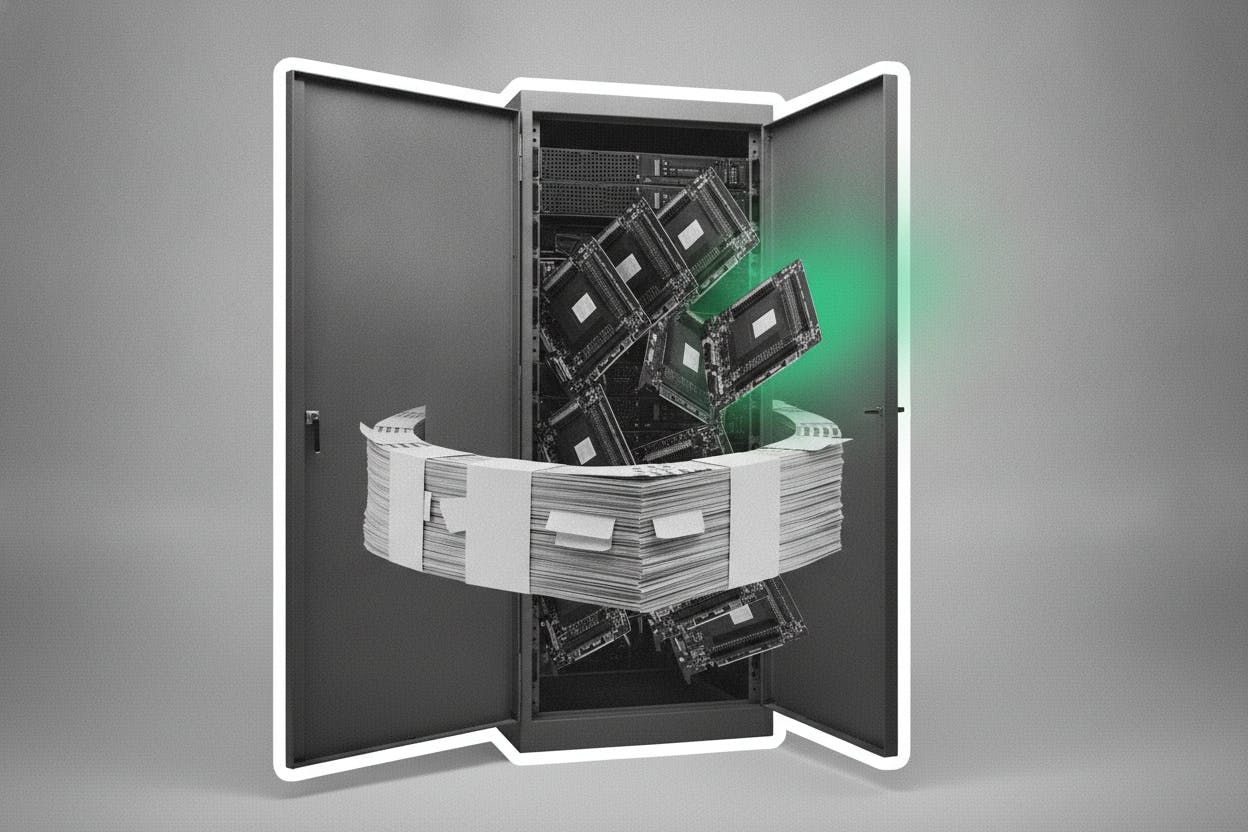
Rackspace Technology is making a bigger bet on enterprise artificial intelligence, and analysts at RBC Capital Markets see potential for significant revenue growth. The company is building out new GPU (graphics processing unit) infrastructure with backing from chipmaker AMD, funded through fresh financing. RBC estimates this push could lift Rackspace's enterprise AI revenue to between $450 million and $600 million by 2028.
What Rackspace Is Doing
Rackspace, a cloud computing and managed services provider, is expanding its AI offerings for businesses. The new GPU buildout will provide computing power needed to run AI workloads, such as training large language models or deploying machine learning applications. GPUs are specialized processors that excel at handling the parallel calculations required for AI, and demand for them has surged as companies race to adopt the technology.
The buildout is backed by AMD, a major competitor to Nvidia in the GPU market. AMD has been aggressively pushing its Instinct series of AI accelerators as an alternative to Nvidia's dominant H100 and B200 chips. For Rackspace, partnering with AMD could offer cost advantages and supply chain flexibility, especially as Nvidia's GPUs remain in high demand and short supply.
To fund the expansion, Rackspace secured fresh financing, though the company has not disclosed the exact amount or terms. The move comes as Rackspace shifts its guidance toward higher-margin AI deployments, signaling a strategic pivot from lower-margin legacy services.
RBC's Revenue Projections
RBC Capital Markets' analysis suggests the AI push could become a meaningful revenue driver for Rackspace. The projected range of $450 million to $600 million by 2028 represents a significant ramp from current levels, though the company has not provided specific near-term AI revenue figures. RBC notes that the shift toward higher-margin deployments could improve profitability, even as overall revenue growth may take time to materialize.
Investors should note that these projections are based on assumptions about adoption rates, pricing, and competition. The enterprise AI market is still evolving, and Rackspace faces competition from cloud giants like Amazon Web Services, Microsoft Azure, and Google Cloud, as well as specialized AI infrastructure providers.
What It Means for Investors
For everyday investors, Rackspace's AI push represents a bet on the broader trend of companies integrating AI into their operations. Enterprise AI—where businesses use AI for tasks like customer service automation, data analysis, or product development—is expected to grow rapidly in coming years. Rackspace aims to capture a slice of that market by offering managed GPU infrastructure and related services.
However, the path to $450-600 million in AI revenue is not guaranteed. The company must execute on its buildout, secure customers, and compete effectively. Rackspace's stock has been volatile, and the company has faced challenges in recent years, including a sharp decline after disappointing updates. The new AI strategy could help stabilize its business, but investors should watch for signs of customer adoption and margin improvement.
Rackspace's focus on higher-margin deployments is a positive signal. In the tech services industry, margins often determine long-term profitability. By prioritizing AI workloads that command premium pricing, Rackspace could improve its financial health, even if revenue growth is gradual.
The AMD partnership is also noteworthy. AMD has been gaining traction in the AI chip market, and its GPUs are often more affordable than Nvidia's. If AMD's Instinct series proves reliable for enterprise AI, Rackspace could offer competitive pricing to customers, potentially attracting cost-conscious businesses.
Broader Context
The enterprise AI infrastructure market is heating up. Companies across industries are investing in AI capabilities, driving demand for GPUs and cloud services. Major tech firms like Meta and Micron have announced large AI investments, underscoring the sector's momentum. For Rackspace, the challenge is differentiating itself from hyperscale cloud providers that offer similar services.
Rackspace's strategy of targeting mid-market and enterprise customers who want managed AI services could be a niche. Many businesses lack the expertise to deploy and manage GPU clusters, creating an opportunity for managed service providers. If Rackspace can deliver reliable, cost-effective AI infrastructure, it could carve out a profitable position.
Investors should also consider the broader economic backdrop. High interest rates and inflation have pressured tech stocks, and Rackspace's reliance on debt financing for its buildout adds financial risk. The company's ability to generate returns on its GPU investments will depend on customer demand and pricing power.
What to Watch Next
Key metrics to monitor include Rackspace's AI revenue growth, customer wins, and gross margins. The company's next earnings report will provide updates on its guidance shift and the progress of its GPU buildout. Investors should also watch for announcements about new AI partnerships or large customer contracts.
Rackspace's stock performance will likely hinge on execution. If the company can demonstrate that its AI strategy is gaining traction, the revenue projections from RBC could become a reality. If not, the stock may continue to struggle.
For now, Rackspace's AI push is a story of potential, not certainty. Investors should weigh the opportunity against the risks and keep an eye on the broader enterprise AI landscape.