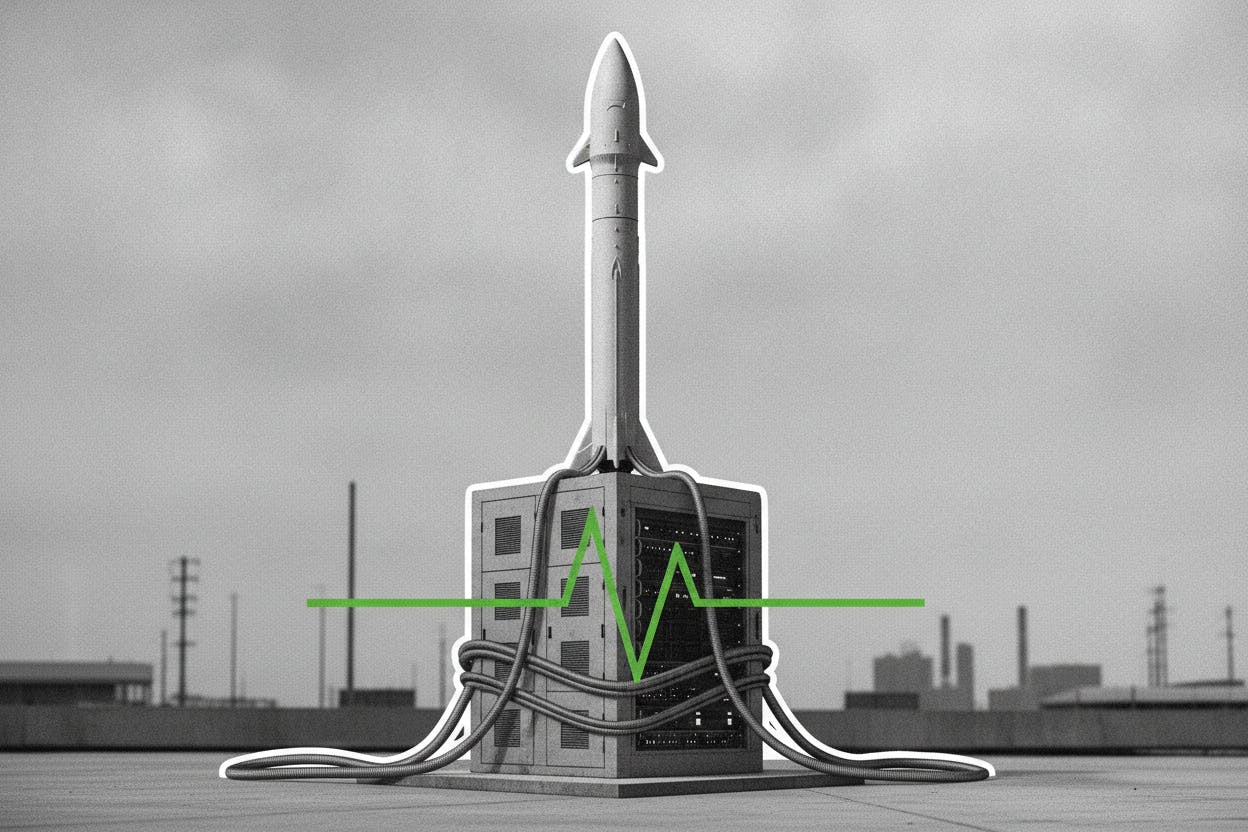
SpaceX is often associated with rockets and space exploration, but analysts say the company's artificial intelligence (AI) story is firmly grounded—in data centers. The near-term revenue opportunity lies in so-called Colossus compute deals, which could bring in more than $28 billion a year, according to analyst estimates. Orbital AI, powered by the Starship rocket, remains a longer-term bet that may not materialize until the next decade.
What Are Colossus Compute Deals?
Colossus refers to large-scale data-center infrastructure designed to handle the massive computing demands of AI workloads. These facilities house thousands of specialized chips, such as graphics processing units (GPUs), that train and run AI models. SpaceX, through its Starlink satellite internet division and other ventures, is positioning itself to provide the connectivity and infrastructure needed to link these data centers.
The $28 billion annual revenue estimate reflects the potential scale of these deals. For context, that figure would rival the revenue of some of the largest tech companies. It underscores how AI is driving demand for data-center capacity, and how SpaceX is looking to capture a slice of that market.
Why Data Centers, Not Space?
While SpaceX's brand is built on rockets and space missions, the company's leadership has increasingly highlighted AI as a growth area. However, the most immediate applications of AI—such as cloud computing, autonomous systems, and large language models—require vast amounts of computing power on Earth. Data centers are the backbone of this infrastructure.
Orbital AI, which would involve running AI models in space, is a more futuristic concept. It would rely on SpaceX's Starship, a next-generation rocket still in development, to deploy satellites or space-based computing platforms. Analysts view this as a next-decade opportunity, given the technical and regulatory hurdles involved.
This split between near-term and long-term AI revenue is similar to how other companies approach emerging technologies. For example, Rackspace recently cut its 2026 forecast while teaming with Palantir on AI for regulated industries, highlighting the challenges of timing AI investments.
What It Means for Investors
For everyday investors, the key takeaway is that SpaceX's AI story is not just about space. The company is leveraging its existing assets—such as Starlink's satellite network and its engineering expertise—to tap into the booming data-center market. This could provide a more predictable revenue stream than the speculative promise of orbital AI.
However, investors should note that SpaceX is a private company, so its stock is not publicly traded. Those interested in gaining exposure to the AI data-center theme might look at publicly traded companies in the same space, such as cloud providers, chipmakers, or data-center real estate investment trusts (REITs).
The $28 billion figure is an estimate, not a guarantee. It depends on factors like the pace of AI adoption, competition from other data-center providers, and SpaceX's ability to execute on its Colossus strategy. SpaceX stock remains above its IPO price, but near-term catalysts have faded, suggesting that investors are already pricing in some of these expectations.
Broader Market Context
The AI boom has driven a surge in demand for data centers globally. Companies like Microsoft, Amazon, and Google are investing billions in new facilities. SpaceX's entry into this market adds a new player with unique capabilities, particularly in connectivity and logistics.
At the same time, the broader market is watching how AI-related spending translates into revenue. Allianz recently had its price target raised as AI-driven cost cuts exceeded expectations, showing that AI can boost profits in unexpected ways. For SpaceX, the Colossus deals represent a similar opportunity to monetize AI infrastructure.
Investors should also consider the competitive landscape. Established data-center operators like Equinix and Digital Realty have deep experience, while chipmakers like Nvidia are critical to AI computing. SpaceX's advantage may lie in its ability to offer integrated solutions, combining satellite connectivity with ground-based computing.
The Bottom Line
SpaceX's AI story is a tale of two timelines. In the near term, Colossus data-center deals could generate substantial revenue, potentially exceeding $28 billion annually. In the longer term, orbital AI remains a promising but distant opportunity tied to Starship. For investors, the focus should be on the ground-based opportunity, which is more tangible and closer to reality.
As always, it's important to do your own research and consider how any investment fits into your overall portfolio. The AI data-center theme is a growing one, but it comes with risks, including technological shifts, regulatory changes, and competition.