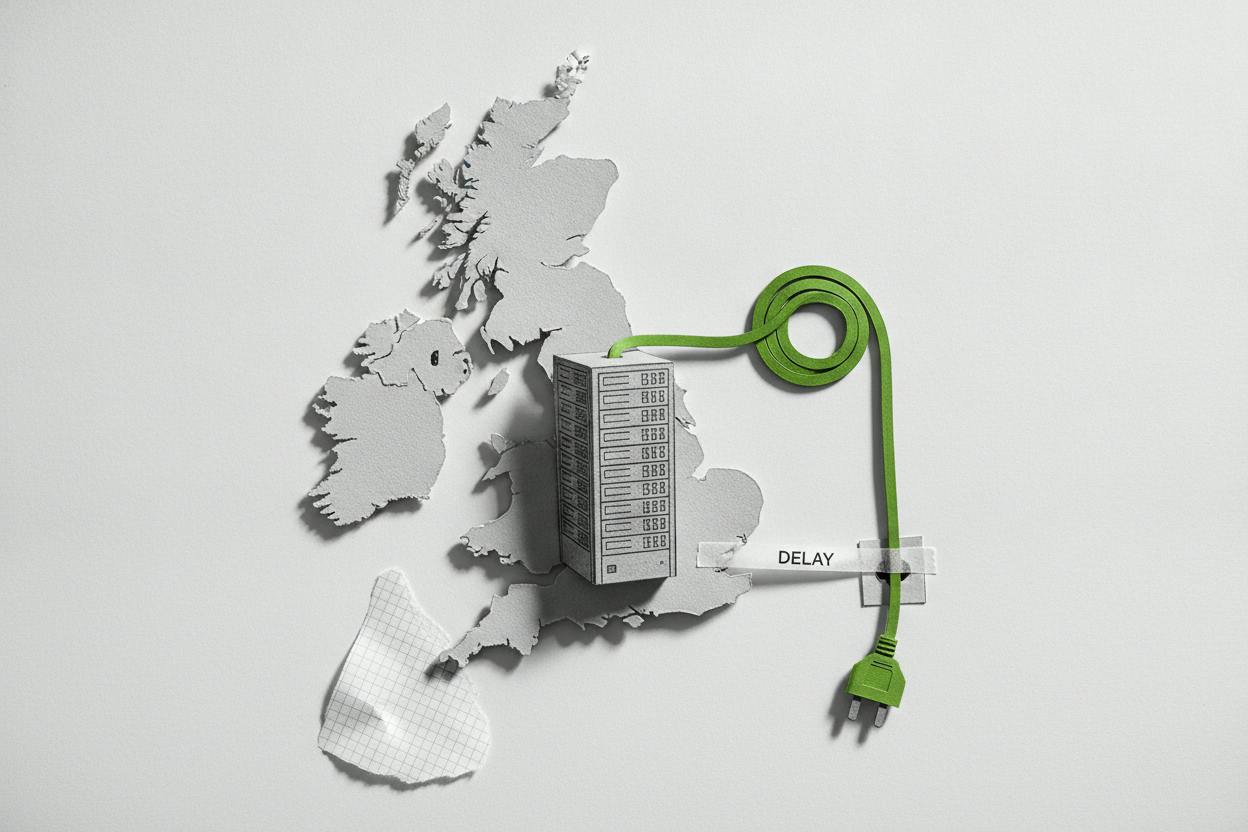
Rackspace Technology, a cloud services company, delivered a mixed message to investors this week: it lowered its 2026 financial targets even as it unveiled a new artificial intelligence partnership with Palantir Technologies. The dual announcements highlight the company's struggle to balance near-term headwinds with longer-term growth bets.
Guidance Cut Raises Questions
Rackspace now expects 2026 revenue of $2.45 billion to $2.55 billion, down from its previous range. It also lowered its forecast for adjusted EBITDA (earnings before interest, taxes, depreciation, and amortization) to $285 million to $295 million. For the current quarter, the company guided for an adjusted loss of $0.08 to $0.11 per share on revenue of $641 million to $649 million — both figures below what analysts surveyed by FactSet had expected.
Such a downgrade can signal that the business is consuming more cash than anticipated, potentially requiring additional funding for operations or turnaround efforts. That context makes the company's separate announcement of an equity distribution agreement with Goldman Sachs particularly significant.
Stock Sale Facility Adds Dilution Risk
Rackspace said it can sell up to $250 million of its common stock over time through Goldman Sachs, with proceeds earmarked for working capital, capital expenditures, and growth initiatives. This is not a one-time fundraising but an at-the-market (ATM) program, meaning the company can issue shares gradually depending on its needs and market conditions.
For investors, the key concern is dilution. When a company issues new shares, existing shareholders' ownership stakes are reduced, and future earnings per share can suffer. The mere existence of a $250 million ATM facility can create a "supply overhang" — traders may expect Rackspace to sell shares into any price strength, making rallies harder to sustain. Until management clarifies how much of the facility it plans to use, this dilution risk will likely remain a topic of discussion.
This situation echoes other companies that have turned to equity raises after disappointing guidance. For example, ABC-Mart shares tumbled 11% despite a 10% profit jump after its flat outlook disappointed investors, showing how forward guidance can move markets.
AI Partnership Targets Regulated Industries
On the positive side, Rackspace announced a collaboration with Palantir, a data analytics software company known for its work with government and large enterprises. The two firms will combine Palantir's Foundry and Artificial Intelligence Platform with Rackspace's "governed" cloud infrastructure and managed services. The goal is to help mid-market and sovereign clients in heavily regulated sectors like healthcare and financial services deploy AI with tighter controls.
This partnership is a longer-term bet. Regulated industries often move slowly when adopting new technology due to compliance and security requirements. By offering a pre-packaged, compliant AI solution, Rackspace hopes to capture a niche that larger cloud providers may overlook. However, the revenue impact from such deals typically takes quarters or years to materialize.
The AI push comes as many tech companies race to capitalize on the generative AI boom. TCS recently topped revenue estimates partly on banking demand, showing how cloud and AI services are driving growth in some corners of the tech sector. But Rackspace's smaller scale and recent guidance cut suggest it faces steeper challenges.
What It Means for Investors
For everyday investors, the Rackspace story illustrates several important dynamics. First, guidance cuts are red flags that warrant attention — they often precede further weakness or strategic shifts. Second, equity distribution agreements can pressure a stock even if the company hasn't sold any shares yet, because the potential for dilution hangs over the stock price.
Third, AI partnerships are exciting but not instant fixes. While the Palantir deal may generate headlines, investors should watch for concrete revenue contributions and customer adoption before assuming it will transform the business.
Rackspace's situation also highlights the broader trend of companies using stock sales to fund operations. Pepco Group recently lifted its 2026 guidance after strong sales, showing how some firms are managing to grow without such measures. Rackspace, by contrast, appears to be in a more defensive posture.
Investors will want to monitor Rackspace's next earnings call for details on how much of the $250 million facility it intends to use, and for any signs that the Palantir partnership is gaining traction. Until then, the stock may face headwinds from the combination of lowered expectations and dilution risk.