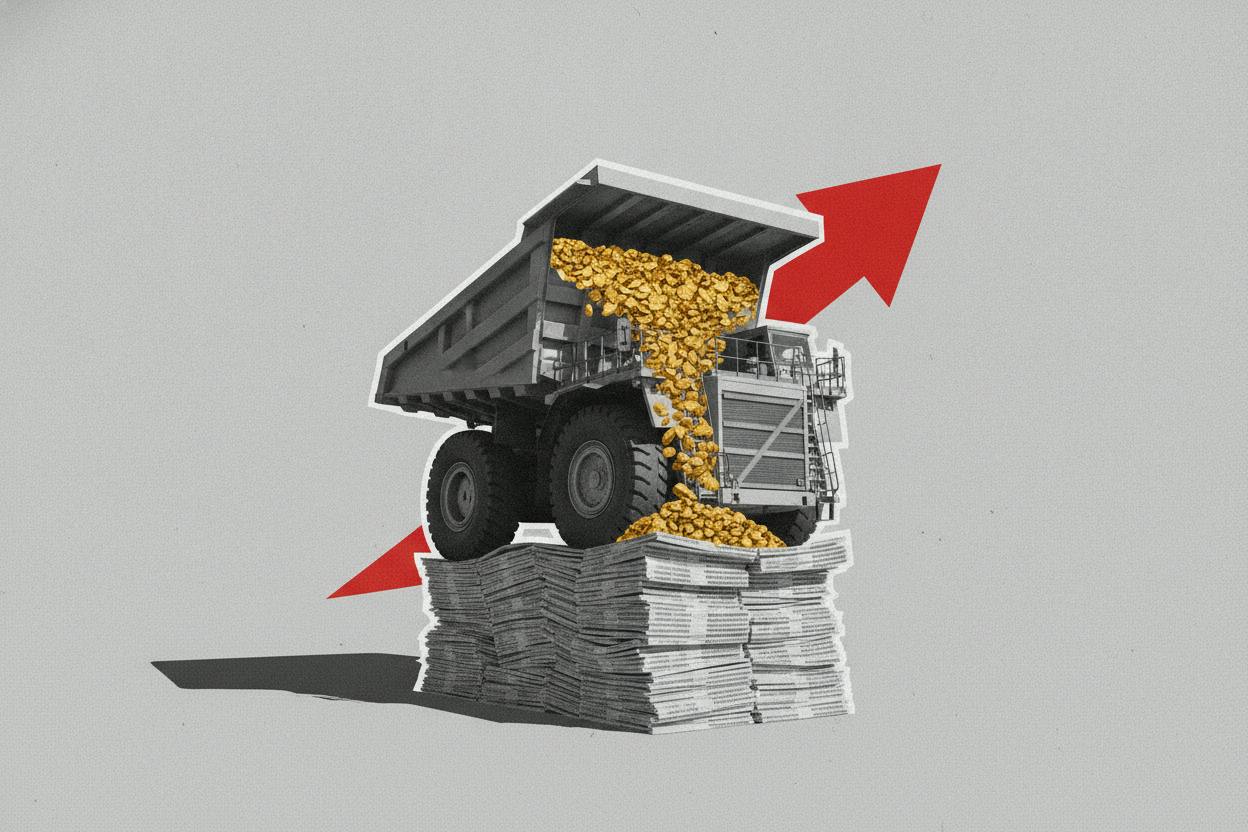
Australian gold miner Ramelius Resources has laid out a more ambitious growth plan, lifting its fiscal 2030 production target to between 560,000 and 610,000 ounces of gold. The company also increased the budget for expanding its Mt Magnet processing plant in Western Australia to AU$280 million, up from an earlier estimate of AU$223 million.
The updated guidance, disclosed in an Australian Securities Exchange filing on Monday, signals that Ramelius is betting on higher output to offset rising costs across its operations.
What the new numbers show
For fiscal 2027, Ramelius now expects to produce between 205,000 and 225,000 ounces of gold. The company also guided to all-in sustaining costs (AISC) of AU$2,150 to AU$2,350 per ounce. AISC is a key industry metric that includes mining, processing, and sustaining capital costs—essentially the cost of keeping the mine running. It gives investors a clearer picture of profitability than simple cash costs.
Alongside the production and cost targets, Ramelius plans to spend between AU$480 million and AU$570 million on growth projects over the period. Much of that capital is earmarked for Mt Magnet, where the plant expansion is expected to boost throughput and lower unit costs over time.
The company's decision to raise both output and spending reflects a common strategy among mid-tier gold miners: invest now to capture higher production later, especially when gold prices remain historically elevated.
Why this matters for investors
For everyday investors, the key takeaway is that Ramelius is prioritizing growth, but at a price. Higher capital spending can pressure near-term cash flows, while the elevated AISC guidance suggests cost pressures are not going away quickly. Gold miners have been grappling with rising labor, energy, and materials costs, and Ramelius is no exception.
The increased Mt Magnet budget—up about 25% from the earlier figure—highlights how inflation is affecting project costs across the sector. Investors should watch whether the company can deliver on these targets without further cost overruns.
Gold prices have been strong in recent years, supported by central bank buying and geopolitical uncertainty. That backdrop makes higher output targets more attractive, but it also means Ramelius is locking in expectations that could be tested if gold prices fall.
Broader market context
Ramelius's announcement comes as Australian miners have been in focus. The ASX 200 has seen miners rally while rate hike odds climb, reflecting a mixed environment for resource stocks. Higher interest rates can strengthen the local dollar, which in turn can pressure gold prices in Australian dollar terms.
Gold miners across the sector are making similar moves. For instance, Pelangio is mapping deeper gold targets in Ghana, showing that exploration and expansion remain priorities industry-wide. Meanwhile, other companies are setting long-term growth targets, like YETI's 2030 targets for steady sales growth, though in a different sector.
Investors should also note that Ramelius's fiscal 2030 target is a long-range goal, subject to many variables, including ore grades, mining conditions, and gold prices. The company will need to execute its expansion plan smoothly to hit those numbers.
What to watch next
Key things for investors to monitor include the progress of the Mt Magnet expansion, any further updates to cost guidance, and the trajectory of gold prices. If gold remains strong, Ramelius could generate significant cash flow from its higher output. If prices weaken, the company's higher cost base could squeeze margins.
Ramelius's shares are likely to react to the news, but the long-term nature of the targets means the market will focus on execution over the next few years. For now, the company is signaling confidence in its growth story, but the proof will be in the delivery.