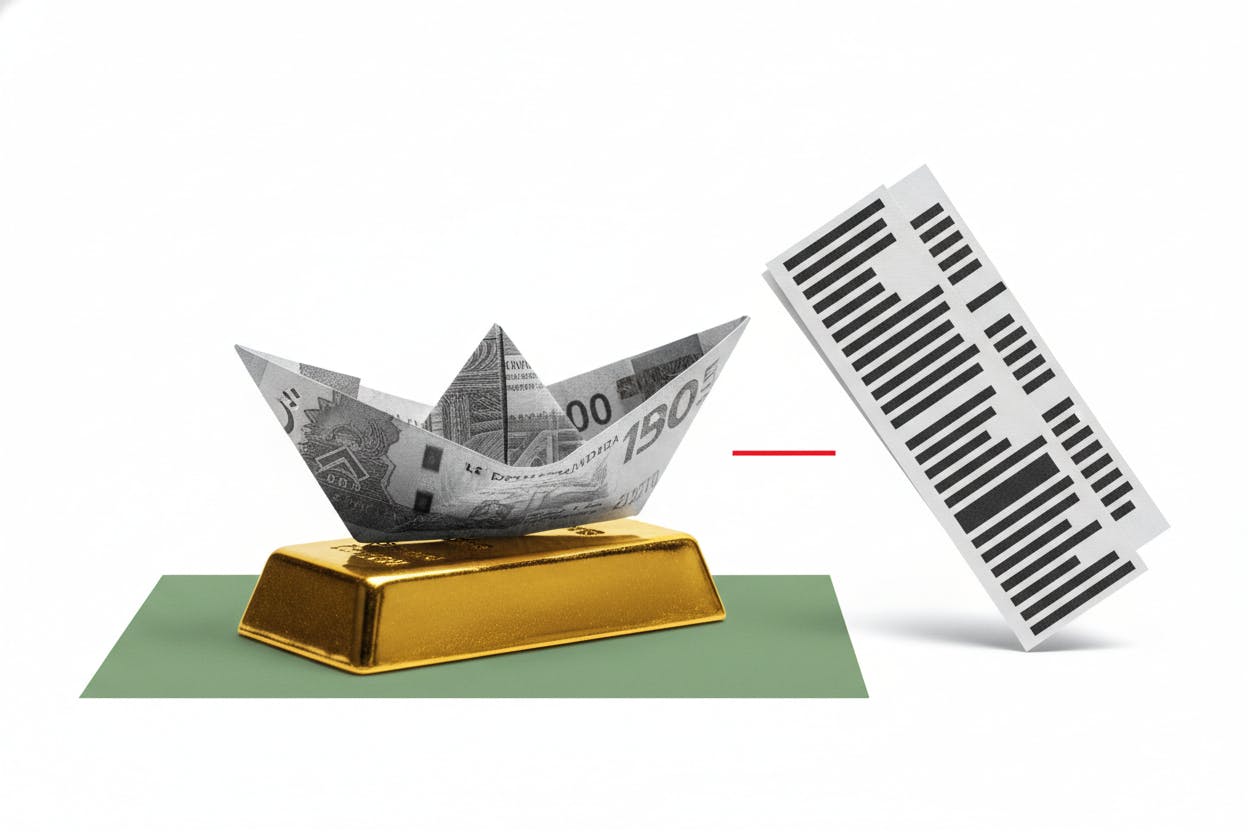
South Africa's rand strengthened to 16.34 against the US dollar on Thursday, helped by a rally in gold prices that marked the metal's best weekly gain since January. But traders remained cautious, keeping positions light ahead of Friday's US non-farm payrolls report, which could reset expectations for Federal Reserve interest-rate policy.
The rand's move reflects a familiar dynamic for South Africa, a major gold producer. When gold prices climb, the country's export earnings and tax revenues tend to improve, which can support the currency. Gold is one of South Africa's key exports, and its price moves often ripple through the rand's value.
Why gold matters for the rand
Gold has been on a strong run this week, with prices heading for their best weekly performance since January. That rally has given the rand a tailwind even as the US dollar held steady ahead of the jobs data. For South Africa, higher gold prices mean more dollars flowing into the economy, which can boost demand for the rand and push its value up.
The relationship isn't perfect—other factors like domestic politics, global risk appetite, and the dollar's broader strength also play a role. But gold's influence is significant enough that traders watch it closely when positioning in the rand.
The rand's gain also comes against a backdrop of mixed economic signals at home. Recent data showed South Africa's private sector barely grew in July as demand softened, a reminder that the economy's recovery remains fragile. That weakness could limit how much the rand can appreciate, even with gold's support.
The US jobs report: a key catalyst
All eyes are now on Friday's non-farm payrolls report, which tracks how many jobs the US economy added last month. The number is one of the most closely watched indicators for the Federal Reserve, as it helps gauge the health of the labor market and, by extension, the path of interest rates.
If the report shows strong job growth, it could reinforce expectations that the Fed will keep rates higher for longer. That would likely boost US Treasury yields and the dollar, making dollar-denominated assets more attractive and putting pressure on emerging-market currencies like the rand. Conversely, a weak report could raise hopes for rate cuts, which would likely weaken the dollar and give the rand further support.
This is why traders are staying cautious. The jobs data can move markets sharply, and many prefer to wait for clarity before taking big positions. As we noted in our earlier look at the dollar's moves, the currency has been sensitive to US data releases, and the payrolls report is the biggest one this week.
What it means for investors
For everyday investors, the rand's movement matters in a few ways. If you hold South African assets—stocks, bonds, or property—a stronger rand can boost your returns when converted back to dollars or other foreign currencies. It can also make imports cheaper, which may help ease inflation pressures.
But the flip side is that a weaker rand can erode the value of foreign investments and push up the cost of imported goods, from oil to electronics. So the currency's direction is a key factor for anyone with exposure to South Africa.
The jobs report is also a reminder of how interconnected global markets are. A single US data point can shift the value of currencies thousands of miles away, affecting everything from your pension fund to the price of your morning coffee.
For now, the rand's strength is a positive sign, but it's far from guaranteed to last. The currency remains sensitive to global risk sentiment, US rate expectations, and domestic economic performance. As we've seen in Africa's mixed currency outlook, some currencies are calm while others face jitters, and the rand sits somewhere in between.
Investors should also keep an eye on other emerging-market currencies, as moves in the dollar often affect them in tandem. The recent climb in Latin American markets on a softer dollar shows how a weaker greenback can lift currencies and commodities across the board.
The bigger picture
Beyond the immediate data, the rand's performance is a window into broader trends. South Africa's economy faces structural challenges—slow growth, high unemployment, and energy constraints—that can weigh on the currency over the long term. But in the short term, commodity prices and global monetary policy often dominate.
Gold's rally this week has been driven by a mix of factors, including safe-haven demand and expectations that the Fed might ease policy later this year. If those expectations grow, gold could continue to climb, providing ongoing support for the rand.
Friday's jobs report will be a critical test. A strong number could reverse the rand's gains, while a weak one could extend them. Either way, the currency is likely to remain volatile, and investors should be prepared for swings.
As always, it's important to remember that currency movements are just one piece of the investment puzzle. Diversification and a long-term perspective remain the best tools for navigating the ups and downs of emerging-market exposure.