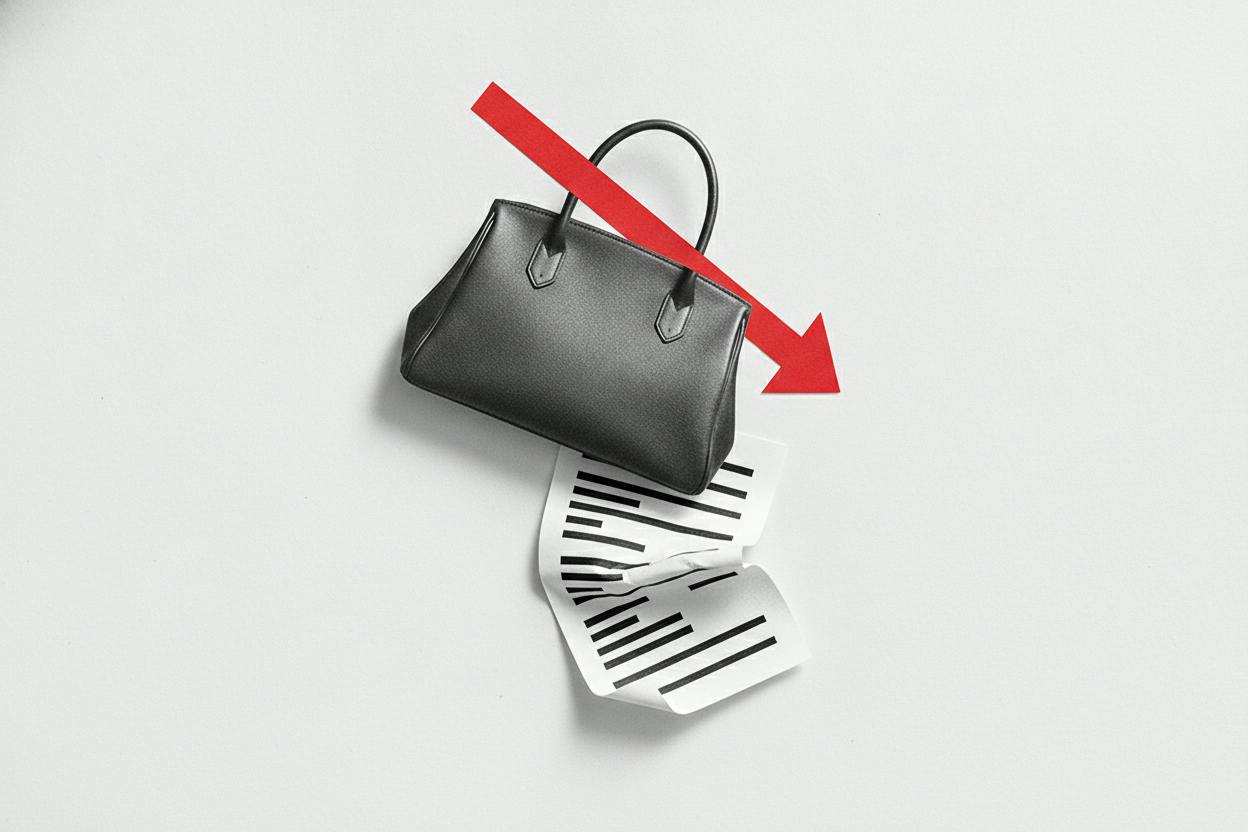
Luxury giant Kering is bracing for another tough quarter, according to RBC Capital Markets, which trimmed its price target on the French group to 260 euros from a previous level. The bank's analysts expect Gucci, Kering's biggest brand, to see organic sales fall 5% in the third quarter, dragging on the company's overall performance when it reports earnings on Oct. 22.
Organic sales strip out the effects of currency swings and acquisitions, giving a clearer picture of underlying demand. A 5% decline at Gucci would mark another quarter of weakness for a brand that has been struggling to reignite consumer interest, particularly in key markets like China and Europe.
Why Gucci matters so much
Gucci is not just another label in Kering's portfolio—it accounts for roughly half of the group's revenue and an even larger share of profits. When Gucci sneezes, Kering catches a cold. RBC's forecast suggests that even if the rest of Kering's brands hold up reasonably well, the fashion and leather goods division—which includes Gucci, Saint Laurent, and Bottega Veneta—could see organic sales dip about 2% in the quarter.
The broader luxury sector has been cooling for over a year. After a post-pandemic spending spree, shoppers have pulled back on high-end purchases, especially in China, where a property crisis and cautious consumer sentiment have weighed on demand. Rivals like LVMH and Hermès have also reported slower growth, though Hermès has proven more resilient thanks to its ultra-exclusive positioning.
RBC's note follows a sell-side call with investors, where the bank laid out its view that Kering is feeling the same demand slowdown as its peers. The bank also suggested that the market may be pricing in too quick a recovery for Gucci, implying that investors hoping for a sharp rebound could be disappointed.
What the price target cut means
A price target is an analyst's estimate of what a stock should be worth over the next 12 months or so. When a bank cuts its target, it's signaling that it sees less upside—or more downside—than before. RBC's move to 260 euros is a modest reduction, but it reflects a cautious outlook for the stock in the near term.
For everyday investors, price targets are useful as a gauge of analyst sentiment, but they're not a guarantee. Analysts can be wrong, and targets are often revised as new data comes in. What matters more is the underlying trend: if Gucci's sales continue to slide, Kering's earnings and share price could stay under pressure.
What to watch on Oct. 22
When Kering reports third-quarter results, investors will be looking for more than just the headline numbers. Key questions include: How deep is the Gucci decline? Is there any sign of stabilization in China? And what is management saying about the brand's turnaround plan, which includes new creative direction and a push into higher-end products?
Kering has been working to refresh Gucci's image, but such efforts take time and money. The company has also been dealing with the fallout from a weak performance in the first half of the year, and the third quarter is unlikely to offer much relief if RBC's forecast is accurate.
For investors, the takeaway is that luxury stocks, once seen as bulletproof, are now vulnerable to the same economic forces affecting other consumer sectors. Interest rates remain elevated, inflation is still biting in some regions, and Chinese shoppers—once the engine of global luxury growth—are spending more cautiously.
That said, luxury groups like Kering have weathered downturns before. Their brands carry enduring cachet, and margins, while under pressure, remain far above most other industries. Long-term investors may see current weakness as a buying opportunity, but short-term volatility is likely to continue until there's clearer evidence that demand is turning around.
In the meantime, RBC's cautious stance is a reminder that even the most iconic brands are not immune to economic cycles. The Oct. 22 report will give investors a fresh look at whether Gucci's struggles are easing or deepening—and what that means for Kering's path forward.