Investment bank RBC Capital Markets is betting that Onto Innovation, a maker of inspection and metrology tools for chip manufacturing, is well positioned for the next upswing in wafer fab equipment (WFE) spending. The bank expects WFE spending to jump roughly 30% in 2026 and more than 35% in 2027, driven by the build-out of AI-focused chipmaking capacity.
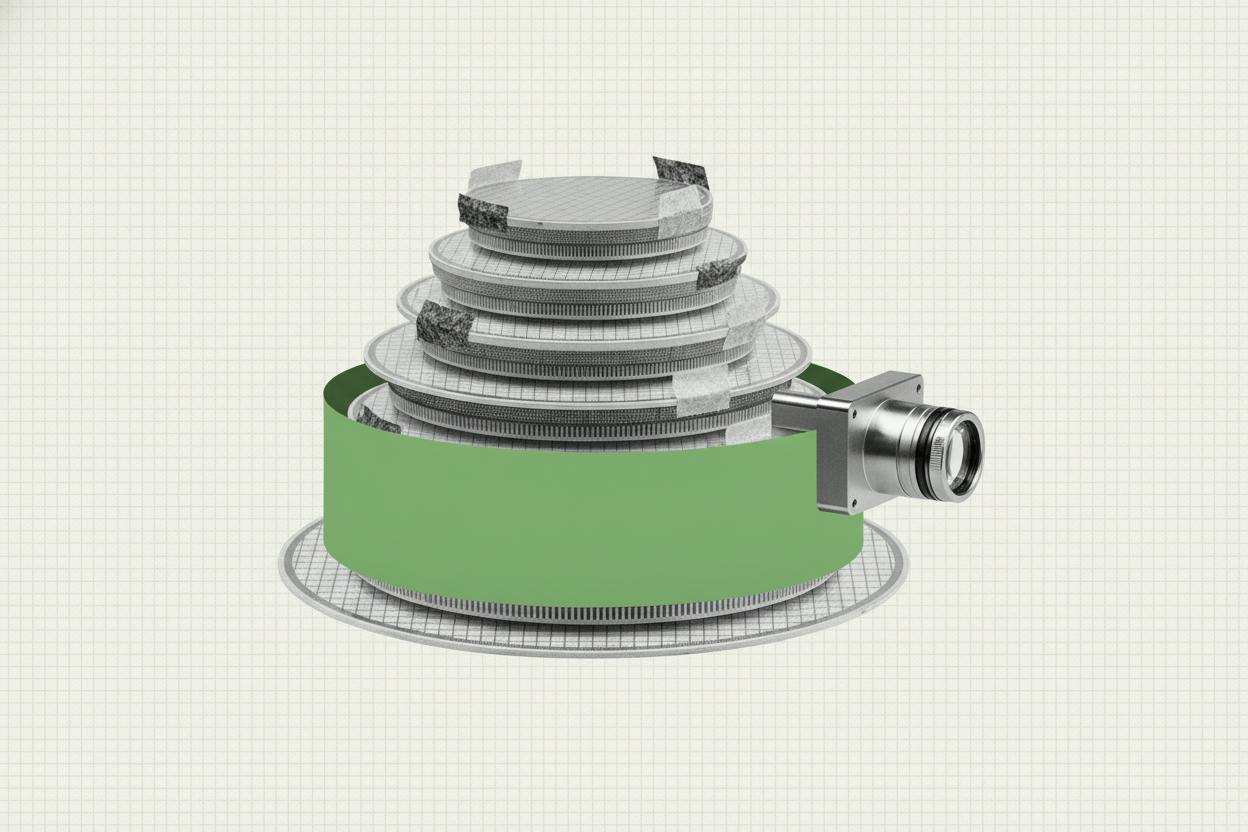
Onto Innovation specializes in process control—the tools that check for defects and measure film thickness and other critical parameters during semiconductor fabrication. As chips become more complex, these tools become more essential, and RBC argues that the next cycle will be about more than just adding capacity.
Why the next WFE cycle is different
RBC’s thesis is that the coming wave of spending won’t simply be about building more fabs. Instead, the emphasis will shift to spending more per wafer to maintain quality. That’s because advanced AI chips rely on high-bandwidth memory (HBM) stacks and advanced packaging techniques like chip-on-wafer-on-substrate (CoWoS). These processes add layers and steps where tiny defects can ruin an entire chip, making rigorous inspection and measurement critical.
“The next cycle is about process control,” the bank’s analysts wrote. “With more layers and more complex packaging, the cost of a single defect rises sharply, so fabs will need more inspection and metrology tools to catch problems early.”
This is a shift from previous cycles, where the focus was on adding raw capacity. Now, the industry is increasingly investing in tools that improve yield and reliability—areas where Onto Innovation has carved out a niche.
AI demand is the key driver
The surge in WFE spending is being fueled by the explosive growth of artificial intelligence. AI accelerators, such as those made by Nvidia and others, require advanced packaging to connect multiple chips and memory stacks. This packaging is more complex than traditional methods, and it demands more inspection steps.
Onto Innovation’s tools are used in both front-end wafer fabrication and advanced packaging. The company’s revenue has been growing as AI-related demand picks up, and RBC expects that trend to continue as the next WFE cycle unfolds.
The bank’s forecast of 30% growth in 2026 and over 35% in 2027 is well above historical averages for WFE spending, which typically grows in the mid-single digits over a cycle. This reflects the outsized impact of AI on the semiconductor industry.
What it means for investors
For everyday investors, the RBC note is a signal that the semiconductor equipment sector could see strong demand in the coming years. Companies like Onto Innovation, which provide specialized tools, may benefit more than those that simply sell standard equipment.
However, it’s important to remember that forecasts are just that—forecasts. WFE spending is cyclical and can be volatile. If AI demand slows or if there’s a broader economic downturn, these growth projections could be revised down.
Investors should also consider that Onto Innovation is a relatively small player compared to giants like Applied Materials or Lam Research. That means its stock can be more volatile, but it also offers more upside if the cycle plays out as RBC expects.
The broader market is also watching AI spending closely. As noted in our coverage of S&P 500 earnings forecasts, AI-related capital expenditures are a key wild card for corporate profits in 2026. If companies continue to invest heavily in AI infrastructure, that bodes well for chip equipment makers.
On the other hand, rising interest rates could cool investment. As we reported on the latest GDP revision, consumer spending remains strong, but the cost of capital is a factor for companies planning big capital expenditures.
For now, RBC’s outlook is optimistic. The bank sees Onto Innovation as a way to play the next WFE cycle, with AI-driven advanced packaging demand helping the company grow faster than the overall market.
As always, investors should do their own research and consider their risk tolerance. The semiconductor industry is known for its booms and busts, and while the AI tailwind is powerful, it’s not guaranteed to last forever.