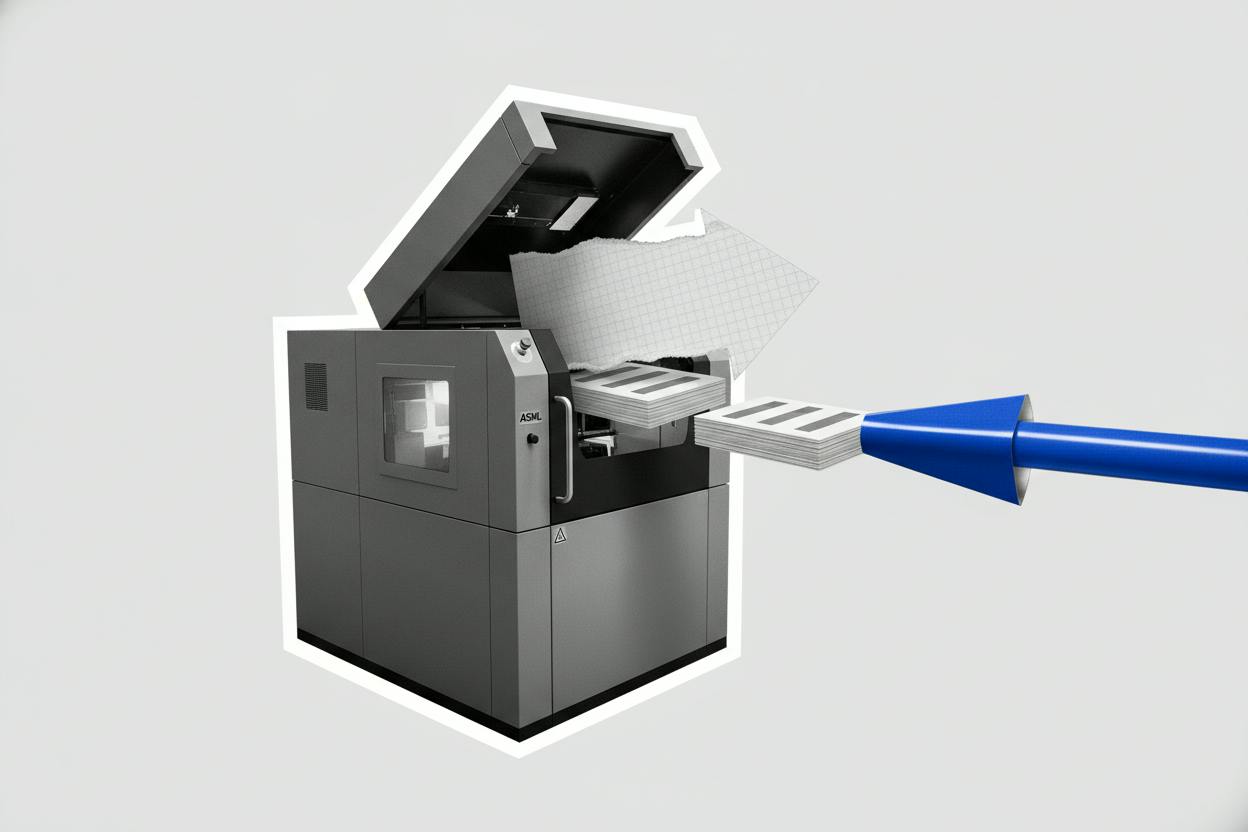
ASML, the Dutch company that dominates the market for advanced chipmaking equipment, is set to report third-quarter results on October 14. Ahead of that release, RBC Capital Markets has come out with a bullish call: the bank expects ASML to beat expectations for the quarter and then guide fourth-quarter revenue and profit above what Wall Street is currently modeling.
RBC's optimism is rooted in what it sees as steady demand for ASML's extreme ultraviolet (EUV) lithography machines—the highly complex tools used to etch the tiniest circuits onto advanced semiconductors. The bank believes that demand will remain strong into 2027 and 2028, which would support ASML's growth well beyond the current quarter.
What RBC is predicting
For the third quarter, RBC forecasts ASML will post revenue of €11.5 billion and earnings per share of €10.60. Those numbers would top the consensus estimates that analysts have been working with. But the more notable part of the call is about the fourth quarter: RBC sees management's guidance coming in 3% to 5% above the Street's consensus of €13.9 billion in revenue and €13.13 in earnings per share.
That gap matters because company guidance often sets the tone for how analysts update their models for the following year. If ASML guides above consensus, it could prompt a wave of upward revisions across the semiconductor equipment sector.
Why EUV demand is the key driver
ASML is the only company in the world that makes EUV lithography systems, which are essential for producing the most advanced chips used in artificial intelligence, smartphones, and high-performance computing. The machines are enormously expensive—each one costs hundreds of millions of dollars—and they are sold to a small group of chipmakers like TSMC, Samsung, and Intel.
Demand for these tools has been volatile in recent years, swinging with the boom-and-bust cycle of the semiconductor industry. But RBC's view is that the current cycle is being supported by a structural shift: the rise of AI has pushed chipmakers to build more advanced fabs, and those fabs need EUV machines. The bank sees that demand persisting into 2027 and 2028, which would give ASML a multi-year runway of growth.
This is not an isolated view. Across the industry, there is growing evidence that AI-related chip demand is straining supply. For example, AMD is reportedly looking at Samsung for memory chips and foundry capacity as AI demand strains existing supply chains. Similarly, Japan's factory confidence has hit a near three-year high on the back of chip demand, underscoring how central semiconductors have become to global manufacturing.
What it means for investors
For everyday investors, the key takeaway is that ASML's earnings report could be a market-moving event, not just for the company itself but for the entire semiconductor supply chain. If ASML beats and guides higher, it would likely boost sentiment for other chip equipment makers and even for chip designers that rely on advanced manufacturing.
However, it's important to remember that RBC's estimates are just one bank's view. The actual results could differ, and ASML's guidance will depend on a range of factors, including the pace of fab construction, geopolitical tensions, and the health of the global economy. Investors should watch the October 14 report closely, but they should also be prepared for volatility around the announcement.
For those who own ASML shares or funds that hold them, the report is a chance to see whether the company's growth story is on track. For those who don't, it's a useful barometer for the health of the tech sector overall. As always, it's wise to consider how any single company's news fits into your broader portfolio and risk tolerance.
RBC's call also echoes a broader theme in the market: the AI boom is driving demand for the building blocks of computing, and companies that provide those building blocks—like ASML—are in a strong position. But that strength is already reflected in many valuations, so the market's reaction to the report will hinge on whether the numbers beat or miss the high expectations that have been set.