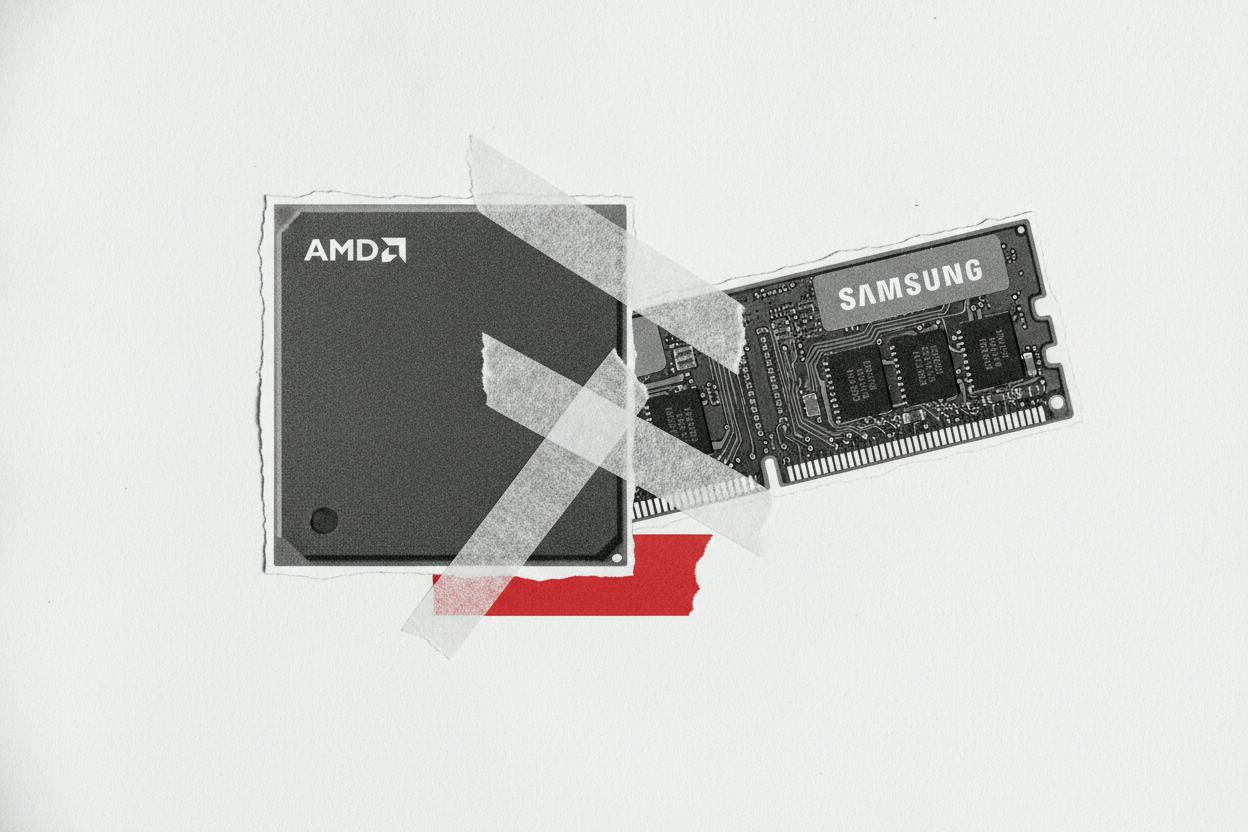
AMD is looking to expand its relationship with Samsung Electronics, according to CEO Lisa Su, as the company scrambles to secure enough memory chips and manufacturing capacity to meet booming demand for AI data-center infrastructure.
Speaking in Seoul, Su said AMD is exploring additional partnership opportunities with the Korean tech giant, which could cover both memory supply and the use of Samsung's foundry services to produce future chips. The remarks underscore a broader industry challenge: AI servers don't just need powerful processors—they also require enormous amounts of memory, and that's becoming a bottleneck.
Why memory is the new battleground
AI workloads are memory-hungry. The large language models and recommendation systems that power generative AI tools rely on high-bandwidth memory (HBM) and other advanced memory chips to feed data to processors quickly. Without enough of these components, even the most advanced GPUs and CPUs can sit idle, waiting for data.
That dynamic has made memory one of the most critical—and constrained—parts of the AI supply chain. Samsung and SK Hynix, another major Korean memory maker, are among the few companies in the world that produce the cutting-edge memory chips AI systems depend on. Su's meetings in Korea highlight how central these suppliers have become to the AI buildout.
Su said AMD is working with customers to "optimize their memory footprint" and pushing suppliers to "build faster" so the company can convert "very strong" data-center demand into shipped systems. The comments suggest that while demand for AMD's AI accelerators is robust, the company's ability to grow is partly tied to how quickly memory makers can ramp up production.
A deeper Samsung tie-up
Beyond memory, AMD is also considering using Samsung's foundry—its chip manufacturing business—to make some of its future processors. Samsung is one of the few companies globally with the technology to produce advanced semiconductors, alongside Taiwan's TSMC, which currently makes most of AMD's chips.
Diversifying manufacturing would give AMD more flexibility and reduce its reliance on a single supplier, a strategic move that has become more common across the industry as geopolitical tensions and supply-chain disruptions have made chip production a top priority. It could also help Samsung fill its foundry capacity, which has been underutilized compared with TSMC's.
For Samsung, a deeper partnership with AMD would be a win on two fronts: more memory orders and a potential marquee customer for its foundry business. That could help Samsung's chip division, which has faced pressure from weaker demand in some memory segments even as AI-related demand surges.
What it means for investors
For everyday investors, the key takeaway is that the AI boom is not just about chip designers like AMD or Nvidia—it's also about the companies that make the components those chips need. Memory makers like Samsung and SK Hynix have seen their fortunes rise and fall with AI demand, and any signs of tight supply can boost their pricing power and profits.
AMD's comments also highlight a potential risk for the company: if memory supply can't keep up, AMD may not be able to ship as many AI systems as it would like, which could cap its revenue growth even as demand remains strong. Investors will be watching whether AMD can secure enough memory and manufacturing capacity to meet its targets.
The broader market has been paying close attention to these dynamics. Samsung's earnings have become a bellwether for AI chip demand, and the AI memory boom, while real, has shown signs of cooling in some areas. Meanwhile, rising memory costs are rippling through other industries, from smartphones to data centers.
For now, AMD's push to deepen ties with Samsung is a sign that the company is trying to secure its supply chain as it races to capitalize on the AI opportunity. Whether that means more memory orders, foundry contracts, or both, the outcome will likely shape AMD's ability to compete in the AI chip market—and could have ripple effects across the semiconductor industry.
Investors should keep an eye on announcements from both companies, as well as quarterly earnings reports, for clues about how these partnerships are progressing and whether memory supply is catching up with demand.