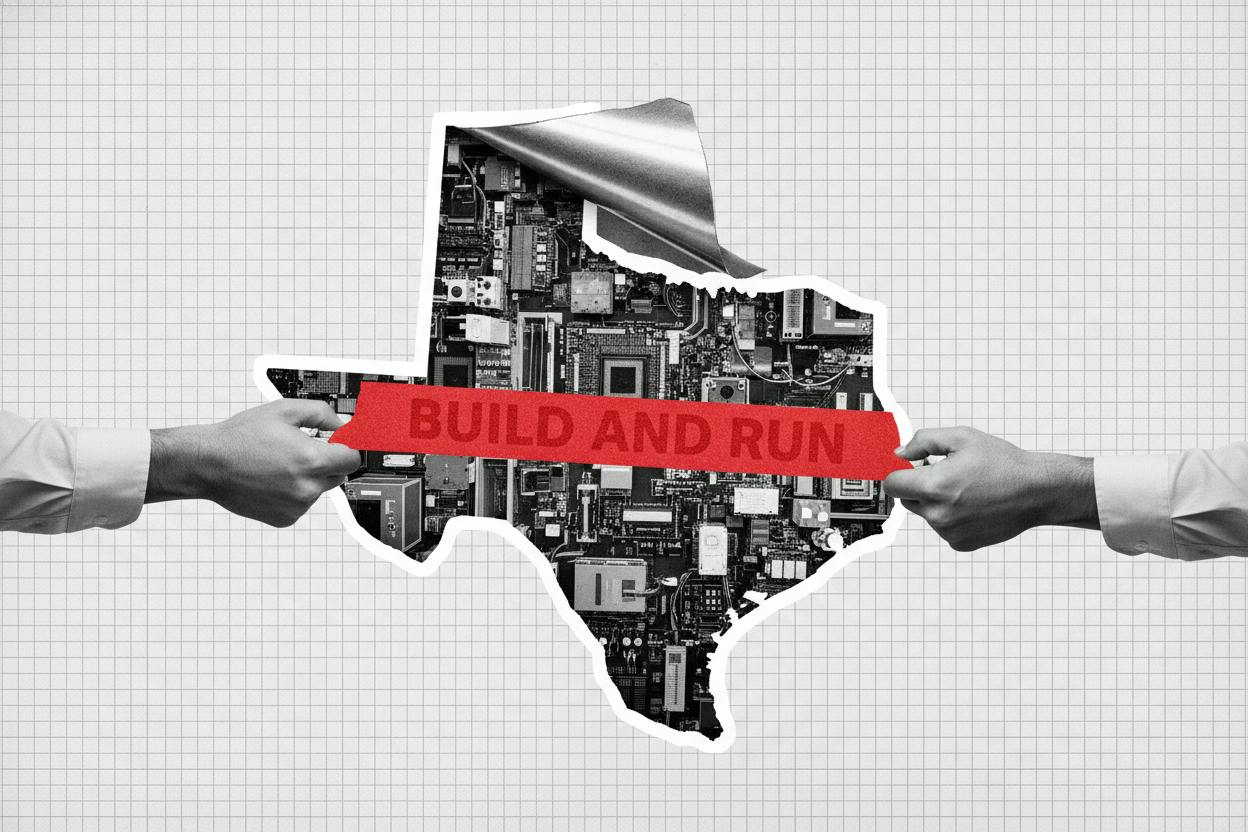
Elon Musk has moved to settle any confusion over who will control the massive artificial intelligence chip factory planned for Texas. In a reply on X, Musk said Tesla and SpaceX will “build and run the fab” — the nickname for a chip manufacturing plant — and that Taiwan Semiconductor Manufacturing Company (TSMC) could “maybe” sublease part of the site. The statement came after a post suggested TSMC might end up owning and operating the facility.
The project, dubbed “Terafab,” is being pitched as a Tesla-SpaceX effort to build a huge factory dedicated to AI chips. Musk’s clarification is significant because “running the fab” means taking on the hard, expensive work of making chips at scale: installing tools, integrating processes, and then slowly improving “yield” — the share of good chips that come off the production line — until output is reliable and profitable.
Who does what at Terafab?
The distinction between owning and operating versus subleasing matters a lot. If TSMC were the operator, investors could more easily map out timelines and execution risk, because the Taiwanese company has successfully “ramped up” new fabs many times before. As a sublessee, TSMC would likely have limited operational and reputational exposure, leaving most of the responsibility with the site’s owner-operator.
Intel, the US chipmaker, is also described as a partner in the project. Its CEO, Lip-Bu Tan, told Bloomberg that Intel will stay involved, which reads less like Intel taking the keys and more like a partnership where roles are still being defined. That could mean Intel provides support in areas like manufacturing technology or design, rather than taking over day-to-day operations.
The news comes as the US pushes to expand domestic chip production, a priority for both national security and economic competitiveness. TSMC has already weighed expanding in Texas, and the broader trend of bringing advanced chipmaking to US soil is a key theme for investors.
What it means for investors
For markets, Musk’s “build and run” stance shifts the risk profile of Terafab away from TSMC and onto Tesla and SpaceX. Markets typically treat new capacity differently depending on who operates it. An established foundry like TSMC has a track record of delivering on schedule, so investors can underwrite its projects with more confidence. A Tesla-SpaceX operation, by contrast, looks more like a long, expensive manufacturing build where schedules can slip and costs can rise as teams climb the learning curve.
That makes Terafab harder to view as near-term, dependable US chip supply, and easier to see as longer-dated optionality. For Tesla shareholders, the project adds another ambitious capital-intensive venture to a company that already has a lot on its plate, from deliveries that have beaten estimates to its broader AI ambitions. For SpaceX, the fab ties into its reported push to secure AI chips, including a reported $40 billion effort to lock in Nvidia AI chips.
The broader AI chip market remains tight, with demand outstripping supply. AMD’s CEO recently said AI chip demand still outstrips supply, and a planned ramp is set for 2027. That backdrop explains why Musk and others are racing to build new capacity, even if the execution is far from guaranteed.
For everyday investors, the key takeaway is that Terafab is a speculative, long-term bet. It’s not a near-term earnings driver for Tesla or SpaceX (which is private). Instead, it’s a sign of how much capital and effort is flowing into AI infrastructure — and how much uncertainty remains about who will ultimately profit from it. As always, it’s wise to focus on companies with clear, proven business models rather than betting on ambitious projects that are still years away from producing chips.