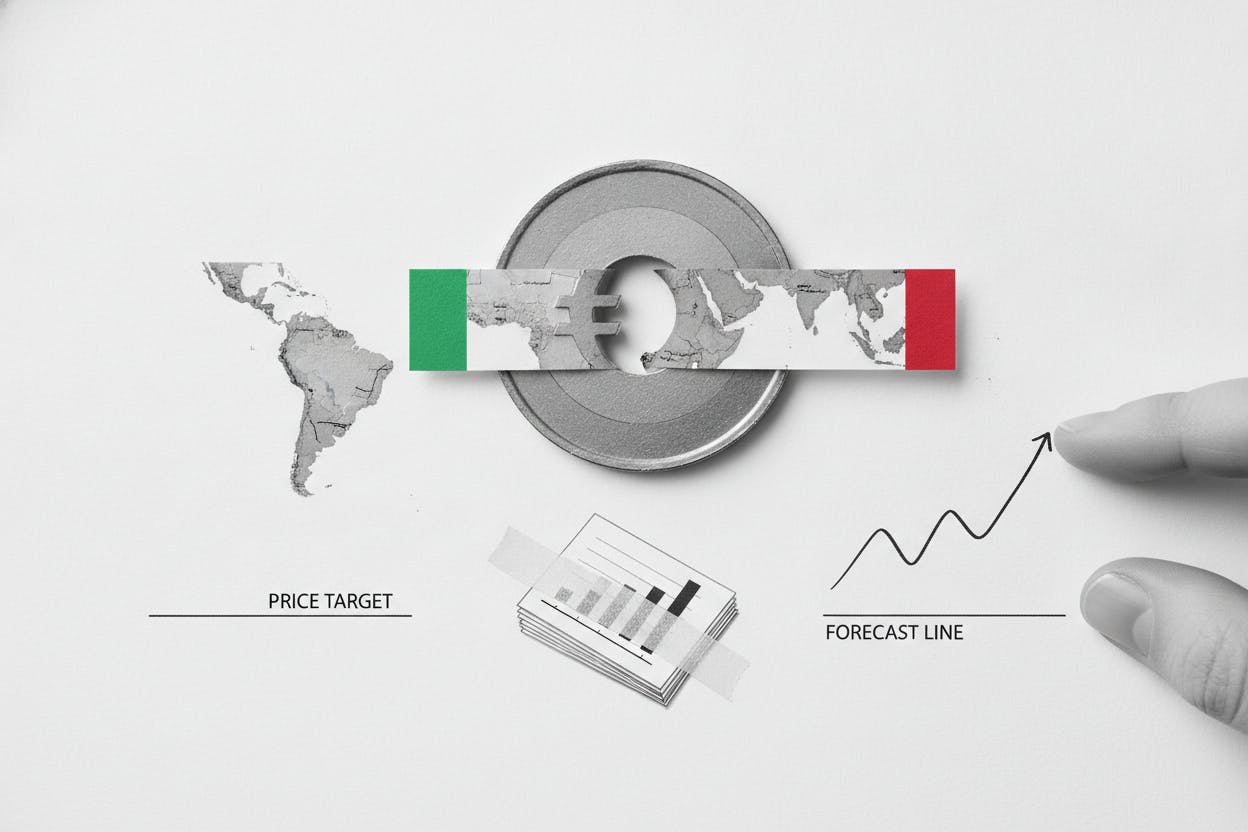
RBC Capital Markets has made a modest adjustment to its forecasts for Banco Santander ahead of the Spanish bank's second-quarter earnings report on July 22. The investment bank raised its 2027 adjusted pretax profit estimate by 1% to €27.72 billion, primarily due to updated foreign exchange assumptions for several Latin American currencies and the US dollar.
Why Currency Matters for Santander
Santander is one of Europe's most internationally diversified banks, with a significant portion of its earnings coming from Latin America, particularly Brazil, Mexico, Chile, and Argentina. However, the bank reports its financial results in euros, making it highly sensitive to currency fluctuations. Even if the underlying business in these countries performs well, a weaker local currency against the euro can reduce reported profits, and vice versa.
RBC's new assumptions include a weaker Brazilian real and Chilean peso, alongside a stronger US dollar and Mexican peso. These shifts can change reported profits even when the operational performance remains steady. According to RBC, the effects largely net out over the next couple of years: higher revenue from currency translation in Mexico and Brazil is expected to be offset by higher local costs and potential loan-loss charges in Argentina.
What the Forecast Change Means
The only meaningful model change was the 1% lift to the 2027 adjusted pretax profit forecast. Despite this upward revision, RBC kept its price target unchanged at 12.75 euros and maintained an "outperform" rating on the stock. This signals that the adjustment is more about translation and accounting recalibration than a fundamental shift in how the bank views Santander's core business momentum.
When an analyst raises a medium-term profit forecast but does not increase the price target, the implied valuation—measured by the price-to-earnings (P/E) multiple—actually becomes lower. That suggests the broker views the revision as currency noise rather than a reason to re-rate the stock. For investors, this means the underlying business outlook remains largely unchanged, and the focus should remain on operational performance rather than short-term currency swings.
What to Watch on July 22
Santander's upcoming earnings report will provide a clearer picture of how these currency dynamics are playing out in real time. The key question is whether the "good" and "bad" currency effects continue to cancel each other out. Stronger translated revenue from Mexico and Brazil could boost reported figures, but higher local costs and potential credit hits tied to Argentina could offset those gains.
If the balance shifts, reported euro profits could look better or worse quickly, regardless of what happens in the underlying businesses. Investors should pay attention to management's commentary on currency exposure and any changes in guidance for the full year.
Broader Market Context
Santander's situation is a reminder of how currency risk can impact multinational companies, especially those with significant emerging market exposure. For everyday investors, it highlights the importance of looking beyond headline profit numbers to understand the underlying drivers. A reported profit increase might simply reflect a weaker euro rather than stronger business performance.
In the broader European banking sector, currency volatility has been a recurring theme, particularly as central banks in different regions take divergent paths on interest rates. The US dollar's strength has been a key factor, while Latin American currencies have faced their own pressures from local economic conditions and political developments.
For more on how currency and commodity moves are affecting global markets, see our coverage of European stocks rallying as oil drops toward $70. Meanwhile, other companies are also adjusting their forecasts, as seen with Morgan Stanley cutting Mosaic's 2027 profit forecast.
Investor Takeaway
RBC's minor forecast tweak is not a game-changer for Santander's investment case. The unchanged price target and rating suggest the bank's long-term outlook remains intact. However, the July 22 earnings report will be a critical test of whether Santander can navigate the currency headwinds and deliver consistent profit growth.
For investors holding Santander shares or considering an entry point, the focus should be on the bank's ability to grow its loan book, manage costs, and maintain credit quality across its diverse markets. Currency effects will always be a factor, but they should not overshadow the fundamental health of the business.