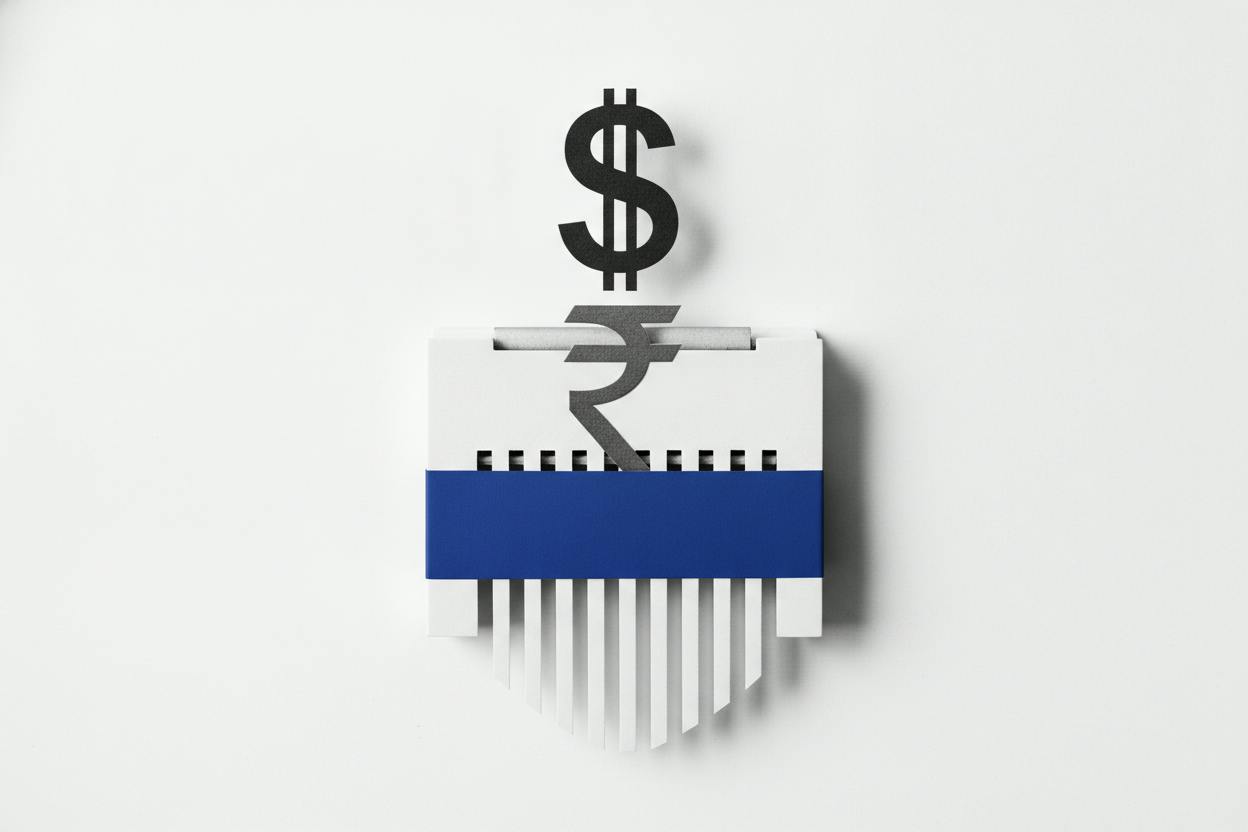
The Reserve Bank of India (RBI) has been quietly tightening money-market conditions using a tool that doesn't grab headlines like an interest-rate hike. According to Bloomberg, the central bank has executed at least $10 billion of "sell-buy" swaps in the past two weeks, a move that pulls rupees out of the banking system and has pushed up 3- to 6-month dollar-rupee forward rates in September.
For everyday investors, this matters because it affects how much it costs banks to borrow money, which in turn can influence everything from loan rates to the returns on short-term fixed-income investments.
How the swap works
A sell-buy swap is a two-part transaction. In the first leg, the RBI sells US dollars to banks and receives rupees in exchange. In the second leg, the deal is reversed at a future date—the RBI buys back the dollars and returns the rupees. The net effect is that rupees are temporarily withdrawn from the banking system, reducing the amount of cash banks have available to lend or invest.
This is a classic liquidity-management tool. Instead of raising the policy interest rate—which would be a more visible and potentially disruptive signal—the RBI can use swaps to fine-tune the amount of cash in the system. It's a quieter way to tighten conditions, but the impact is real.
The recent swaps have been large enough to move the market. Forward rates for the dollar-rupee pair in the 3- to 6-month tenor have risen in September, reflecting the reduced supply of rupees and the increased demand for dollars in the forward market.
Why the RBI is acting now
India's economy has been a standout performer in Asia. The OECD recently lifted its 2026 growth forecast for India to 7.1%, while also warning about rising inflation. That growth has brought with it a need to manage liquidity carefully—too much cash can fuel inflation, while too little can choke off credit.
The RBI has to balance multiple objectives: supporting growth, keeping inflation in check, and maintaining a stable rupee. The swap operation appears aimed at absorbing excess liquidity that could otherwise put downward pressure on the rupee or feed into higher prices.
This isn't happening in a vacuum. Global oil prices have been climbing, with Brent crude recently nearing $102 a barrel, a factor that has already weighed on Indian stocks. Higher oil prices tend to widen India's trade deficit and put pressure on the rupee, making liquidity management more delicate.
What it means for investors
For investors, the key takeaway is that short-term interest rates in India are likely to stay firm, or even edge higher, as the RBI drains liquidity. This can affect:
- Bond yields: With less cash in the system, banks may demand higher yields on government and corporate bonds, which could push up borrowing costs.
- Bank stocks: Tighter liquidity can squeeze banks' net interest margins if they can't pass on higher funding costs to borrowers quickly. Indian bank stocks have already been under pressure from other regulatory concerns, such as proposed insurance commission caps.
- Rupee stability: By draining rupees, the RBI is effectively supporting the currency, which can be positive for foreign investors and for sectors that rely on imports.
- Fixed-income returns: For investors in short-term debt funds or bank deposits, the tighter liquidity could mean slightly better yields in the near term.
It's important to note that the RBI's actions are not a signal of a rate hike, but they do indicate that the central bank is comfortable with current liquidity levels and may be pre-empting inflationary pressures.
Looking ahead
Investors will be watching whether the RBI continues these swap operations and whether they start to affect longer-term rates. The central bank's next policy meeting will be closely scrutinised for any change in stance, especially given the OECD's warning about rising inflation.
For now, the message is clear: the RBI is using every tool at its disposal to manage the economy, and the effects are showing up in the forward market. For ordinary investors, staying informed about these moves can help in understanding why interest rates and currency values are moving the way they are.